Lever Bent-Over Wide Row Plate Loaded
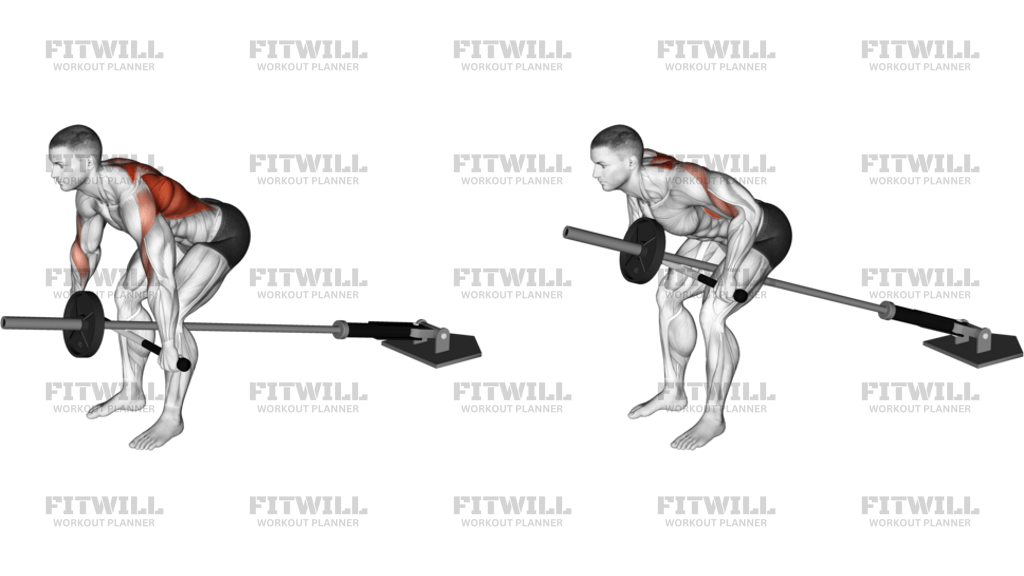
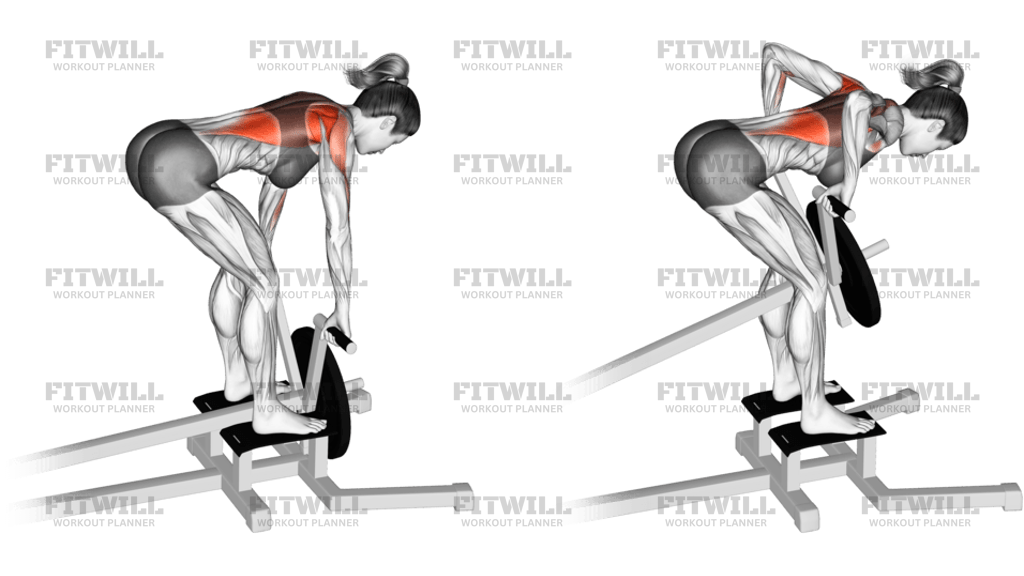
Lever Bent-Over Wide Row Plate Loaded is a plate-loaded rowing movement for building the upper back with a fixed machine path and a wide neutral grip. The bent-over setup puts the torso into a strong hinge so the handles can travel toward the lower ribs while the back, lats, rear delts, and elbow flexors work together. Because the load moves on a guided lever, the exercise is useful when you want row strength without having to control a free bar through the entire path.
The wide hand position changes the emphasis compared with a narrow row. You will usually feel more work through the upper back, rear shoulders, and the muscles that retract the shoulder blades, with the lats still contributing strongly as the elbows drive back. The machine path helps keep tension on the pulling muscles, but it also makes setup matter more: if the hinge is too shallow, the pull turns into a shrug; if the hinge is too deep or the load is too heavy, the lower back starts doing work that should stay in the torso brace.
A clean repetition starts before the plates leave the stops. Stand with a stable stance, hinge at the hips, keep a neutral spine, and reach for the wide handles without rounding the shoulders forward. From there, pull the elbows back and slightly out, bringing the handles toward the lower chest or upper abdomen. Keep the chest from collapsing, keep the neck long, and stop the rep when the shoulder blades are fully retracted without bouncing the weight off your body.
On the way down, let the handles travel back under control until the arms are almost straight and the upper back stays organized. Do not chase extra range by letting the shoulders roll forward or the low back arch to finish the rep. Breathing should stay rhythmic: inhale as the arms lengthen, brace before the pull, and exhale as you drive the handles in. That rhythm keeps the torso fixed so the row stays strict from the first rep to the last.
This movement fits well in back-focused sessions, upper-body split work, or accessory blocks where you want a strong row pattern with repeatable mechanics. It is also a good option for lifters who need a stable rowing variation while they learn to hinge and control the scapulae. Use a load that lets you keep the torso angle, pause briefly at the top, and lower the handles without losing position. If the low back or traps take over, reduce the weight and shorten the set before form breaks down.
Fitwill
Log Workouts, Track Progress & Build Strength.
Achieve more with Fitwill: explore over 9600 exercises with images and videos, access built-in and custom workouts, perfect for both gym and home sessions, and see real results.
Start your journey. Download today!




Instructions
- Stand over the lever row with your feet about hip-width apart and the bar loaded, then hinge at the hips until your torso is close to parallel with the floor.
- Keep a slight bend in your knees, a neutral spine, and a long neck while you reach for the wide neutral handles with both hands.
- Set your shoulders down and back just enough to lock in the upper back without turning the start position into a shrug.
- Brace your midsection before the first pull so your torso stays fixed while the arms begin to work.
- Pull the handles toward your lower ribs or upper abdomen by driving the elbows back and slightly out.
- Squeeze the shoulder blades together briefly at the top without bouncing the plates into the stop.
- Lower the handles slowly until your arms are almost straight and you feel a controlled stretch through the lats and upper back.
- Inhale on the lowering phase, exhale as you row, and reset your hinge before each new repetition.
Tips & Tricks
- Think about driving the elbows back rather than curling the handles with the hands.
- Keep the torso angle steady; if your chest rises each rep, the set is getting too heavy.
- The wide grip should make the pull feel upper-back dominant, so do not let the elbows tuck tightly against your sides.
- Stop the top of the rep when the shoulder blades are fully squeezed; do not lean back to get extra range.
- Let the handles come down under control until the arms are nearly straight, but do not round the upper back to chase a longer stretch.
- Use a load that lets you pause for a moment at the top without jerking the plates.
- If your lower back is the limiting factor, shorten the set, reduce the load, or use a slightly higher torso angle.
- Keep your neck in line with your spine so you are not craning forward to watch the movement.
Frequently Asked Questions
What muscles does the Lever Bent-Over Wide Row Plate Loaded work most?
It primarily trains the upper back, lats, rear delts, rhomboids, and elbow flexors, with the spinal erectors and core stabilizing the hinge.
Where should the handles travel during each rep?
Pull the wide handles toward your lower ribs or upper abdomen, then lower them until your arms are almost straight without losing your hinge.
Is this more of a lat row or an upper-back row?
The wide grip makes it feel more upper-back and rear-delt dominant than a narrow row, but the lats still contribute strongly to the pull.
How bent over should I be for the setup?
Aim for a strong hip hinge with the torso close to parallel to the floor, a neutral spine, and soft knees.
Can beginners use this machine row?
Yes. Start with a light load and learn to keep the torso angle fixed before adding weight.
What is the biggest form mistake on this row?
The most common mistake is turning the set into a body swing, which steals work from the back and loads the lower back.
Should I pause at the top of the row?
A brief squeeze at the top is useful if you can hold the shoulder blades together without jerking the machine.
How do I know the load is too heavy?
If your chest pops up, your lower back arches, or the handles stop near your waist instead of the ribs, the load is probably too heavy.