Elevated Seated Calf Raise
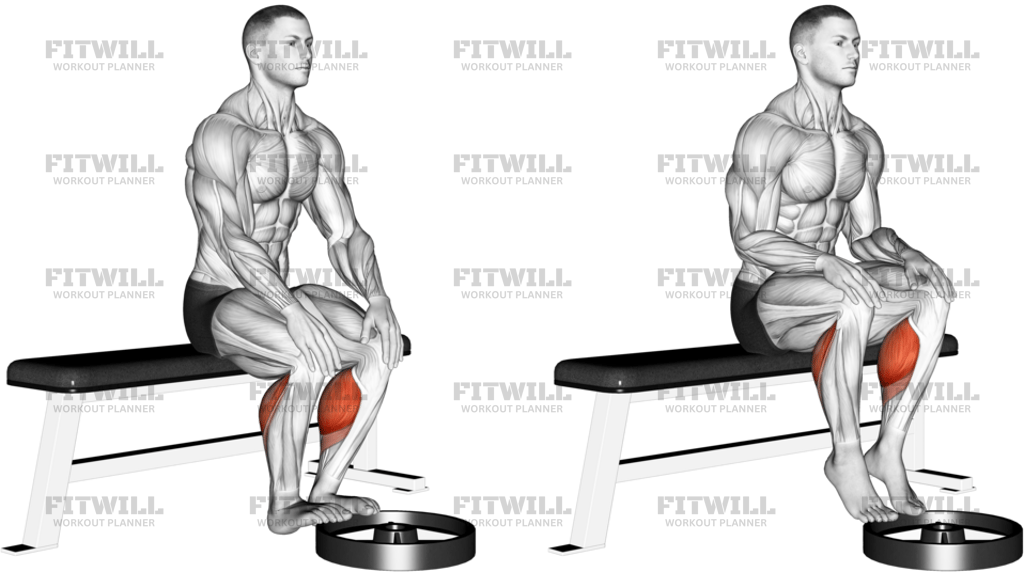
Elevated Seated Calf Raise is a bent-knee calf exercise performed with the balls of the feet supported on a raised edge or plate and the heels hanging free. The seated position changes the leverage at the ankle so the calves work through a shorter but very focused range, with more emphasis on the soleus and strong support from the gastrocnemius. It is a simple setup, but the setup matters a lot because the height of the support, the knee bend, and the amount of heel drop all affect how well you can load the calves without bouncing.
The exercise is useful when you want direct calf work without standing balance demands. Sitting down removes most of the hip and torso contribution, so the ankles have to do the job. That makes the movement especially helpful for accessory calf training, lower-leg conditioning, and rebuilding calf strength after sports or running sessions. It also works well for higher-rep sets because the limiting factor is usually calf fatigue rather than whole-body fatigue.
Good repetitions start with the knees bent and the feet centered on the edge of the platform. From there, let the heels sink under control until you feel a stretch through the lower calf and Achilles, then press through the forefoot to raise the heels as high as possible. Keep the knees quiet, the torso tall, and the pressure even across the ball of the foot. A brief squeeze at the top helps finish the contraction, and the lowering phase should stay smooth so the stretch does not turn into a bounce.
This is a good choice for beginners because the movement is easy to understand and the load can be adjusted with body position or added resistance. It is also a useful exercise for lifters and runners who need more lower-leg volume without heavy standing loading. The main safety concern is forcing the bottom stretch or letting the feet roll outward as fatigue builds. If the Achilles tendon feels irritated, shorten the range slightly, slow the tempo, and keep every rep pain-free and controlled.
[ Workout Log & Planner ]
Put your next workout in Fitwill
Keep your plan and training log ready when you are.


Instructions
- Sit on a flat bench with the balls of your feet on a raised edge, plate, or block and let your heels hang freely off the front.
- Keep your knees bent about 90 degrees, feet about hip-width apart, and your torso stacked tall over your hips.
- Place your hands on your thighs or on the bench for balance, but do not use them to rock your body.
- Lower both heels slowly until you feel a strong stretch through the lower calves and Achilles tendons.
- Press through the ball of each foot and lift your heels as high as you can without letting the knees drift or the feet roll outward.
- Pause briefly at the top and squeeze the calves before starting the next rep.
- Lower back down under control to the bottom stretch instead of bouncing off the platform.
- Breathe in on the descent and exhale as you lift through the working phase.
Tips & Tricks
- Keep the pressure over the big toe and second toe so the ankles do not drift outward as you fatigue.
- Let the heels drop only as far as you can control; the bottom stretch should feel strong, not sharp or bouncy.
- Use a bench height that leaves your thighs supported while the heels can move freely below the edge.
- If bodyweight is too easy, press your hands gently into your thighs to add resistance without changing the leg position.
- If the movement turns into a hip rock, the calves have stopped doing the work and the set is too hard or too fast.
- A short pause at the top usually produces better calf tension than chasing extra speed.
- High-rep sets often work well here because the calves tolerate long time under tension.
- Stop if the Achilles tendon feels pinched or the feet cramp and reset with a smaller range of motion.
Frequently Asked Questions
What muscle does Elevated Seated Calf Raise target most?
It primarily targets the calf muscles, with a strong emphasis on the soleus because the knees stay bent.
Why are the knees bent during this calf raise?
The bent-knee position shifts more of the work toward the soleus and keeps the exercise focused on ankle movement instead of whole-body leverage.
Where should my feet sit on the platform?
Place only the balls of the feet on the support so the heels can drop below the edge and rise through a full calf contraction.
Should my knees move during the set?
No. Keep the knees quiet and let the ankles do the lifting and lowering.
Can I make this harder without adding weight?
Yes. You can use one leg at a time, slow the lowering phase, or press your hands lightly into your thighs for extra resistance.
What should I do if my calves cramp?
Reduce the range slightly, slow the tempo, and avoid rushing the top squeeze. Cramping usually means fatigue or too much intensity for the current set.
Is this exercise beginner-friendly?
Yes. It is easy to learn because the only moving joint is the ankle, and the bodyweight setup keeps the load manageable.
How low should my heels go at the bottom?
Lower them until you feel a controlled stretch through the calves, but do not force them so low that the Achilles tendon feels painful.