Dumbbell Bent Arm Iso Hold
Dumbbell Bent Arm Iso Hold is a standing isometric arm drill built around keeping the elbows bent and the dumbbells fixed in place instead of cycling through full curls or presses. It is useful when you want to build time under tension in the upper arms, train the forearms to hold a position without wrist collapse, and teach the shoulders to stay quiet while the arms work.
The position looks simple, but the details decide whether the hold feels clean or sloppy. A small change in elbow angle, wrist position, or torso lean can shift the load away from the intended arm position and turn the set into a shrugging or swaying contest. Dumbbell Bent Arm Iso Hold works best when the elbows stay locked at the same bend and the rest of the body stays stacked and still.
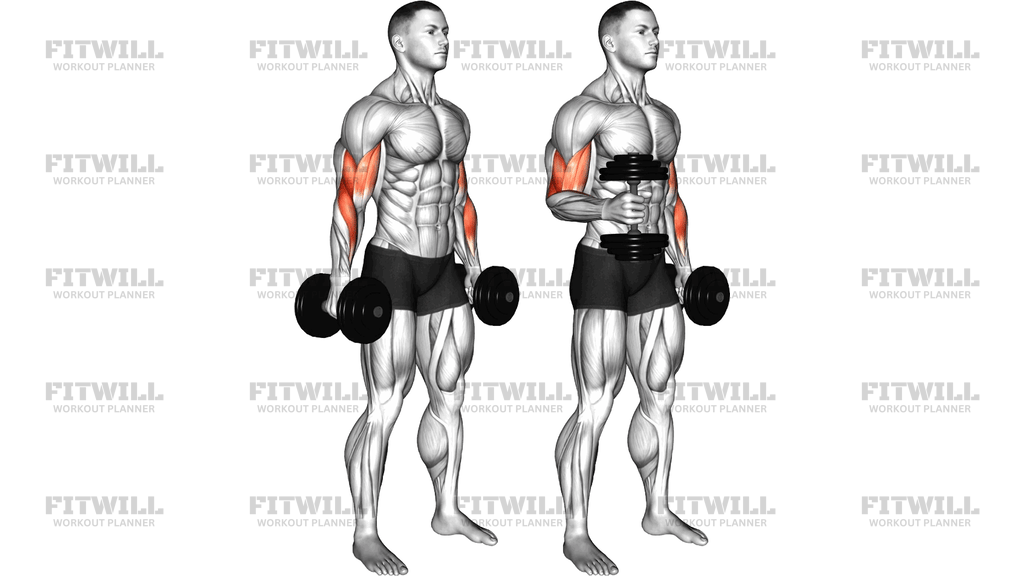
Set up standing with a dumbbell in each hand, feet about hip-width apart, and the weights hanging at your sides before you bring them up. Raise the dumbbells until both elbows are bent to roughly 90 degrees and the weights sit in front of your torso around lower-chest or rib height. Keep the upper arms close to your sides, the wrists straight, and the shoulders down so the hold starts from a stable, repeatable position.
From there, brace your midsection, keep the elbow angle unchanged, and hold the dumbbells steady while you breathe in short, controlled breaths. The weights should stay level with each other and should not drift forward, backward, or outward as fatigue builds. If the torso starts to lean back or the shoulders creep toward your ears, the load is too heavy or the hold is lasting longer than your current position can support.
Dumbbell Bent Arm Iso Hold is a useful accessory on arm day, during warm-ups for curl or press work, or as a finisher when you want local fatigue without a lot of joint motion. It can also help beginners learn how to control dumbbells at a fixed joint angle before progressing to more dynamic work. Keep the set crisp, shorten the hold before form breaks, and lower the weights slowly back to your sides when the rep or timer is finished.
[ Workout Log & Planner ]
Put your next workout in Fitwill
Keep your plan and training log ready when you are.


Instructions
- Stand tall with a dumbbell in each hand, feet about hip-width apart, and your arms hanging straight by your sides.
- Bring both dumbbells up until your elbows are bent to about 90 degrees and the weights sit in front of your torso at lower-chest or rib height.
- Keep your upper arms close to your sides, your wrists stacked over your elbows, and your shoulders pulled down away from your ears.
- Set your ribs over your pelvis so you do not lean back when the dumbbells leave your sides.
- Hold the position without letting either elbow open, flare, or drift forward as you fatigue.
- Breathe in short, quiet breaths while keeping the dumbbells level with each other.
- If one side drops or your torso starts twisting, lower both weights, reset, and re-establish the same elbow angle before holding again.
- When the hold is complete, lower the dumbbells slowly back to your sides and finish standing tall.
Tips & Tricks
- Pick a load that lets you keep both elbows at the same 90-degree bend without leaning back.
- Keep the dumbbells slightly in front of your ribs, not far out beside your body, so the shoulders do not take over.
- Squeeze the handles hard enough that your wrists stay straight instead of folding backward.
- If your shoulders shrug, shorten the hold and keep the collarbones broad.
- Longer holds are only useful if the elbow angle stays unchanged; stop before the position starts to wobble.
- A neutral grip is usually easier on the wrists than turning the palms fully up under fatigue.
- Watch for torso twist: if one dumbbell hangs lower, reset before the asymmetry turns into cheating.
- Use this as a controlled accessory, not a max-effort grind that forces the lower back to arch.
Frequently Asked Questions
What does Dumbbell Bent Arm Iso Hold train?
It mainly challenges the upper arms while the forearms and shoulders stabilize the fixed elbow position. You will also feel a strong grip demand because the weights never get a rest.
Should the dumbbells stay at chest height the whole time?
Yes, the point is to keep the elbows bent at the same angle instead of letting the weights rise and fall. If the dumbbells drift, the hold turns into a partial repetition.
How heavy should I use for Dumbbell Bent Arm Iso Hold?
Use a weight you can hold with straight wrists and quiet shoulders for the full planned time. If you have to arch back or shrug to finish the set, it is too heavy.
Can beginners do Dumbbell Bent Arm Iso Hold?
Yes, but beginners should keep the load light and the hold short so the elbow angle stays clean. Quality matters more than duration on this movement.
Why do my shoulders burn before my arms?
That usually means the dumbbells are drifting too far from your torso or your shoulders are creeping up. Bring the weights slightly closer to your ribs and keep the neck long.
Can I do Dumbbell Bent Arm Iso Hold one arm at a time?
Yes, a single-arm version works well if you want to clean up side-to-side differences or lower the total load. Keep the free arm relaxed and avoid rotating toward the working side.
What is the biggest mistake with this hold?
Letting the elbow angle change while pretending the rep is still static. The hold only counts if the bend stays consistent from start to finish.
How long should I hold each set?
Short, controlled holds are usually more useful than long sloppy ones, especially if your elbows start to open or your wrists collapse. Stop the set as soon as the position stops looking identical to the start.