Narrow Top Half Pull-Up
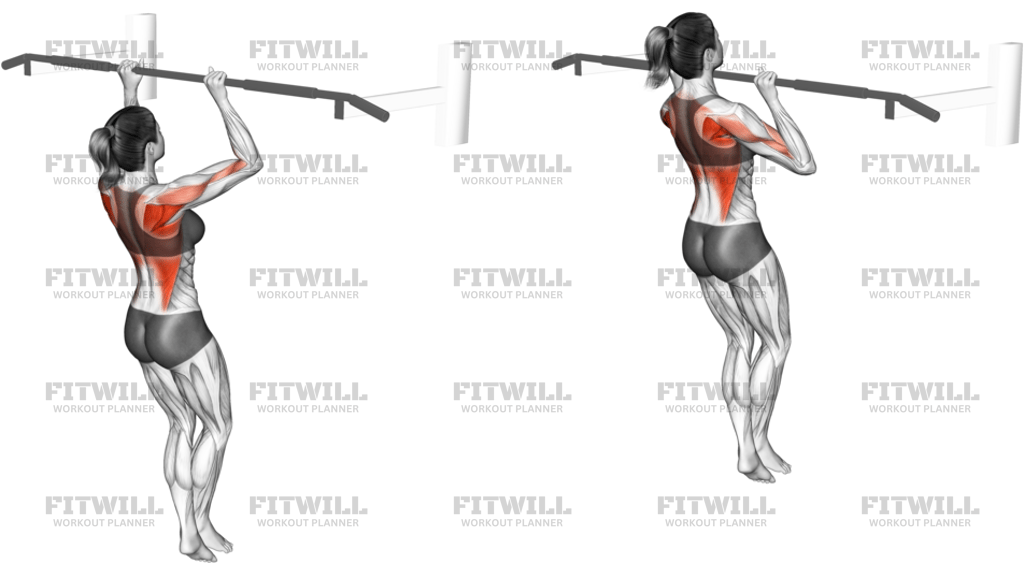
Narrow Top Half Pull-Up is a bodyweight pulling exercise performed from a narrow overhand grip on a bar, using only the upper half of the pull-up range. It trains the lats, biceps, mid-back, rear shoulders, and the scapular muscles that keep the shoulder girdle organized while you pull. Because you stay in the strongest part of the range, it is useful for building strength, reinforcing pull-up mechanics, and adding focused volume without extra load.
The narrow hand position changes the line of pull compared with a wider grip. It usually keeps the elbows closer to the ribs, which can feel more natural for the shoulders while asking the biceps and upper-back stabilizers to work hard. The top-half range also keeps tension high when the torso is closest to the bar, so small details like rib position, scapular control, and bar path make a big difference in how the rep feels.
Set the hands slightly inside shoulder width, keep the grip wrapped and secure, and start from the top half rather than a dead-hang stretch. Lower under control until the elbows open only partway and the shoulders stay active, then pull the chest and chin back toward the bar without kicking, shrugging, or turning the set into a swing. Keep the ribs down, legs quiet, and neck long so the work stays in the back and arms instead of leaking into momentum.
This variation works well as an accessory strength movement, a technique drill for full pull-ups, or a controlled hypertrophy set when you want high-quality reps in a limited range. It is not a good choice for kipping or for chasing sloppy repetition counts. If your shoulders or elbows feel irritated, shorten the range, slow the lowering phase, or use assistance until you can own the top-half path with clean control.
Fitwill
Log Workouts, Track Progress & Build Strength.
Achieve more with Fitwill: explore over 9600 exercises with images and videos, access built-in and custom workouts, perfect for both gym and home sessions, and see real results.
Start your journey. Download today!




Instructions
- Grip the bar slightly inside shoulder width with an overhand grip and wrap your thumbs securely around it.
- Hang with your feet together or ankles crossed, then lift your chest and set your shoulders down away from your ears.
- Start in the top half of the pull-up with your chin at or just above the bar and your torso steady.
- Brace your abs and glutes so your ribs stay down before the first rep begins.
- Lower yourself slowly until your elbows open only partway and your shoulders stay active, not dumped into a dead hang.
- Pause for a brief moment in that lower top-half position without swinging.
- Pull your elbows down and back to bring your chest and chin back to the bar.
- Finish the rep with control, then lower again or step to the floor after the last rep.
Tips & Tricks
- Keep the grip narrow, but not so tight that your wrists flare outward or your forearms take over the set.
- Think about pulling the elbows down toward your front pockets instead of yanking the chin at the bar.
- Do not let the shoulders shrug toward the ears at the bottom half of the range.
- If your legs swing, cross the ankles and keep the ribs stacked over the pelvis.
- Use a slower descent than the pull if you want the top-half range to stay challenging.
- Stop just short of a dead hang if your shoulder position starts to collapse.
- Exhale as you pull up and inhale while you control the lower phase.
- Use assistance or a shorter range if the elbows or shoulders feel irritated after a few reps.
Frequently Asked Questions
What muscles does Narrow Top Half Pull-Up train?
It mainly works the lats, biceps, mid-back, rear shoulders, and the muscles that stabilize the shoulder blades.
How is this different from a full pull-up?
A top-half pull-up uses only the upper portion of the range, so you stay closer to the bar and spend less time in the long-stretch bottom position.
Why use a narrow grip on the bar?
A narrow overhand grip usually keeps the elbows closer to the ribs and makes the pull path feel more compact and controlled.
Do I need to touch my chest to the bar?
No. The goal is to bring the chin and upper chest back toward the bar while keeping the shoulders and torso controlled.
Can beginners do Narrow Top Half Pull-Up?
Yes, if they use assistance, a band, or a reduced range so the shoulders stay organized and the reps stay strict.
What is the biggest form mistake?
The most common problem is shrugging, swinging, or dropping into a dead hang instead of keeping tension in the upper half of the rep.
How can I make this exercise harder without adding weight?
Slow the lowering phase, add a pause near the bottom of the top-half range, or keep every rep perfectly still.
What should I do if my elbows or shoulders get irritated?
Shorten the range, lower the total volume, or switch to an assisted variation until the pull feels smooth and pain-free.