Dumbbell Deadlift Neutral Grip
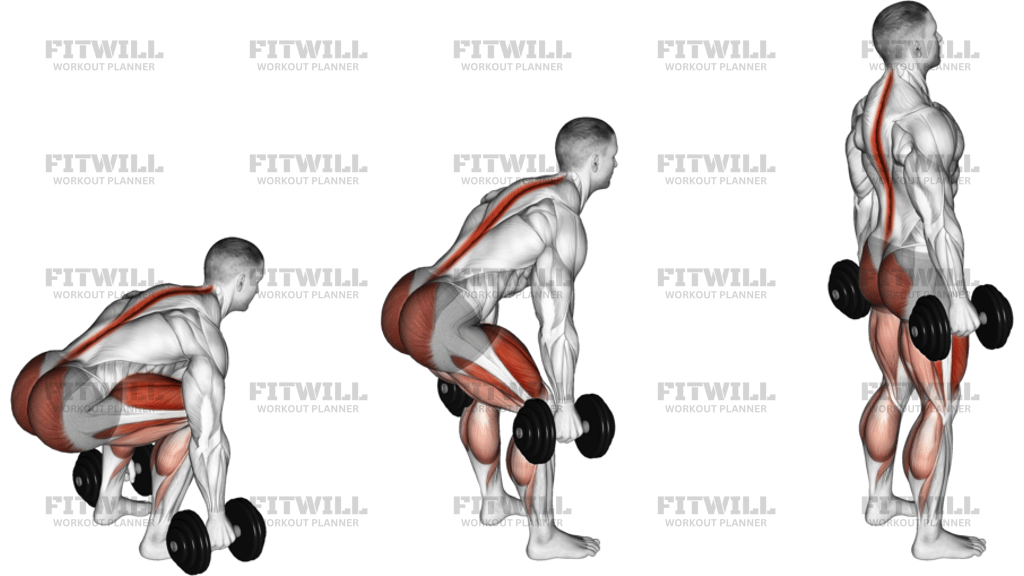
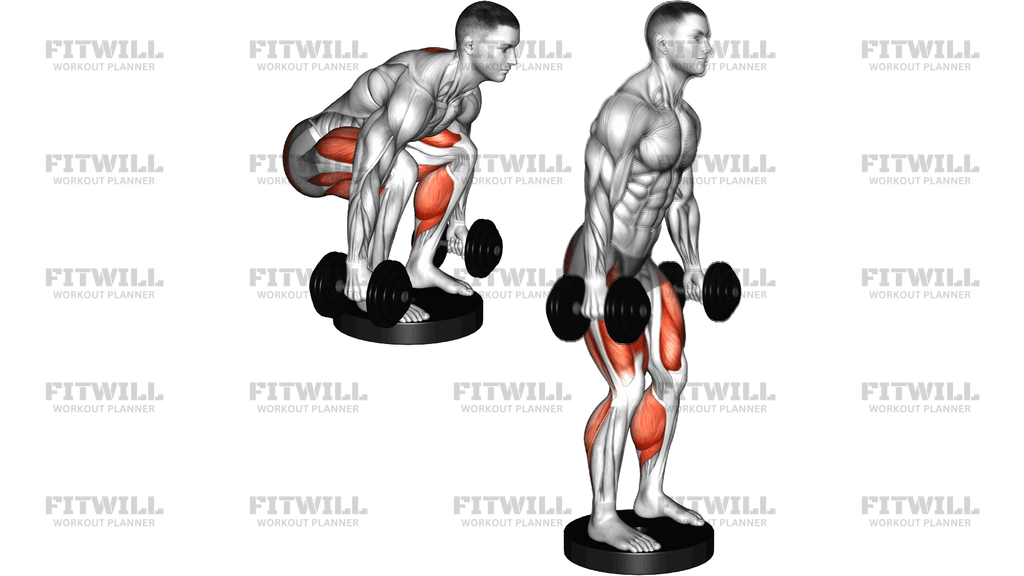
Dumbbell Deadlift Neutral Grip is a bilateral hip-hinge exercise that starts from the floor with the dumbbells outside your feet and your palms facing in. It is a straightforward way to train glutes, hamstrings, adductors, upper back, and trunk stiffness while teaching the body how to keep the spine organized under load. The neutral grip also keeps the wrists in a natural position and lets the arms hang like hooks instead of forcing extra shoulder rotation.
The setup matters because the deadlift begins from a still position, so where the dumbbells sit and how you organize your torso decide how clean the first pull feels. Stand with your feet about hip-width apart, place the bells close to the midfoot, and hinge until your shins are near the handles. Your chest should stay long, your back should stay flat, and your shoulders should sit slightly in front of the dumbbells so the hamstrings and lats are already loaded before the plates leave the floor.
Once you start the rep, drive the floor away instead of trying to yank the weight upward with your arms. Keep the dumbbells close to your legs, let the knees and hips extend together, and stand all the way up by squeezing the glutes rather than leaning back at the top. On the way down, send the hips back first, then bend the knees as the bells pass them, and place the dumbbells back on the floor under control so each rep can reset cleanly.
Dumbbell Deadlift Neutral Grip is useful when you want a deadlift pattern with a smaller equipment footprint than a barbell and a little more freedom to find a comfortable hand path. It works well for beginners learning the hinge, for lifters using it as accessory work after squats or split squats, and for home sessions where the dumbbells are the main loading option. The exercise is simple, but it rewards patience: the best reps look smooth, close to the body, and evenly braced from the floor to the finish.
Most problems show up when the hips drop too low, the dumbbells drift forward, or the lifter finishes by overextending the lower back instead of standing tall. Keep your neck neutral, keep pressure through the whole foot, and treat the floor as a real pause between reps when you want better position or heavier loading. If your back starts to take over before your legs do, reduce the load and rebuild the hinge before pushing the set harder.
[ Workout Log & Planner ]
Put your next workout in Fitwill
Keep your plan and training log ready when you are.


Instructions
- Place the dumbbells on the floor just outside your feet, stand about hip-width apart, and point your toes slightly out if that helps you reach the handles comfortably.
- Hinge at the hips, bend your knees, and lower your torso until your shins are close to the handles and your shoulders are slightly in front of the dumbbells.
- Grip the handles with both palms facing in, keep your chest long, and set your back in a neutral line before you pull.
- Take a breath into your belly and brace your trunk so your torso stays fixed as the weight leaves the floor.
- Drive through the whole foot and push the floor away to lift the dumbbells, letting your hips and knees extend together.
- Keep the dumbbells brushing close to your shins and thighs as you stand so the load stays balanced over your midfoot.
- Finish the rep by standing tall and squeezing your glutes, but do not lean back or shrug your shoulders at the top.
- Lower the dumbbells by sending your hips back first, then bending your knees once the bells pass them.
- Set the dumbbells back on the floor under control, reset your hinge, and repeat for the planned number of reps.
Tips & Tricks
- Keep the dumbbells close to your feet at the start so the first pull does not turn into a forward reach.
- Think about pushing the floor away; if the arms try to lift the dumbbells by themselves, the setup is too loose.
- A flat, long back is more important than touching the floor quickly, so shorten the range if your lumbar spine starts to round.
- Let your shoulders stay slightly in front of the bells off the floor; that position loads the hamstrings and keeps the pull organized.
- Drag the dumbbells up the legs instead of swinging them forward, especially as they pass the knees.
- Lock out with the glutes, not with a backward lean, so the finish stays strong without compressing the lower back.
- If your grip fails before your hips do, use lighter dumbbells or straps so the set still trains the hinge instead of just the hands.
- Plant pressure through heel and midfoot and avoid rocking onto the toes as the bells leave the floor.
- Reset each rep if position starts slipping; dead-stop reps usually clean up form better than rushed touch-and-go reps.
- Keep your gaze a few feet ahead of you on the floor so your neck stays in line with the rest of the spine.
Frequently Asked Questions
What muscles does Dumbbell Deadlift Neutral Grip work most?
It primarily trains the glutes and hamstrings, with the adductors, spinal erectors, lats, and grip helping stabilize the lift.
Is Dumbbell Deadlift Neutral Grip good for beginners?
Yes. The separate dumbbells make it easier to learn the hinge than a barbell deadlift, especially with light weight and dead-stop reps.
Should the dumbbells touch the floor every rep?
For a dead-stop style, yes. Let them settle so you can reset your brace and hinge before the next pull.
How wide should my stance be for Dumbbell Deadlift Neutral Grip?
Hip-width is the best starting point. That usually keeps the dumbbells outside the feet while letting the shins stay close to vertical.
Why use a neutral grip instead of turning the palms forward?
A neutral grip keeps the wrists straight and the arms hanging naturally, which usually makes the pull feel more stable and less awkward on the shoulders.
What is the most common mistake in this deadlift?
Most people either squat the weight up or round the lower back to reach the floor. Keep the hips back, the chest long, and the bells close to the legs.
Can I use Dumbbell Deadlift Neutral Grip instead of a barbell deadlift?
You can use it as a substitute for accessory work or home training, but it usually loads less than a barbell and is best for controlled reps.
How do I know if the set is getting too heavy?
If the dumbbells drift forward, the back starts rounding, or the top finish turns into a lean-back, the load is too high for the rep quality you want.