Reverse Leg Extension
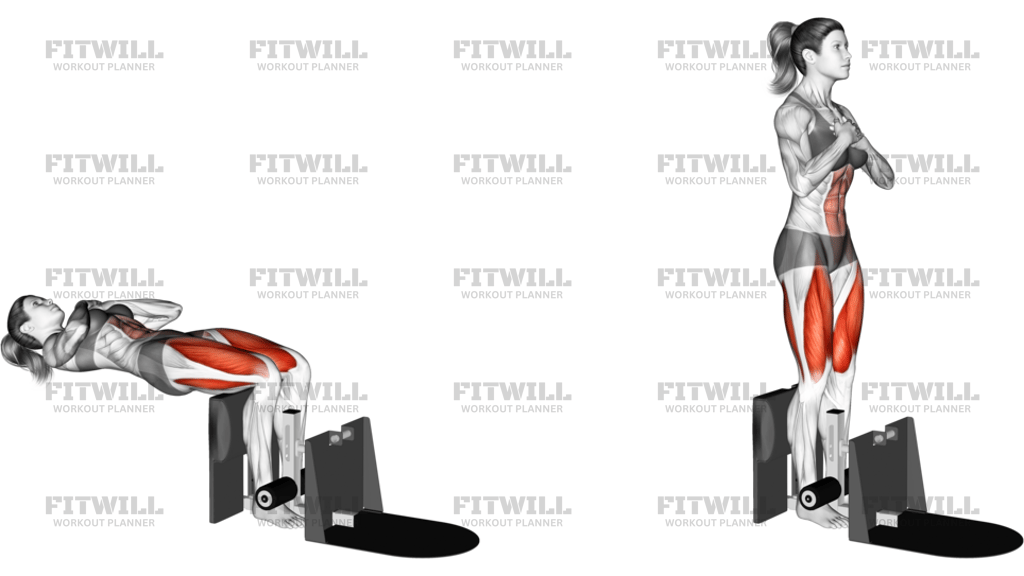
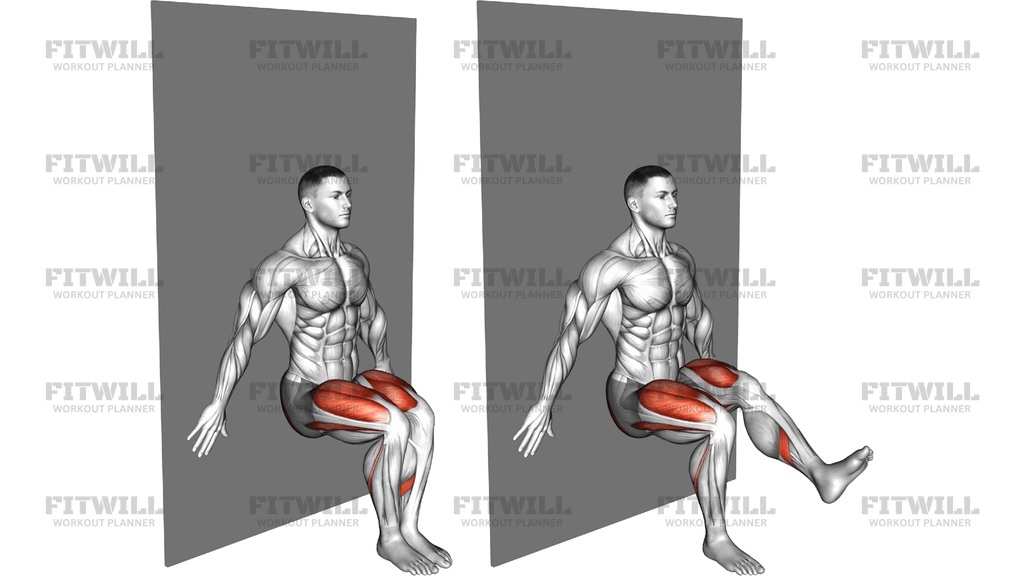
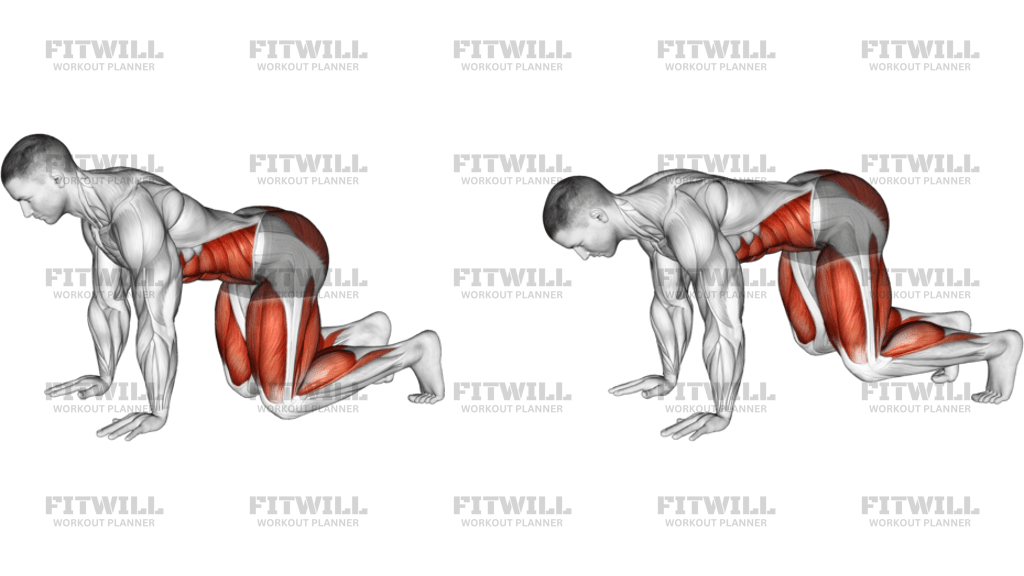
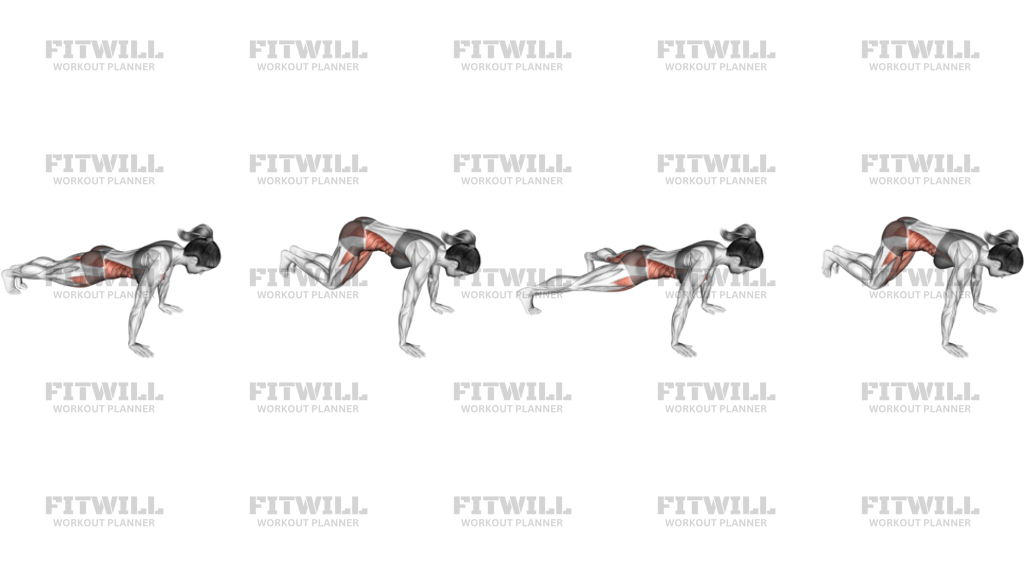
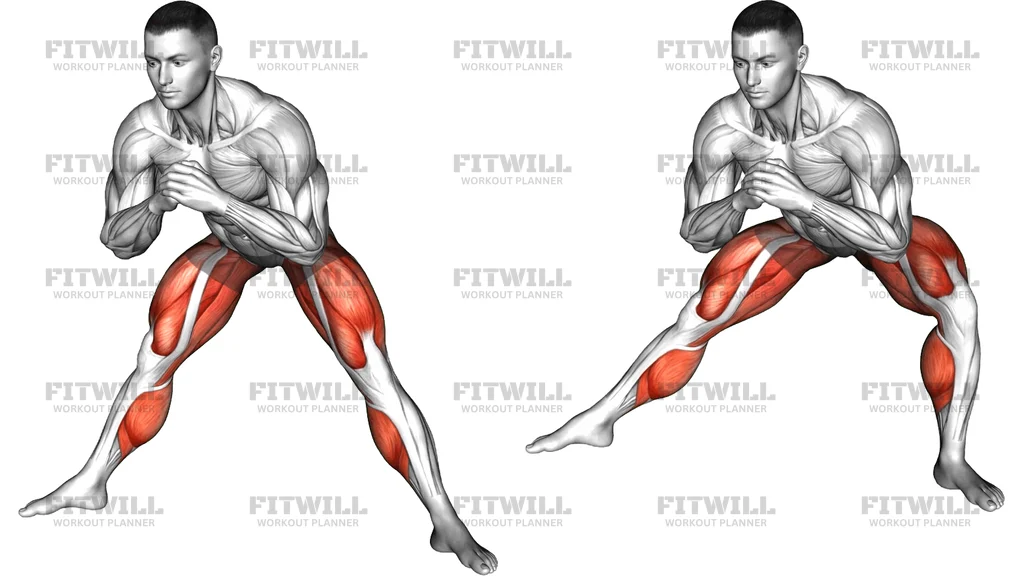
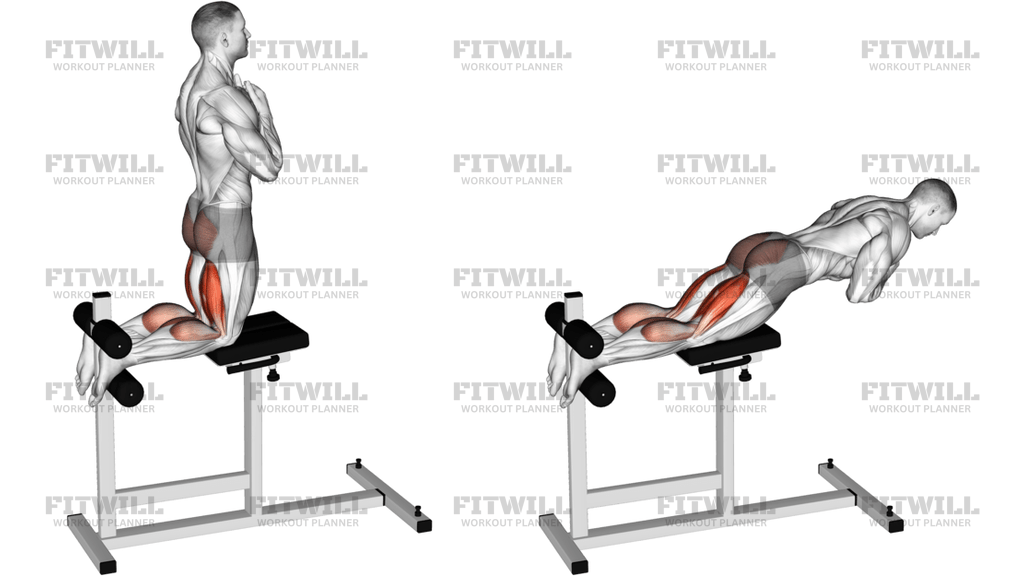
Reverse Leg Extension is a bodyweight hip-extension exercise that asks you to keep the torso quiet while the legs move through a controlled arc. In the image, the body is supported on a pad and the working motion comes from extending the hips rather than swinging the legs. That makes the exercise useful for building glute drive, posterior-chain control, and trunk stability at the same time.
The setup matters because this movement is easy to turn into a back-dominant swing if the support point is off. Line the hips up with the pad or bench edge, keep the ribs stacked, and start with a slight bend in the knees so the legs can travel without locking out the joints. Once you are in position, brace before each rep so the pelvis stays steady and the lower back does not take over.
Each repetition should feel like a clean hip extension from a stretched start to a firm squeeze at the top. Drive the legs back and up with control, finish by tightening the glutes, and avoid forcing the range higher than your pelvis can hold. On the way down, let the legs return slowly and keep tension on the hips instead of dropping into the bottom position.
This is a good accessory exercise when you want posterior-chain work without loading the spine heavily. It fits well in glute-focused sessions, core-stability work, or as a controlled warm-up before heavier hinge patterns. Because the exercise is bodyweight based, the quality of each rep matters more than chasing speed or volume.
The safest version is the one that stays smooth and repeatable. If the front of the hips cramp or the low back starts to arch, shorten the range, slow the tempo, and re-check the support position. A good set should leave the glutes working hard while the torso stays organized from start to finish.
Fitwill
Log Workouts, Track Progress & Build Strength.
Achieve more with Fitwill: explore over 9600 exercises with images and videos, access built-in and custom workouts, perfect for both gym and home sessions, and see real results.
Start your journey. Download today!




Instructions
- Place your hips on the support pad or bench edge so your torso can stay fixed and your legs can move freely.
- Set your hands on the support or across your chest, keep your neck long, and let the legs start in a slightly bent, stretched position.
- Stack your ribs over your pelvis and brace your abs before the first rep so the low back stays quiet.
- Drive the legs back and up from the hips until the glutes finish the rep.
- Pause briefly at the top without over-arching the lower back.
- Lower the legs slowly and keep tension through the hips as you return to the start.
- Reset your breath and repeat for the planned number of reps.
- Stop the set if the pelvis rocks or the movement turns into a swing.
Tips & Tricks
- Keep the support point at the hips; if the pad rides too high, the lower back will start doing the work.
- Use a small knee bend to keep the rep focused on hip extension instead of knee lockout.
- Think about reaching long on the lowering phase instead of dropping the legs.
- Squeeze the glutes at the top, but stop before the lumbar spine takes over.
- Exhale as the legs drive back and up, then inhale as you lower under control.
- If the front of the hips cramp, shorten the range and slow the descent.
- Keep both sides even so the pelvis does not twist during the lift.
- Progress the exercise with more reps, a slower tempo, or a longer pause before trying to force bigger range.
Frequently Asked Questions
What does Reverse Leg Extension work most?
It mainly targets the glutes and hamstrings while the core keeps the pelvis stable.
Is Reverse Leg Extension the same as a glute bridge?
No. A glute bridge is done from the floor, while this version uses a supported setup and a different hip-extension arc.
Where should my hips sit on the support?
The hips should be lined up with the pad or bench edge so the torso stays anchored and the legs can move cleanly.
Should I feel this in my lower back?
No. The lower back should stay braced and quiet; the working effort should come from the hips and glutes.
Can beginners do this exercise safely?
Yes, as long as they keep the range short, move slowly, and avoid swinging the legs.
What is the most common mistake?
Most people arch the low back or lift the legs with momentum instead of controlled hip extension.
How do I make Reverse Leg Extension harder?
Add a longer pause at the top, slow the lowering phase, or increase reps before trying to make the movement bigger.
When should I stop the set?
Stop when the pelvis starts rocking, the low back takes over, or you can no longer control the return.