High Bar Inverted Row
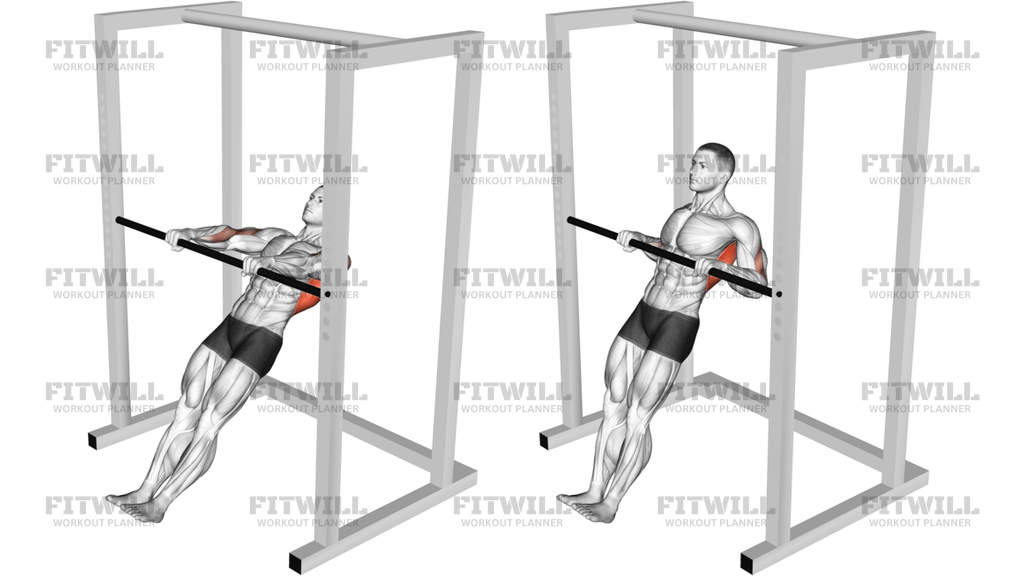
High Bar Inverted Row is a bodyweight pulling exercise performed under a fixed bar set high in a rack or Smith machine. The higher bar position makes the torso angle more upright than a low inverted row, so the movement is easier to scale while still teaching strong horizontal pulling mechanics. It is useful for building back strength, shoulder blade control, and a steady body line without needing a cable machine or heavy external load.
This exercise mainly trains the back, especially the lats and upper back, while the rear shoulders, biceps, forearms, and trunk help keep the rep clean. The straight-body position is part of the training effect: if the hips sag or the ribs flare, the pull turns into a loose heave instead of a controlled row. High Bar Inverted Row rewards a tight setup because the better your line is before the first pull, the more evenly the work stays on the upper body.
Start by setting the bar at a height that lets your feet stay on the floor while your arms hang straight beneath it. Take an overhand grip slightly wider than shoulder width, then walk your feet forward until your body forms a straight line from head to heels. Keep your heels planted, glutes squeezed, and ribs down so your torso stays rigid as you row.
Each repetition should feel like a clean pull of the chest toward the bar, not a yank from the hips or neck. Drive the elbows back, keep the wrists stacked, and finish with the chest close to the bar while the shoulder blades are pulled together and down. Lower yourself under control until the arms are fully straight again, then reset the body line before the next rep.
High Bar Inverted Row is a practical choice for beginners learning to row with body weight, and it also works well for experienced lifters as accessory volume, warm-up work, or a pull-up support movement. Make it harder by walking the feet farther forward or lowering the bar, and make it easier by raising the bar or keeping a slightly softer knee bend. The main goal is not to win a rep count; it is to keep the torso stable, the pull smooth, and the shoulders organized through every repetition.
[ Workout Log & Planner ]
Put your next workout in Fitwill
Keep your plan and training log ready when you are.


Instructions
- Set a barbell in a rack or Smith machine at about lower-chest height so you can hang beneath it with your feet on the floor.
- Take an overhand grip a little wider than shoulder width and stand under the bar with your hands directly above your chest.
- Walk your feet forward until your body forms a straight line from head to heels, with your heels planted and legs straight or only slightly bent.
- Squeeze your glutes, pull your ribs down, and let your arms hang straight before the first rep.
- Start the pull by driving your elbows back and bringing your chest toward the bar, not by jutting your chin forward.
- Keep your shoulders away from your ears as you row so the upper back does the work instead of shrugging.
- Pause briefly when your chest is close to the bar and your shoulder blades are pulled together.
- Lower yourself under control until the arms are straight again and the body line is reset.
- Stop the set if your hips drop, your feet slide, or you have to swing to finish the rep.
Tips & Tricks
- A higher bar makes the row easier; lower the bar or walk your feet farther forward only after you can keep a straight body line.
- Think about pulling the bar to your lower chest so the elbows stay on a strong back-pulling path.
- Keep your heels heavy on the floor. If the toes start doing all the work, the torso usually starts to sag.
- Do not chase a chin-over-bar rep. A chest-to-bar finish keeps the back working harder and shortens the temptation to crane the neck.
- If your shoulders shrug, start each rep by setting them down away from your ears before you pull.
- Use a brief pause at the top to remove momentum and make the upper back finish the rep.
- A slight bend in the knees is fine if it helps you keep the ribs tucked and the pelvis from tipping forward.
- Lower with a steady two- to three-second descent if you want more control and less swinging.
- If the grip gives out before the back does, shorten the set or use a slightly thicker bar grip instead of cheating the body angle.
Frequently Asked Questions
What muscles does High Bar Inverted Row work most?
It mainly trains the back, especially the lats and upper back, with help from the rear shoulders, biceps, forearms, and core.
Can beginners perform this exercise?
Yes. A high bar and a more upright torso make High Bar Inverted Row a good starting point for learning bodyweight rows.
How should my body be positioned under the bar?
Keep a straight line from head to heels, heels on the floor, ribs down, and glutes squeezed so the pull stays strict.
Should I pull my chest or my chin to the bar?
Aim for the chest, usually the lower or mid-chest, to reach the bar. Leading with the chin tends to shorten the rep and encourages neck strain.
How can I make High Bar Inverted Row easier or harder?
Raise the bar or keep your body more upright to make it easier. Lower the bar or walk your feet farther forward to increase the load.
What is the biggest form mistake on this row?
Letting the hips drop and turning the rep into a sway is the main mistake. Keep the glutes tight and the torso locked in one line.
Is an overhand grip required?
The overhand grip shown is the standard version because it keeps the elbows in a strong rowing path, but grip options can change the feel if your equipment allows them.
Where should I feel the movement most?
You should feel the back working hardest, with the shoulder blades, lats, and upper back doing most of the job and the arms assisting.