Ring Chest Fly
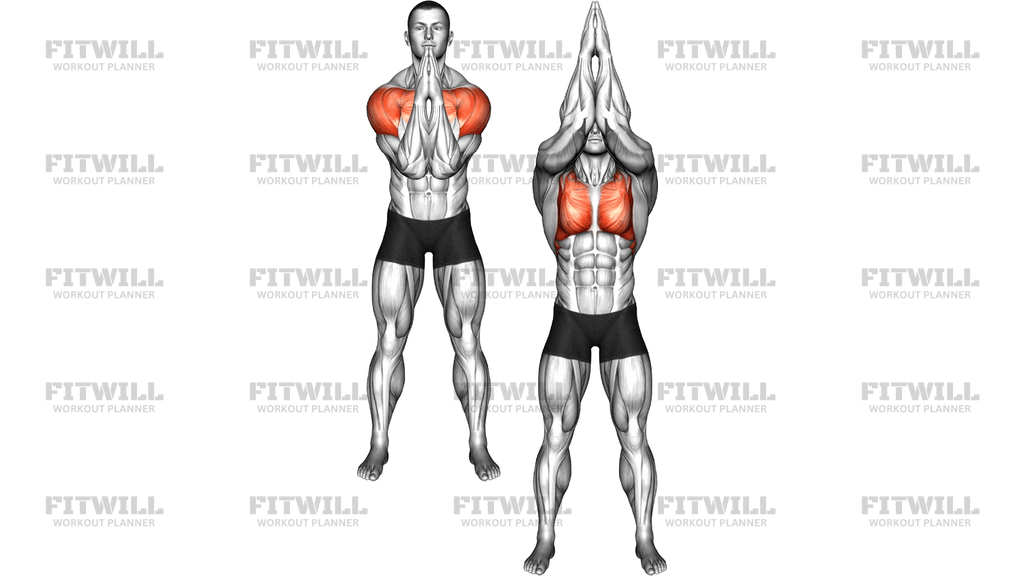
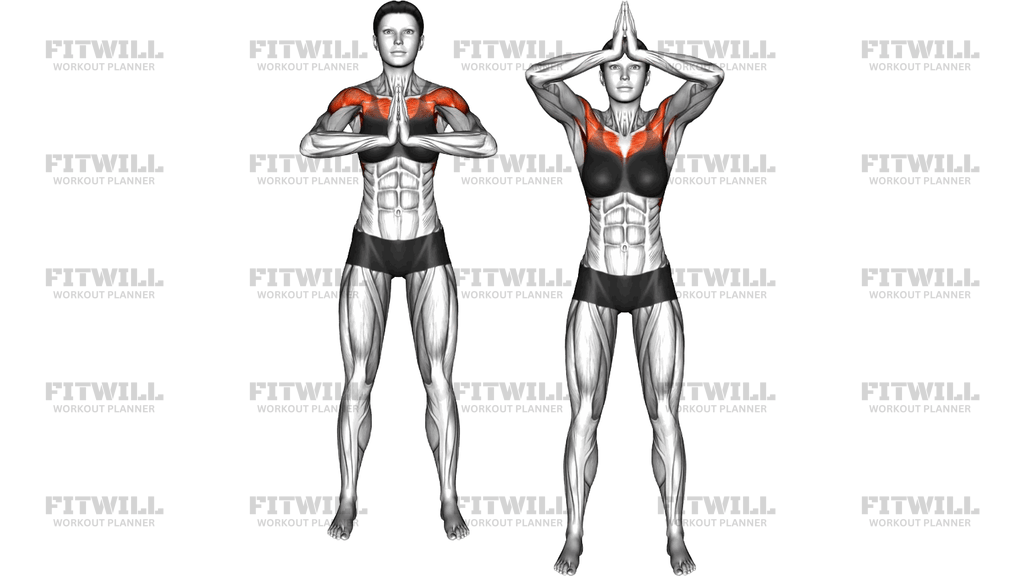
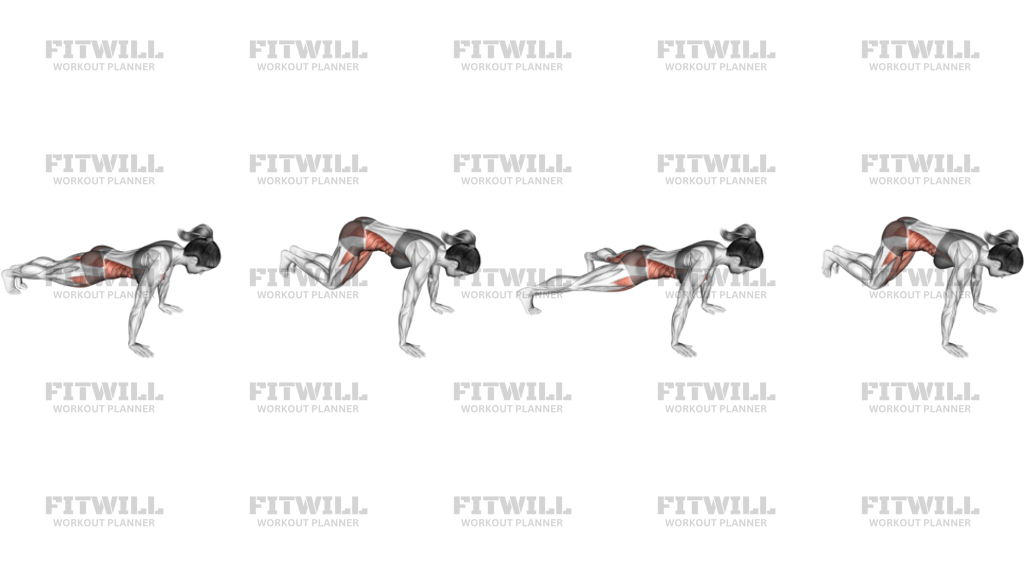
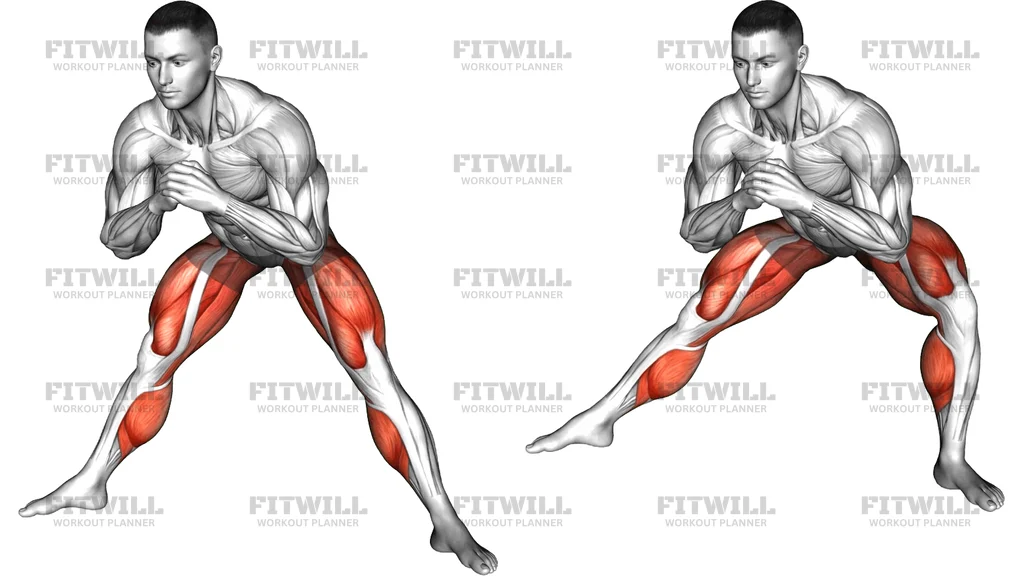
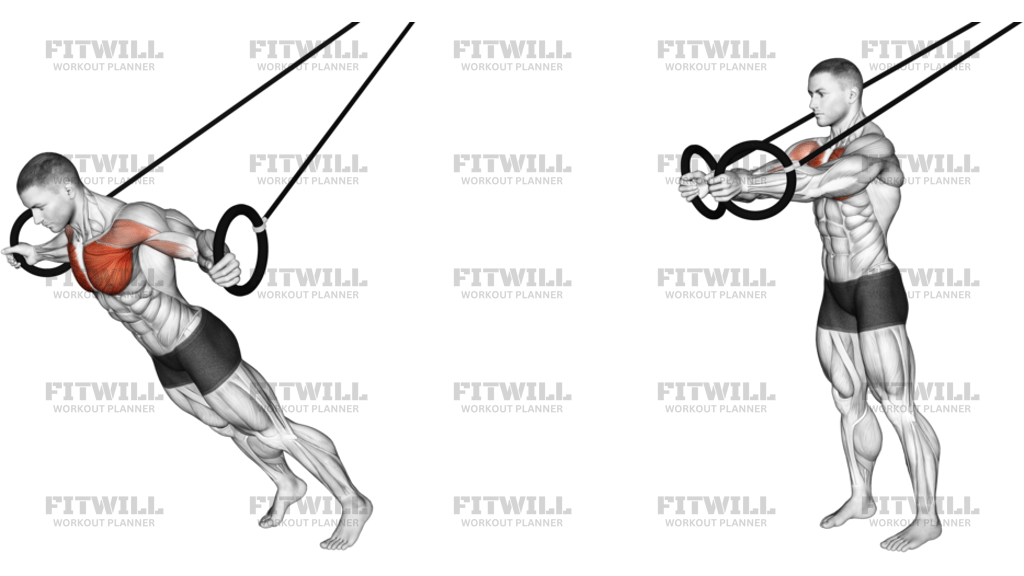
Ring Chest Fly is a bodyweight chest movement performed on suspended rings, usually with the body leaned forward in a straight line from head to heels. The rings add instability, so the exercise trains the chest while also demanding shoulder control, grip awareness, and a rigid midline. In the image, the arms open wide and then sweep together in front of the chest, which is the key shape of the rep.
The setup changes the feel of the exercise more than the rep speed does. A more forward body angle increases the loading on the chest and front shoulders, while a more upright stance reduces the demand. The important part is to keep the shoulders organized, the elbows softly bent, and the ribs stacked so the movement comes from the chest rather than from a lower-back arch or a shrugged shoulder position.
This is a fly, not a press. Each repetition should follow a wide arc: open under control until you reach a comfortable chest stretch, then bring the rings back together in front of the sternum without snapping the hands together or losing tension. The torso should stay long and braced the entire time, with the feet planted and the body resisting any swing or rotation as the rings move.
Ring Chest Fly fits well in chest accessory work, upper-body circuits, or skill-focused warm-ups where you want controlled horizontal adduction without a bench or dumbbells. It is useful for building chest awareness and unilateral stability on unstable handles, but only if the shoulder joint stays smooth and pain-free. The safest version is the one that keeps the range honest, the tempo steady, and the load low enough to prevent compensation.
Fitwill
Log Workouts, Track Progress & Build Strength.
Achieve more with Fitwill: explore over 9600 exercises with images and videos, access built-in and custom workouts, perfect for both gym and home sessions, and see real results.
Start your journey. Download today!




Instructions
- Set the rings around lower-chest height and face away from the anchor with one handle in each hand.
- Walk your feet forward until your body forms a straight line from head to heels and you feel a forward lean into the straps.
- Hold the handles in front of your chest with palms facing each other and a soft bend in both elbows.
- Set your shoulders down and back lightly, then brace your ribs and glutes so the torso stays fixed.
- Inhale and open the arms in a wide arc until the chest is stretched and the rings are near shoulder width.
- Keep the wrists neutral and stop the descent before the shoulders roll forward or the lower back takes over.
- Exhale and sweep the rings back together in front of the sternum, squeezing the chest without locking out hard.
- Pause briefly in the closed position, then return to the open position under control for the next rep.
Tips & Tricks
- Move your feet farther forward to make the fly harder; stepping back makes the exercise easier and more shoulder-friendly.
- Keep a small bend in the elbows the whole time so the rep stays a fly and does not turn into a pressing motion.
- Let the rings travel in a smooth arc instead of forcing them straight out to the sides, which can irritate the shoulders.
- Stop the opening phase before the front of the shoulder feels pinched; the deepest stretch is not always the best stretch.
- Keep the ribs down and the glutes tight so the chest does the work instead of the lower back arching.
- Use a slow opening phase and a controlled closing phase; bouncing out of the bottom usually means the lean is too aggressive.
- If the rings wobble, narrow the stance or reduce the body angle before adding more reps.
- Exhale as the hands come together and inhale as the arms open to help keep the torso braced.
- Keep the neck long and the shoulders away from the ears so the upper traps do not take over.
Frequently Asked Questions
What muscle does Ring Chest Fly target most?
The chest is the main target, especially the pectorals, with the front shoulders and triceps helping.
Can beginners perform this exercise?
Yes, but beginners should keep the body more upright and use a short range until they can control the rings.
How do I make the ring fly easier?
Walk your feet closer to the anchor and stand more upright so less bodyweight is being supported by the rings.
How do I make the ring fly harder?
Lean farther forward and lengthen the body angle, which increases the chest load and the stability demand.
Should my arms stay straight?
No. Keep a soft bend in the elbows so the shoulders stay safer and the movement stays focused on the chest.
Where should I feel the stretch?
You should feel it across the chest and slightly in the front of the shoulders, not as a pinch in the joint.
What is the most common form error?
Letting the shoulders dump forward or the lower back arch as the arms open is the biggest mistake.
Why use rings instead of dumbbells or cables?
Rings add instability, so the chest has to work while the shoulders and core also control the moving handles.
How many reps should I do?
Use a controlled rep range that lets you keep the same body line and shoulder position on every repetition.