Lunge Stretch
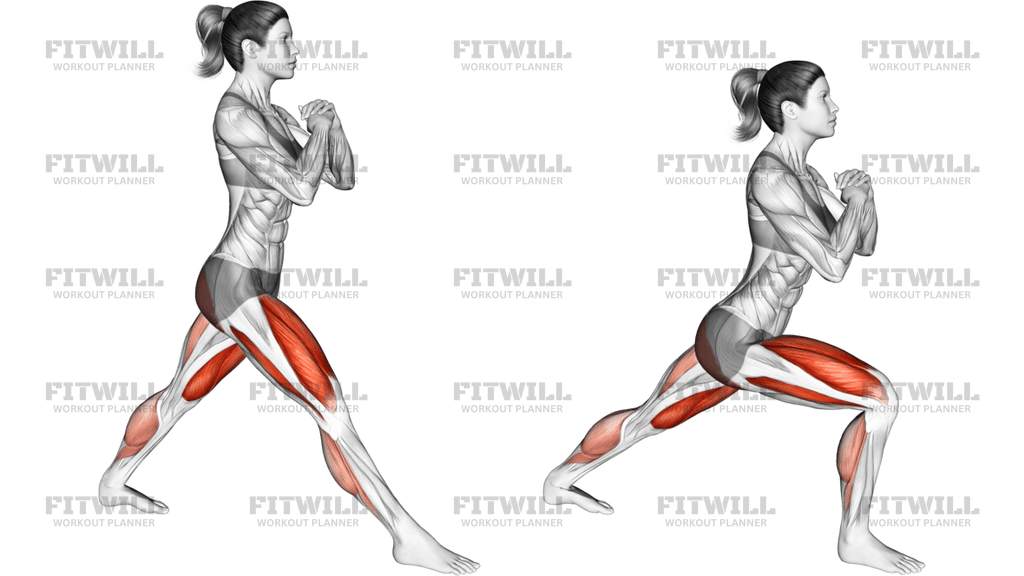
Lunge Stretch is a split-stance mobility drill that opens the front of the rear hip and quad while teaching you how to keep the pelvis and torso organized in a long lunge position. It is usually done with bodyweight and a mat, and it works well when you want a controlled stretch that still asks the legs and trunk to stabilize.
The main stretch comes from the back leg. As you sink into the lunge, the rear hip extends and the rear quadriceps lengthen, while the front leg, glutes, and deep core keep you balanced. If the torso stays tall and the ribs stay stacked over the pelvis, the stretch stays where it belongs instead of being dumped into the lower back.
Set your feet in a long staggered stance with the front foot flat and the back foot on the ball of the foot. From there, lower straight down under control until you feel a firm pull through the rear quad and hip flexor. The hands together at the chest, as shown here, help you stay organized and avoid twisting while you settle into the position.
This stretch is useful before lower-body training, after long periods of sitting, or anywhere you need a cleaner split-stance pattern. It is especially helpful if tight quads or hip flexors make lunges, running, or squatting feel restricted. The best version looks calm and deliberate, not forced.
Keep the range pain-free and avoid turning it into a backbend. A small posterior pelvic tilt, a squeezed rear-glute, and a slow exhale usually do more for the stretch than trying to sink lower. If the front knee or low back complains, shorten the stance, reduce depth, and keep the torso more upright.
[ Workout Log & Planner ]
Put your next workout in Fitwill
Keep your plan and training log ready when you are.


Instructions
- Step into a long split stance on a mat, with your front foot flat and your back foot on the ball of the foot.
- Keep the front knee stacked over the middle toes and square both hip bones toward the front.
- Bring your hands together at chest height, or rest them lightly on your hips if that keeps your torso steadier.
- Straighten the back leg long behind you and keep the rear heel lifted.
- Squeeze the rear glute and gently tuck the pelvis so the stretch starts at the front of the back hip.
- Lower your hips straight down until you feel a strong stretch through the rear quad and hip flexor.
- Keep your chest tall and your ribs stacked over your pelvis instead of arching your lower back.
- Hold the bottom position for one to three slow breaths, softening a little more on each exhale.
- Press through the front foot to come back up, then reset or switch sides before repeating.
Tips & Tricks
- Make the stance long enough that the rear knee stays behind the hip line; a short stance usually shifts the stretch into the front knee.
- A light squeeze of the rear glute deepens the stretch in the back hip without needing to sink lower.
- Keep the front heel planted. If it starts to lift, the lunge is usually too short or too deep.
- If your lower back arches, pull the ribs down and stay tall instead of leaning back for extra range.
- Holding the hands at chest height helps stop the torso from rotating and keeps the stretch cleaner.
- Use a folded mat or pad if the rear knee is close to the floor or the stance feels harsh on the knee.
- Shift a little more weight forward if you want more rear-hip stretch, but keep the front knee tracking cleanly.
- Stop short of pinching in the front hip or front knee; shorten the stance before chasing more depth.
Frequently Asked Questions
What does Lunge Stretch work most?
It mainly stretches the rear hip flexor and quad, while the front leg, glutes, and core help you stay balanced.
Should my back knee touch the floor in Lunge Stretch?
Not necessarily. This version works well with the rear knee hovering above the floor so you can keep tension on the back hip and quad.
Why do I feel Lunge Stretch in my lower back?
That usually means the ribs are flaring and the pelvis is tipping forward. Stay tall, squeeze the rear glute, and make the stance slightly shorter if needed.
How do I make Lunge Stretch hit the quad more?
Keep the torso upright and think about driving the rear knee toward the floor while the rear foot stays planted on the ball of the foot.
Is Lunge Stretch beginner-friendly?
Yes. Start with a shorter stance, a small depth, and a few calm breaths on each side before trying a deeper hold.
Do I need a mat for Lunge Stretch?
A mat is not required, but it helps if the rear knee comes close to the floor or you want a little more comfort during the hold.
Should my front knee go past my toes?
A little travel is fine if the heel stays down and the knee tracks over the toes, but if it feels jammed, shorten the stance and keep the shin more vertical.
How long should I hold each side of Lunge Stretch?
A hold of 20 to 40 seconds, or 2 to 4 slow breaths, is usually enough before switching sides.