Wrist Abduction Articulations
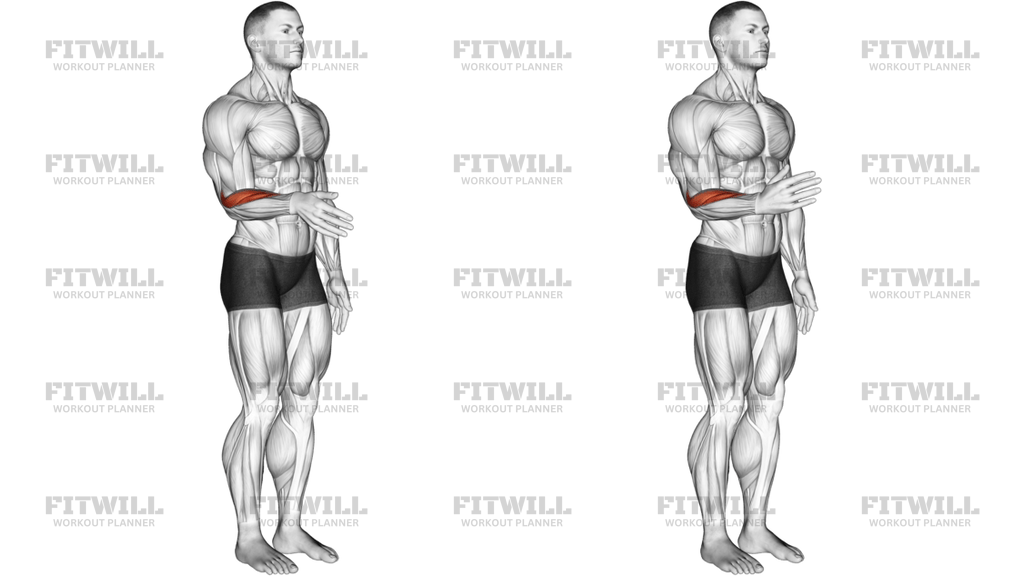
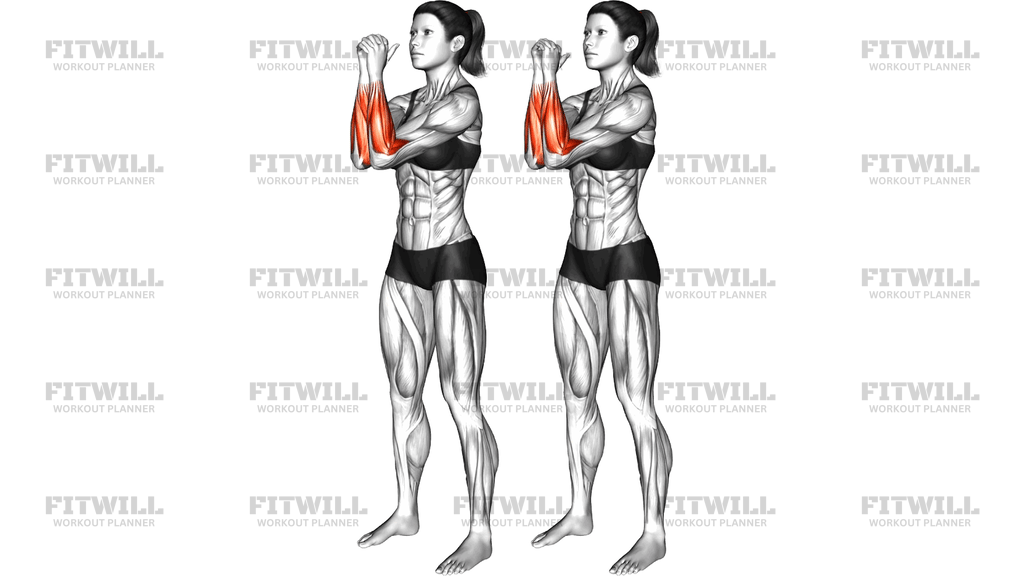
Wrist Abduction Articulations is a standing forearm-control drill that trains radial deviation, the small side-to-side motion that lifts the thumb side of the hand toward the forearm. In the image, the upper arm stays close to the torso while the forearm is held out in front and the wrist does the work. That setup matters: if the elbow drifts, the shoulder rolls, or the torso sways, the movement stops being a wrist articulation and turns into compensation.
This exercise is best understood as a precision movement for the forearm rather than a big strength lift. The goal is to keep the forearm quiet, move only through the wrist, and create a smooth arc from neutral into abduction and back again. Done well, it builds awareness of the smaller muscles around the wrist, improves control for grip-heavy training, and can be useful when you want to warm up the forearms before pulling, pressing, climbing, or racket work.
Because the range is small, the setup has to be exact. Stand tall with the ribs stacked over the pelvis, keep the shoulder relaxed, and pin the working upper arm near the side of the body. The forearm should stay in front of the torso and the hand should move without curling the fingers, rotating the forearm, or shrugging the shoulder. Light tension and slow tempo are more useful here than trying to force a larger range.
During each repetition, guide the hand toward the thumb side, pause briefly at the end of the range, then return under control to the starting position. The movement should feel smooth and repeatable, not jerky or ballistic. If the wrist pinches, the elbow floats, or the fingers start helping, the range is probably too large or the pace is too fast.
Use Wrist Abduction Articulations as an accessory drill, a warm-up for forearm work, or a low-fatigue control exercise between heavier upper-body sets. It is beginner-friendly when performed with a very small range and no momentum, and it is also useful for more advanced lifters who want cleaner wrist mechanics and better positioning during pulling and carrying work. Keep every rep deliberate enough that the forearm, wrist, and breathing stay organized from start to finish.
Fitwill
Log Workouts, Track Progress & Build Strength.
Achieve more with Fitwill: explore over 9600 exercises with images and videos, access built-in and custom workouts, perfect for both gym and home sessions, and see real results.
Start your journey. Download today!




Instructions
- Stand tall with your feet about hip-width apart and keep the ribs stacked over the pelvis.
- Bend the working elbow to about 90 degrees and pin the upper arm close to your side.
- Hold the forearm in front of your torso at roughly lower-rib height with the wrist straight and the fingers relaxed.
- Start from a neutral wrist position and keep the forearm still before the rep begins.
- Move the hand toward the thumb side by lifting the wrist into abduction.
- Pause briefly at the end of the range without letting the shoulder rise or the torso twist.
- Lower the hand back to neutral under control, keeping the elbow and forearm quiet.
- Repeat for the planned reps, then switch sides if you are training one arm at a time.
Tips & Tricks
- Keep the working elbow glued near your ribs so the motion stays in the wrist instead of the shoulder.
- Think about lifting the thumb side of the hand, not bending the fingers or rotating the forearm.
- Use a very small range at first; wrist abduction is subtle and a bigger arc usually means cheating.
- Let the hand travel smoothly rather than snapping to the top position.
- If the shoulder starts to shrug, lower the arm and reset the upper arm against the torso.
- Exhale as the hand moves into abduction and inhale as you return to neutral.
- Stop the set if you feel a sharp pinch along the pinky side of the wrist or at the base of the thumb.
- Treat this like a quality drill, so slow tempo matters more than rep count.
Frequently Asked Questions
What muscles work most during Wrist Abduction Articulations?
The radial deviators of the forearm do most of the work, especially the muscles that lift the thumb side of the hand.
Should my elbow move during the rep?
No. Keep the elbow pinned near your side so the movement stays isolated to the wrist.
Do I need any equipment for this exercise?
No. The bodyweight version is just a controlled wrist articulation and is usually done without added load.
What is the most common mistake with this movement?
People usually turn it into a shoulder or forearm rotation instead of a pure wrist-side lift and return.
Is this exercise appropriate for beginners?
Yes. Beginners can learn it easily if they keep the range small and move slowly.
Why does the image show the forearm held in front of the body?
That position makes it easier to keep the upper arm steady and isolate the wrist without extra body movement.
What should I do if the wrist feels pinchy?
Shorten the range, slow the tempo, and stop before the joint starts to pinch or twist.
Where does this fit in a workout?
It works well in a warm-up, as accessory forearm work, or as a low-fatigue control drill between upper-body sets.