Handboard Hang With 135 Degree Elbow
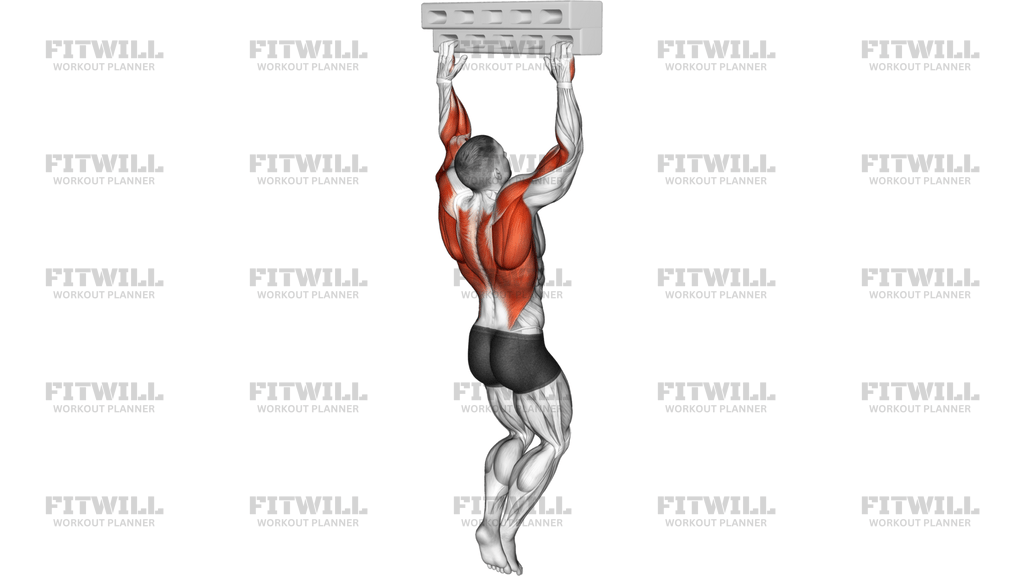
Handboard Hang With 135 Degree Elbow is a climbing-style isometric hold on a handboard or hangboard. The elbows stay bent rather than locked out, so the exercise loads the fingers, forearms, biceps, upper back, and shoulder stabilizers at the same time. It is useful for climbers and grip training because it teaches you to keep tension through the hands and shoulders while the body hangs from a small, fixed edge.
The 135-degree elbow angle changes the demand compared with a straight-arm dead hang. You still need enough shoulder engagement to keep the chest open and the scapulae controlled, but the bent arms reduce the purely passive stretch and make the hold feel more active. That makes the position useful for building grip endurance, elbow flexor strength, and the ability to maintain body tension on smaller holds.
Setup matters because a handboard hold can go from productive to sloppy very quickly. Choose a grip width and edge size you can control, then hang with the shoulders set away from the ears, the ribs down, and the pelvis quiet. The body should look organized, not swung back and forth. If you cannot keep the elbows at roughly 135 degrees without jerking, cutting loose, or shrugging hard into the neck, the hold is too hard for the current set.
Hold the position with steady breathing and a clean line from hands to torso to legs. This is not a rep-driven exercise; it is an isometric effort where the goal is to accumulate quality time under tension. Use it early in the workout when grip freshness matters, or later as a focused accessory drill if the board size and duration stay within your control. Beginners can practice it with a larger edge, lighter body angle, or partial foot assistance before progressing to a full unsupported hang.
Keep the movement safe by ending the set before the grip opens, the shoulders collapse, or the elbows lose their angle. Controlled dismounts matter as much as the hold itself because the fingers and elbows are working hard in a fixed position. Done well, this exercise builds the specific strength and positioning skill needed for climbing and other hanging progressions without turning into a painful shrugging hang.
[ Workout Log & Planner ]
Put your next workout in Fitwill
Keep your plan and training log ready when you are.


Instructions
- Stand under the handboard or hangboard and take a grip on the chosen edges with both hands, using a hold size you can control.
- Lift into the hang and bend the elbows until they sit at about 135 degrees, keeping the forearms vertical and the shoulders active.
- Set the shoulder blades gently down and back so the neck stays long and the chest does not collapse forward.
- Brace the ribs and midsection so the body stays quiet instead of swinging or twisting under the board.
- Keep the wrists firm and the fingers wrapped evenly on the holds without cranking into a painful grip position.
- Hold the position for the planned time while maintaining the elbow angle and shoulder tension.
- Breathe in a controlled rhythm without letting the torso surge upward or drop away from the board.
- Step down or release one hand at a time when the set is complete, then rest before the next hold.
Tips & Tricks
- Pick a hold edge that lets you keep the elbows near 135 degrees without collapsing into a straight-arm hang.
- If your shoulders creep toward your ears, shorten the set or use a bigger edge before the grip fails.
- Keep the forearms stacked under the hands instead of letting the wrists fold back hard.
- Use a quiet lower body: crossed ankles, bent knees, or a light hollow body position all work if they stop swinging.
- Treat the shoulders as active supports, not passive joints hanging on the capsules.
- Stop the set when the hands start slipping or the elbows rapidly open and close to save the hold.
- Breathing should stay calm and shallow enough to preserve torso tension, not forced and gasping.
- For extra shoulder comfort, begin with one foot lightly supported and build toward a full bodyweight hang.
Frequently Asked Questions
What does the handboard hang with 135 degree elbow train?
It mainly trains grip strength and forearm endurance, with help from the biceps, upper back, and shoulder stabilizers.
Is this the same as a dead hang?
No. A dead hang uses mostly straight arms, while this version keeps the elbows bent to around 135 degrees and demands more active shoulder and arm tension.
How hard should the handboard edge be?
Use an edge that lets you hold the elbow angle and shoulder position without shrugging, swinging, or losing the fingers early.
Should my shoulders be relaxed during the hang?
No. They should be active and controlled, with the shoulder blades set so you are not hanging passively into the joints.
Can beginners do this exercise?
Yes, but it is better to start with a larger hold, shorter time, or partial foot support before moving to a harder board.
What is the biggest form mistake?
The most common mistake is letting the body swing while the elbows open and the shoulders shrug toward the ears.
How long should I hold it?
Hold only as long as you can keep the hand position, elbow angle, and shoulder control clean.
What can I use if the full bodyweight hang is too hard?
Use a bigger edge, support some weight with your feet, or shorten the hold time until you can keep a clean position.