Standing Bent Knee Figure 8
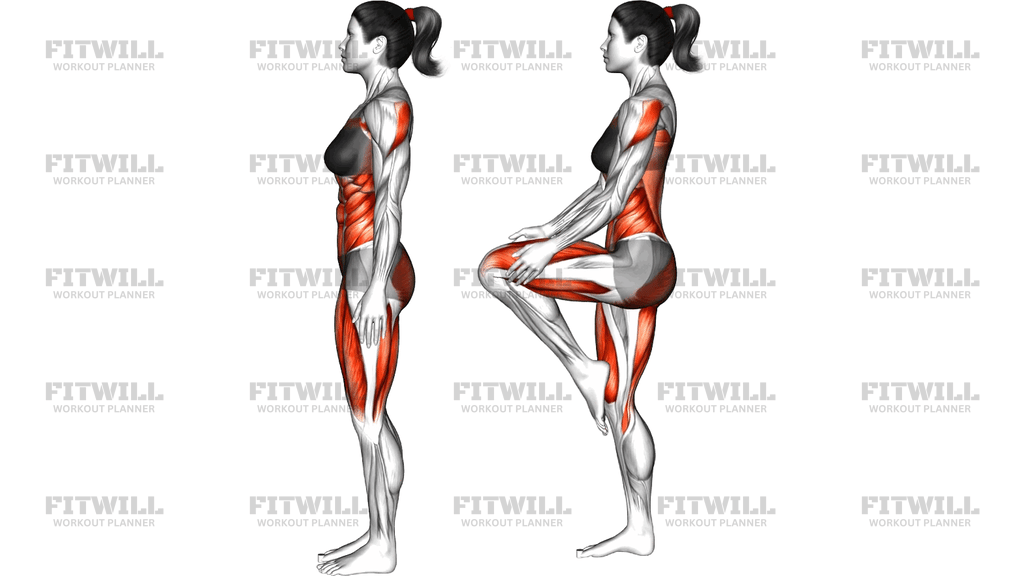
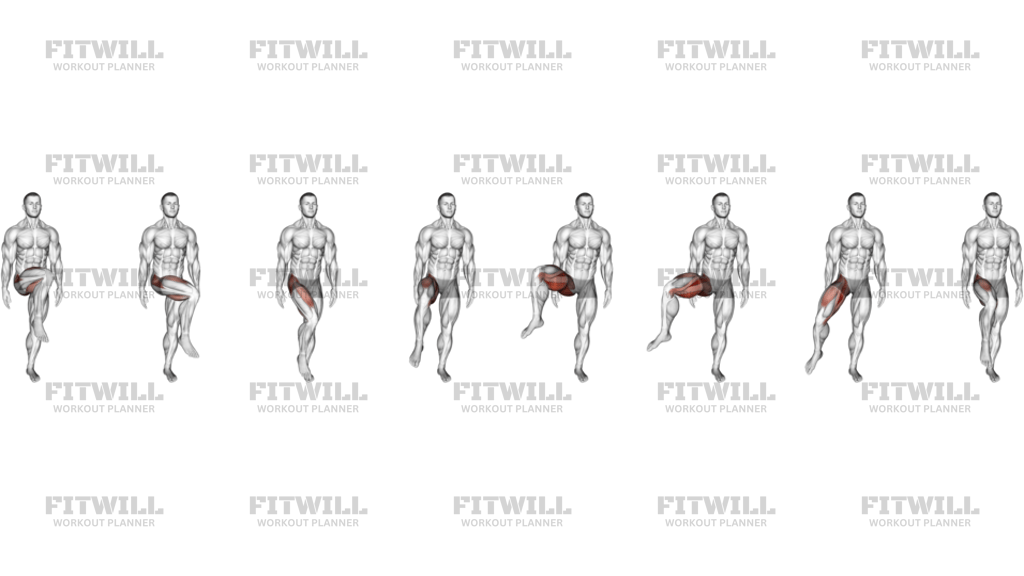
Standing Bent Knee Figure 8 is a standing hip-control and balance drill that uses body weight to train the way one leg stabilizes while the other leg moves. With one foot rooted to the floor and the opposite knee bent, the lifted leg traces a small figure-eight path in front of the body. The movement asks the hips, pelvis, and trunk to stay organized while the free leg moves through different angles of rotation.
This exercise is useful for waking up the glutes, hip rotators, adductors, and deep core muscles before lower-body training. It also reinforces coordination between the standing leg and the moving leg, which matters for lunges, cutting, stepping, running, and any drill that requires one-sided control. The goal is not a big swing or a fast rep count; it is smooth, repeatable hip motion without losing balance or letting the torso twist.
The setup matters because the drill only works well when the standing side stays tall and steady. Start with a slight bend in the support knee, ribs stacked over the pelvis, and the stance foot planted firmly through the heel, big toe, and little toe. Keep the lifted knee bent so the thigh can move around the hip socket instead of turning into a straight-leg swing. If balance is limiting the quality of the movement, use a wall or post lightly for support.
During each rep, guide the knee in a controlled figure eight and keep the movement smooth through both halves of the pattern. Let the thigh travel only as far as you can maintain a level pelvis and a quiet trunk. Breathe steadily, reverse direction with control, and lower the leg only when you can finish the last loop without rushing. This is especially effective as a warm-up, activation drill, or corrective accessory when you want hip mobility with a balance demand.
If you feel pinching in the front of the hip or see the torso swaying to create range, the movement is too large or too fast. Shrink the path, slow the transitions, and prioritize control over height. Clean repetitions should leave the hip feeling mobile and switched on, not strained.
Fitwill
Log Workouts, Track Progress & Build Strength.
Achieve more with Fitwill: explore over 9600 exercises with images and videos, access built-in and custom workouts, perfect for both gym and home sessions, and see real results.
Start your journey. Download today!




Instructions
- Stand tall on one leg with the opposite knee bent and lifted in front of your hip.
- Plant the standing foot firmly and keep a slight bend in that knee.
- Stack your ribs over your pelvis and brace lightly so the torso stays quiet.
- Use the lifted knee to trace a small figure-eight path in front of your body.
- Sweep the knee outward, then across, then back through the other side with control.
- Keep the bent leg shape consistent and move from the hip joint instead of the low back.
- Breathe smoothly and reverse direction once the first pattern is complete.
- Lower the leg under control and repeat for the planned reps or time.
Tips & Tricks
- Keep pressure through the heel, big toe, and little toe of the standing foot so the ankle does not wobble.
- Make the figure eight small enough to stay balanced; bigger is not better here.
- Let the thigh move from the hip socket instead of swinging the foot around as a loose pendulum.
- Hold the pelvis level; if one hip hikes up, shrink the path.
- Use a fingertip on a wall or rack if support lets you keep the reps cleaner.
- Keep the bent knee angle mostly fixed so the lower leg does not straighten during the loop.
- Move slowly through the direction change, because that is where control is usually lost.
- Stop before the front of the hip pinches or the torso starts rotating to fake more range.
Frequently Asked Questions
What does Standing Bent Knee Figure 8 train most?
It primarily trains hip stability, balance, and controlled hip rotation with help from the glutes and core.
Can beginners perform this exercise?
Yes. Beginners usually do best with a smaller figure-eight path and light fingertip support from a wall.
Should my torso move with the leg?
No. Keep the ribs stacked over the pelvis and let the lifted leg do the work while the trunk stays quiet.
How big should the figure-eight path be?
Small enough that you can keep your balance and hold a level pelvis. If the range forces swaying, it is too large.
Where should I feel this exercise?
You should feel work around the standing glute, outer hip, and deep core, with some effort from the moving hip as well.
Is it better to hold onto a wall or do it free-standing?
Free-standing is fine if balance is solid, but a light wall touch is a smart option when it helps you keep the motion clean.
What is the most common mistake?
Rushing the loop and twisting the torso to create fake range instead of moving the leg smoothly from the hip.
How many reps or seconds should I use?
Use controlled warm-up style sets, such as 5 to 8 slow figure-eights each way or about 20 to 40 seconds per side.