Bodyweight Forward Lunge Hinge At Hips
Bodyweight Forward Lunge Hinge At Hips is a bodyweight single-leg strength exercise that combines a forward lunge with a clear hip hinge. The forward step challenges balance and coordination, while the hinge bias shifts more demand onto the glutes and hamstrings of the front leg. It is useful when you want a simple lower-body pattern that teaches control, knee tracking, and trunk position without needing external load.
The main training effect comes from the front leg, where the gluteus maximus works to extend the hip as you stand and the hamstrings help stabilize the descent. The core and spinal erectors keep the torso from collapsing or twisting as you step through the rep. Because this is a bodyweight movement, the quality of the stance, stride length, and torso angle matter more than speed or repetition count.
The setup should feel deliberate before you move. Start tall with your feet under control, then step one foot forward far enough that you can lower into the lunge without the front knee crashing too far ahead of the toes. Keep the back heel lifted, the front foot flat, and your ribs stacked over your pelvis as you begin the descent. A slight hinge at the hips helps load the front glute while keeping the torso long instead of rounded.
Lower under control until the back knee is just above the floor, or as low as you can go while keeping the front heel down and the front knee tracking over the middle toes. The front leg should do most of the work; the rear leg is mainly there for balance and support. Pause briefly in the bottom position, then drive through the front heel and midfoot to stand back up without bouncing off the floor or pushing hard from the rear leg.
This exercise fits well in warm-ups, accessory work, conditioning circuits, or any session where you want unilateral leg work with a glute emphasis. It is also a good teaching drill for people who tend to lunge upright and dump load into the front knee. Keep the repetition smooth and repeatable, and stop the set when the torso starts to fold, the knee caves inward, or the back leg begins to take over the movement.
Fitwill
Log Workouts, Track Progress & Build Strength.
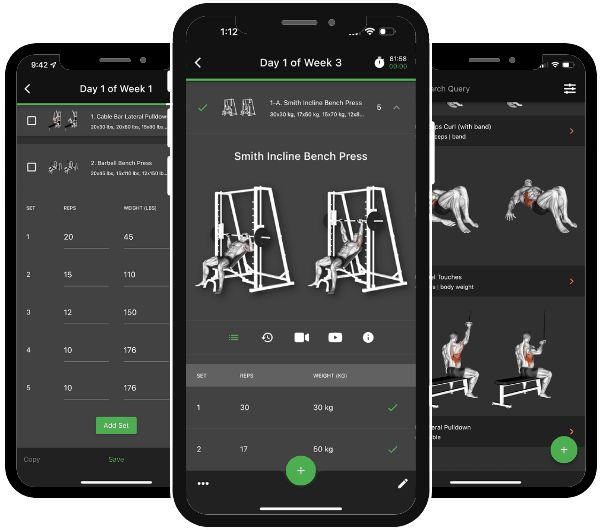
Achieve more with Fitwill: explore over 5000 exercises with images and videos, access built-in and custom workouts, perfect for both gym and home sessions, and see real results.
Start your journey. Download today!


Instructions
- Stand tall with your feet about hip-width apart and brace your torso before the first rep.
- Step one foot forward into a split stance, keeping the front foot flat and the rear heel lifted.
- Set your weight mostly over the front leg and keep your ribs stacked over your pelvis.
- Begin the descent by hinging slightly at the hips while bending both knees.
- Lower until the back knee hovers just above the floor and the front knee stays in line with the toes.
- Keep the front heel down and let the front glute control the bottom of the rep.
- Pause briefly, then exhale as you drive through the front heel and midfoot to stand back up.
- Bring the rear foot back under you or switch sides for the next repetition, keeping the motion smooth and balanced.
Tips & Tricks
- Take a longer step if your front knee shoots far forward and you lose the hip hinge.
- Keep most of your pressure on the front heel and midfoot; the rear toes should only help with balance.
- Let the hips travel back as you descend so the front glute, not just the quad, controls the bottom position.
- Keep the front knee tracking over the second or third toe instead of letting it cave inward.
- Stay tall through the chest, but do not over-arch your lower back to fake a deeper lunge.
- Use a brief pause near the floor to remove bounce and make each rep start from control.
- If balance is limiting the set, lunge next to a wall or rack and use one hand for light support.
- A slower lowering phase usually makes this bodyweight version harder and cleaner than adding extra reps.
Frequently Asked Questions
What muscles does Bodyweight Forward Lunge Hinge At Hips work most?
The front glute does most of the work, with the hamstrings, quads, core, and spinal erectors helping stabilize the movement.
Why is the hip hinge important in Bodyweight Forward Lunge Hinge At Hips?
The slight hinge shifts more tension into the glutes and hamstrings and keeps the torso from dropping straight down like a shallow squat.
Should my back knee touch the floor?
No. Stop just above the floor so you can keep tension on the front leg and avoid bouncing out of the bottom.
How far should I step forward for this lunge?
Step far enough that your front heel stays planted and you can hinge at the hips without the knee sliding too far past the toes.
Is Bodyweight Forward Lunge Hinge At Hips beginner friendly?
Yes, if you keep the range short and use a slow descent. A wall or rack can help with balance while you learn the pattern.
What is the most common mistake in this movement?
People often push off the back leg or let the front knee cave inward. The front leg should control the rep and the knee should stay aligned with the toes.
Can I use this instead of a reverse lunge?
Yes, but the forward step is usually more demanding on balance and braking strength. A reverse lunge is often easier if you want a simpler entry point.
How many reps should I do?
This bodyweight version usually works well for 6-12 controlled reps per side, depending on whether you are training strength, control, or warm-up volume.