Jump Box
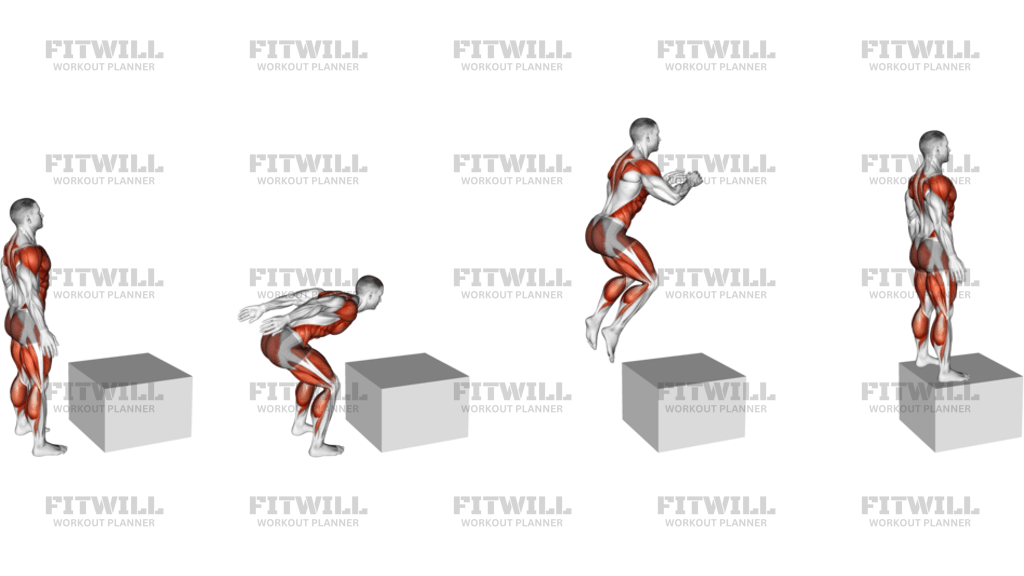
Jump Box is a box jump plyometric drill that trains lower-body power, landing control, and coordination. It looks simple, but the value comes from how cleanly you leave the floor and how softly you accept your body weight on the box. A sturdy plyo box, step, or platform is essential because the exercise is only as good as the surface you trust to land on. When the box is stable and the height is realistic, the movement becomes a clean test of takeoff speed and landing quality.
The main work comes from the glutes, quads, calves, and hamstrings, while the core helps you stay stacked as you leave the floor and settle onto the box. Jump Box is useful for athletes, warm-up potentiation, and power-focused training blocks when you want quick force production without long sets. It teaches you to explode up from the floor, then absorb force without collapsing forward or letting the knees cave inward. That combination of power and control is what makes the drill useful, not just the height of the jump.
The setup matters more than most people expect. Stand a short distance from the box with your feet about hip-width apart, chest tall, and arms ready to swing. Lower into a shallow athletic dip, load the hips, and jump both feet toward the center of the box rather than diving with your torso or trying to reach the box with your knees first. The best rep starts with a quick, confident preload instead of a long crouch.
A good landing is quiet and balanced. Land with both feet flat, knees softly bent, and your hips over your feet, then stabilize for a moment before standing tall on the box. Step down one foot at a time instead of jumping off, especially once fatigue starts to blunt your control. If you have to tuck hard, slap the top of the box, or land loudly, the box is too high for the quality you want. Clean landings should look athletic, not forced.
Because Jump Box is a plyometric movement, the goal is crisp reps, not high fatigue. Low reps with full rest usually produce better power and cleaner mechanics than chasing volume. Stop the set when your jump loses snap, your feet stop landing together, or you start hesitating before takeoff, because the best version of Jump Box is fast, accurate, and repeatable. Treated that way, it is a very effective drill for building explosive intent without turning the session into sloppy conditioning.
[ Workout Log & Planner ]
Put your next workout in Fitwill
Keep your plan and training log ready when you are.


Instructions
- Place a sturdy plyo box or platform on a flat surface and stand a short distance in front of it with your feet hip-width apart.
- Keep your chest tall, your eyes on the top of the box, and your arms relaxed at your sides before you dip.
- Lower into a shallow athletic squat by bending your hips and knees together, then load your arms behind you.
- Swing your arms forward and jump explosively off both feet toward the center of the box.
- Bring your knees up just enough to clear the edge, without folding into a deep tuck or diving your torso forward.
- Land on the box with both feet at the same time, full foot on the surface, and your knees softly bent.
- Absorb the landing quietly, hold your balance for a brief moment, and stand tall at the top without wobbling.
- Step back down one foot at a time, reset your stance, and repeat for the planned number of reps.
Tips & Tricks
- Choose a box height that lets you land with both feet flat instead of having to pull your knees hard into your chest.
- Use your arm swing to help the jump, but do not pitch your torso forward to reach the box.
- A quiet landing is the goal; if the landing sounds heavy, lower the box or shorten the set.
- Keep your knees tracking over your toes when you land so the box jump does not turn into a collapsing knee position.
- Step down every rep unless the box is very low and your program specifically calls for repeated jumps down.
- Reset your feet before each jump instead of bouncing through rushed reps with sloppy foot placement.
- Stop the set as soon as your jump height drops or you need an extra hesitation before takeoff.
- Use low reps and full recovery so the movement stays explosive rather than turning into conditioning.
Frequently Asked Questions
What muscles does Jump Box train?
Jump Box mainly trains the glutes, quads, calves, and hamstrings, with the core helping you stay stable in the air and on landing.
Is Jump Box safe for beginners?
Yes, if the box is low and the landing is controlled. Beginners should start with a height they can hit confidently with both feet and step down after every rep.
How high should the box be for Jump Box?
Use a box that lets you land flat-footed without rounding your back or tucking your knees too much. Lower is usually better for power and cleaner mechanics.
Should I jump down from the box?
No, step down one foot at a time. Jumping down adds unnecessary impact and takes away from the power-focused purpose of Jump Box.
What is the biggest mistake in Jump Box?
Trying to clear too high a box and turning the jump into a knee tuck. The rep should come from a strong takeoff and a controlled landing, not from folding in midair.
Can I use Jump Box as conditioning?
You can, but low-rep explosive work usually gives better results than long sloppy sets. Once the jumps stop looking crisp, the exercise has lost its power focus.
Do I need to fully stand up on the box?
Yes, stand tall long enough to control the top position before stepping down. That pause helps you own the landing instead of rushing into the next rep.
What should I do if I keep hitting the edge of the box?
Start a little closer, use a lower box, or clean up the arm swing so the jump travels upward instead of forward into the front edge.