Assisted Chin-Up Squat Position
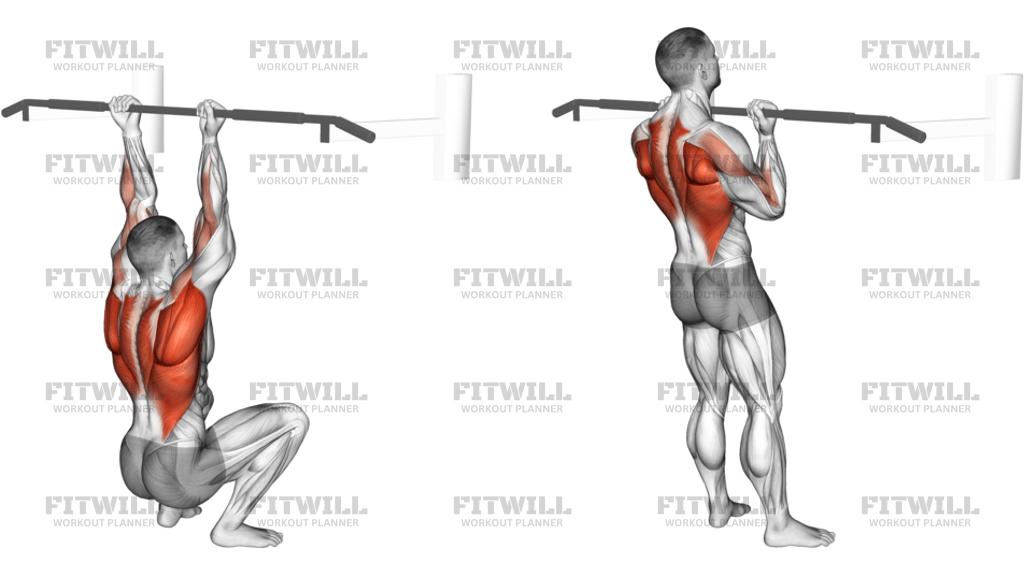
Assisted Chin-Up Squat Position is a vertical pulling exercise that blends a chin-up with a supported squat under the bar. You start beneath the handle with your knees bent and feet planted, so the legs can share part of the load while you practice the chin-up path with better control than a full dead hang.
The movement trains the lats, upper back, biceps, forearms, and the trunk muscles that stop the body from swaying. Because the squat position gives you a stable base, it is useful for beginners, for higher-rep accessory work, and for lifters rebuilding chin-up strength without jumping straight to strict bodyweight reps.
Set your hands on the bar at a comfortable shoulder-width grip, keep your chest lifted, and let the shoulders settle before you pull. The lower body should stay organized under you: heels down or evenly loaded, knees bent, torso braced, and neck long. The cleaner the base, the less the rep turns into a swing or a shrug.
From the bottom, drive your elbows down and back, pull your chest toward the bar, and keep the legs assisting just enough to make the rep smooth. Avoid yanking with the hips or letting the shoulders climb into the ears. Lower under control until your arms are straight again and you are back in the same squat setup.
Use this variation when you want chin-up practice with less absolute load, when you need controlled pulling volume, or when you want to groove a stronger top position before moving to a harder variation. Stop if the shoulders lose position, the knees shoot forward to cheat the rep, or the movement turns into a bounce instead of a pull.
[ Workout Log & Planner ]
Put your next workout in Fitwill
Keep your plan and training log ready when you are.


Instructions
- Stand under the bar and take a shoulder-width chin-up grip on the handles or bar.
- Drop into a deep squat beneath the bar with your feet flat, knees bent, chest lifted, and arms straight.
- Set your shoulders down away from your ears and brace your midsection before you start the first rep.
- Press lightly through the legs so they share the load instead of hanging passively from the shoulders.
- Begin the pull by driving your elbows down and back while keeping your torso stacked over your hips.
- Bring your chest toward the bar without kicking, swinging, or leaning into a jump.
- Pause briefly near the top with the chin over or close to the bar and the upper back tight.
- Lower slowly until your elbows straighten and you return to the same squat position under control.
- Reset your breath, recheck the squat stance, and repeat for the planned number of reps.
Tips & Tricks
- Use just enough leg drive to smooth the pull; if the lower body is doing all the work, the chin-up pattern disappears.
- Keep the feet planted so the movement stays a supported squat position instead of becoming a jump.
- Think about pulling the elbows toward the ribs to keep the lats and mid-back active.
- Stop the rep before the shoulders shrug up toward the ears at the top.
- If the bar feels too high, keep the squat deeper rather than reaching and losing position.
- Lower on a slow count to build strength through the hardest part of the descent.
- Keep the head neutral instead of jutting the chin forward to clear the bar.
- Reduce assistance or range if the knees, hips, or lower back start taking over the pull.
Frequently Asked Questions
What muscles does Assisted Chin-Up Squat Position work most?
It emphasizes the lats, upper back, biceps, and forearms, with the core and legs helping stabilize the squat under the bar.
Why use the squat position instead of a dead hang?
The bent-knee squat stance lets the legs share load and makes it easier to practice a controlled chin-up path without full bodyweight hanging from the shoulders.
Should my feet stay on the floor during each rep?
Yes. Keep the feet planted so the lower body can assist and the movement stays organized under the bar.
How wide should my grip be on the bar?
Use a comfortable shoulder-width grip or the handles built into the station. The goal is a grip that lets the elbows pull down naturally.
Do I need to fully straighten my arms at the bottom?
Yes, return to straight arms in the same squat setup so each rep starts from a repeatable position.
What is the most common mistake with this movement?
The biggest issue is turning the rep into a leg bounce or shrugging the shoulders up to force the chin over the bar.
Is this a good beginner chin-up progression?
Yes. It is a practical way to build pulling strength, bar control, and confidence before moving to stricter chin-ups.
How can I make this exercise harder?
Use less leg assistance, slow the lowering phase, and keep the torso quieter so the upper body has to do more of the work.