Dumbbell Incline Biceps Curl 70 Degrees
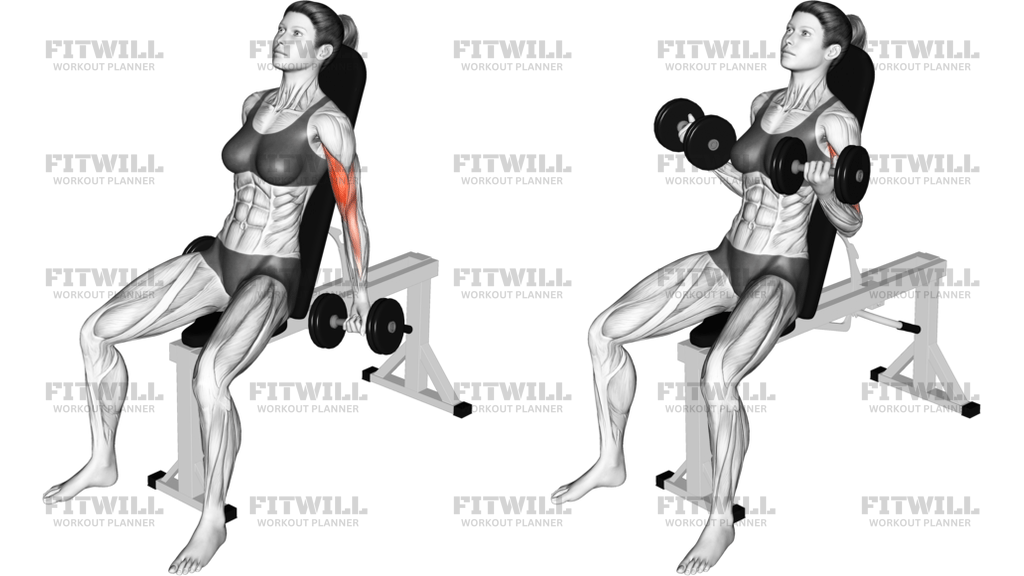
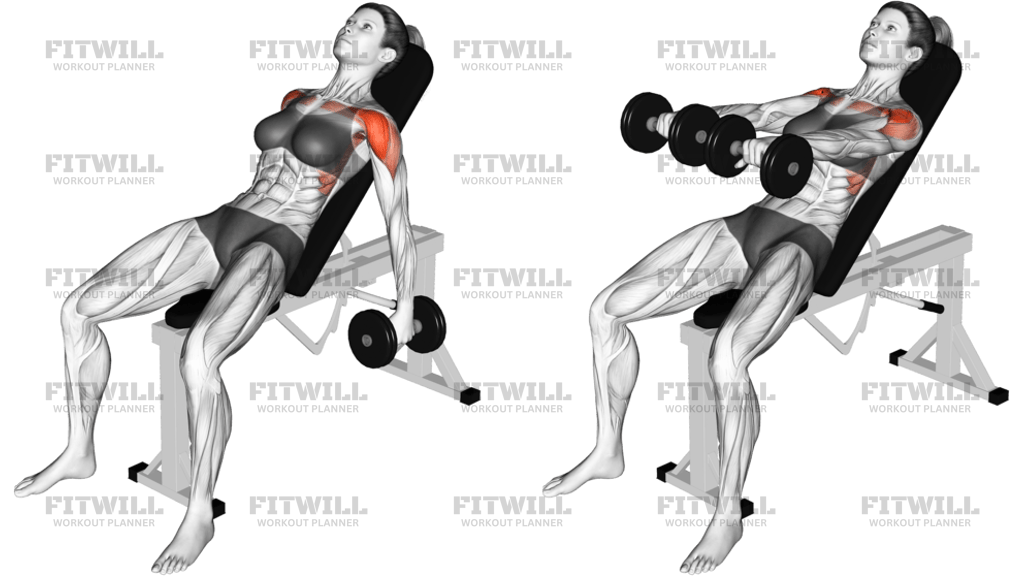
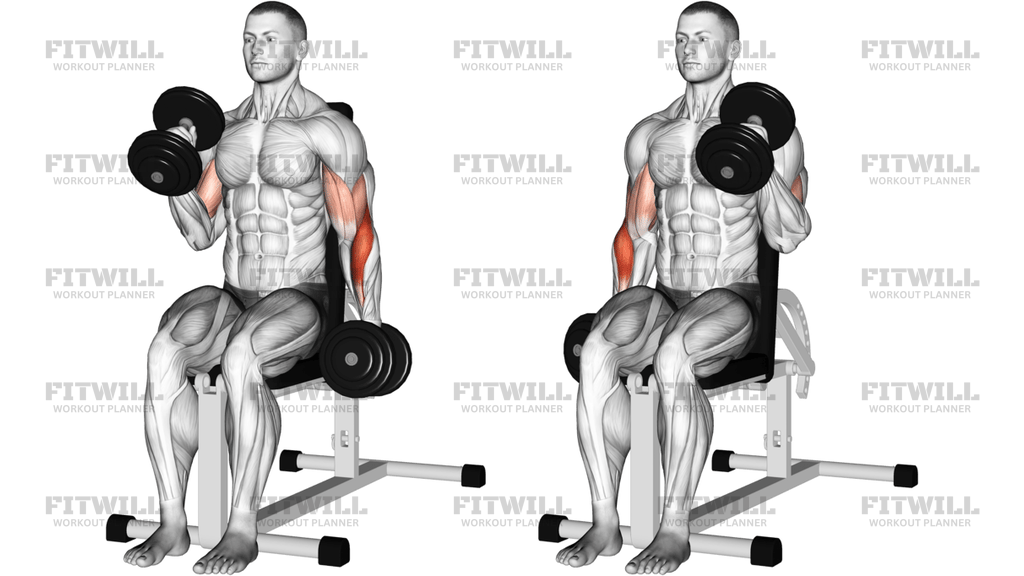
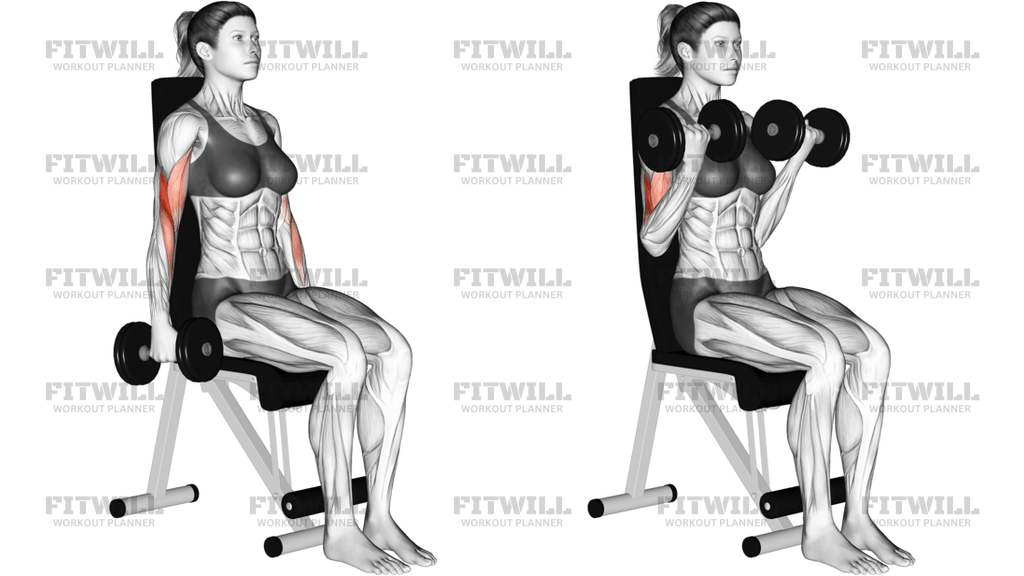
Dumbbell Incline Biceps Curl (70 Degrees) is a seated dumbbell curl performed with your back supported on an incline bench set near 70 degrees. The bench angle matters because it places the upper arm slightly behind the torso at the bottom of the rep, which changes the leverage on the biceps and makes cheating with the shoulders or trunk much harder.
This setup is especially useful when you want strict elbow flexion with a long, controlled range of motion. The main work comes from the biceps while the forearms stay active for grip and wrist control, and the upper back, rear shoulder, and core help keep the body pinned to the bench. When it is done well, the curl stays smooth from the fully stretched bottom position to the squeezed top without swinging the dumbbells.
Start by sitting back on the incline bench with the head, upper back, and hips supported. Let the dumbbells hang at your sides with the palms facing forward, wrists stacked, and elbows close to the line of the torso. Keep the chest lifted against the pad and the shoulders set down and back so the arm can curl without the shoulder rolling forward to help.
From there, curl the dumbbells in a controlled arc toward the front of the shoulders, then lower them slowly until the arms are long again and the biceps are still under tension. The working range should feel deliberate, not rushed, and the torso should stay quiet the entire time. This variation fits well in arm-focused training, bodybuilding sessions, or any workout where you want strict biceps work with less momentum than a standing curl. Use a load that lets you keep the bench contact, wrist position, and elbow path consistent for every repetition.
[ Workout Log & Planner ]
Put your next workout in Fitwill
Keep your plan and training log ready when you are.


Instructions
- Set an incline bench to about 70 degrees and sit with your head, upper back, and hips fully supported.
- Hold a dumbbell in each hand with your arms hanging straight down, palms facing forward, and wrists neutral.
- Plant both feet flat on the floor and keep your chest open against the backrest.
- Pin your upper arms in place so the shoulders do not roll forward as the set begins.
- Curl both dumbbells in a smooth arc toward the front of your shoulders.
- Squeeze the biceps briefly at the top without letting the elbows drift forward or the torso lift off the pad.
- Lower the dumbbells slowly until the arms are long again and the biceps stay loaded.
- Inhale on the way down and exhale as you curl, then reset quietly before the next rep.
Tips & Tricks
- Keep your elbows slightly behind the torso at the bottom, but do not let them drift farther back as the dumbbells rise.
- Use a bench angle near 70 degrees; a much flatter setup changes the tension and makes the movement easier to turn into a shoulder swing.
- Let the arms reach a true stretch at the bottom, but stop before the shoulders tip forward off the pad.
- Turn the palms fully up during the curl so the biceps, not the brachialis and forearms alone, do most of the work.
- Keep the wrists stacked over the forearms; bent wrists usually mean the load is too heavy.
- Lower the dumbbells for at least as long as you lift them to keep tension on the biceps through the eccentric phase.
- Do not slam the dumbbells together or rest them at the top, because that removes tension from the target muscle.
- If your shoulders start lifting or your chest leaves the bench, reduce the load and shorten the set.
Frequently Asked Questions
What does the 70-degree incline change in this curl?
The incline keeps the upper arm slightly behind the torso at the bottom, which increases the stretch on the biceps and makes the rep stricter than a standing curl.
Which part of the biceps works hardest here?
Both heads work, but the long head is usually emphasized more because the shoulder is extended on the incline bench.
How should my elbows move during the curl?
Keep them nearly fixed and let the forearms rotate around the elbow joint. If the elbows travel far forward, the set turns into a front-delt assisted curl.
Should I fully straighten my arms at the bottom?
Lower until the arms are long and the biceps are stretched, but stop before you lose shoulder contact or let the elbows hyperextend uncomfortably.
Can I do this exercise with one dumbbell at a time?
Yes. Alternating arms can help you control the top and bottom of the rep, but the bench position and elbow path should stay the same.
Why do my shoulders feel involved on this movement?
Some shoulder stabilizing is normal, but if the front of the shoulders starts driving the lift, the dumbbells are probably too heavy or the bench angle is too low.
Is this a good beginner biceps exercise?
Yes, as long as the weight is light enough to keep your back against the bench and your wrists from bending back.
How do I know if the weight is too heavy?
If you need to arch off the bench, swing the dumbbells, or shorten the lowering phase, the load is too high for this variation.