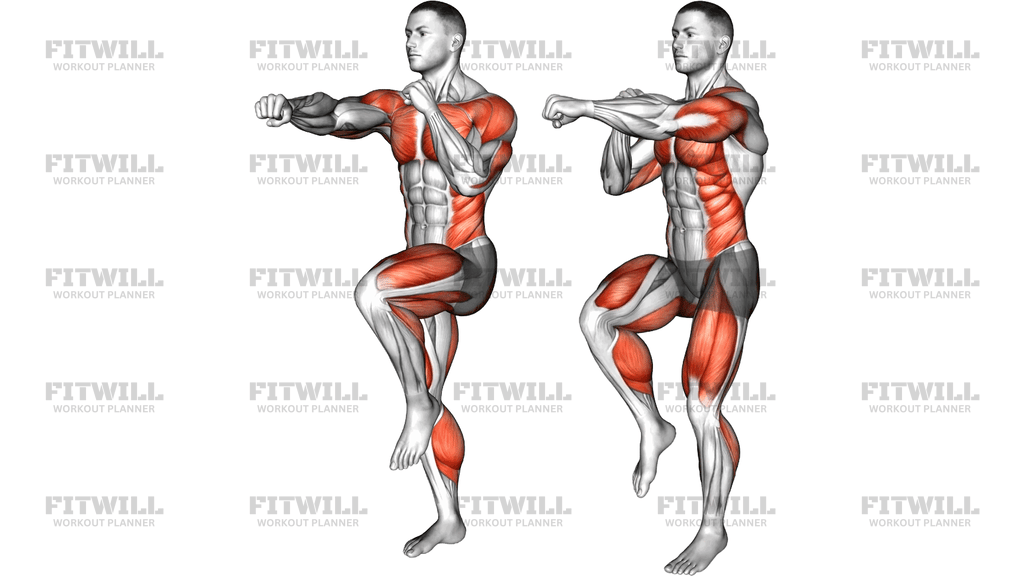
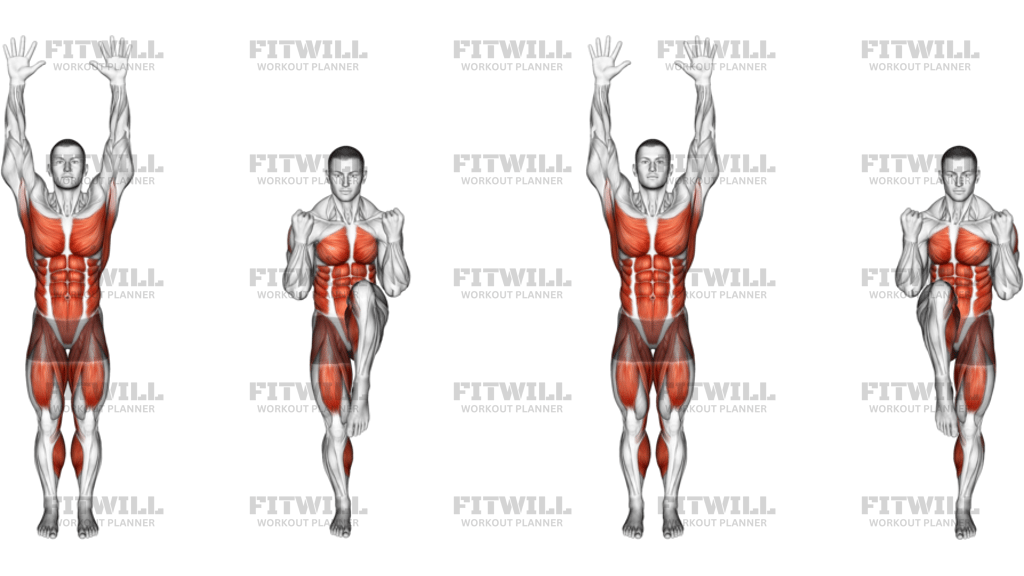
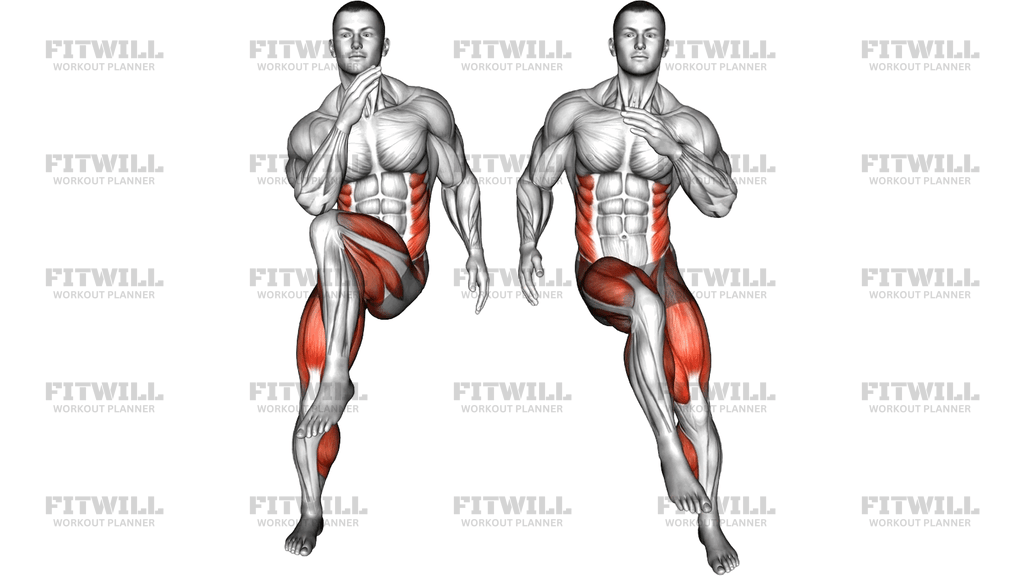
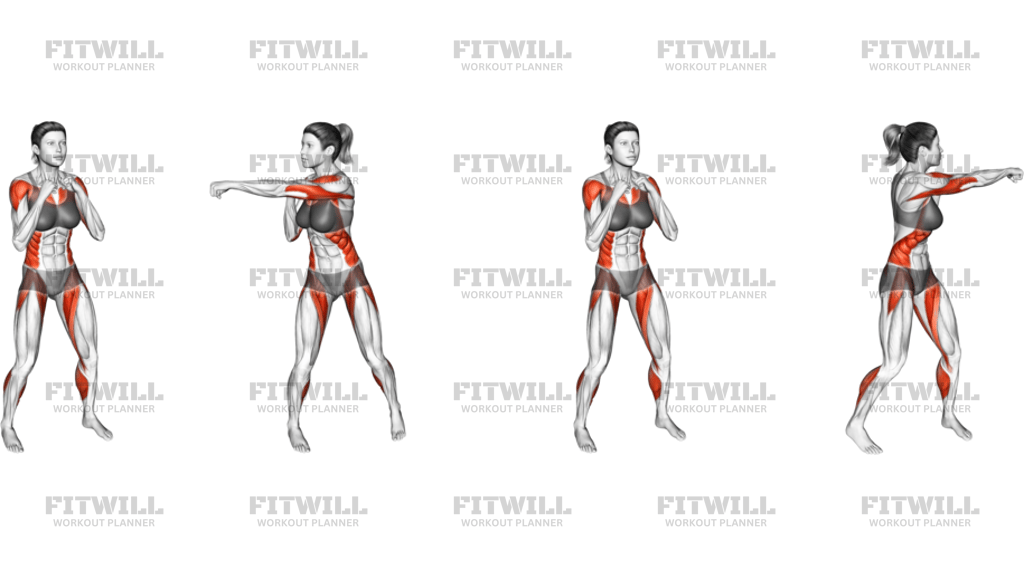
Mountain Climber Jump
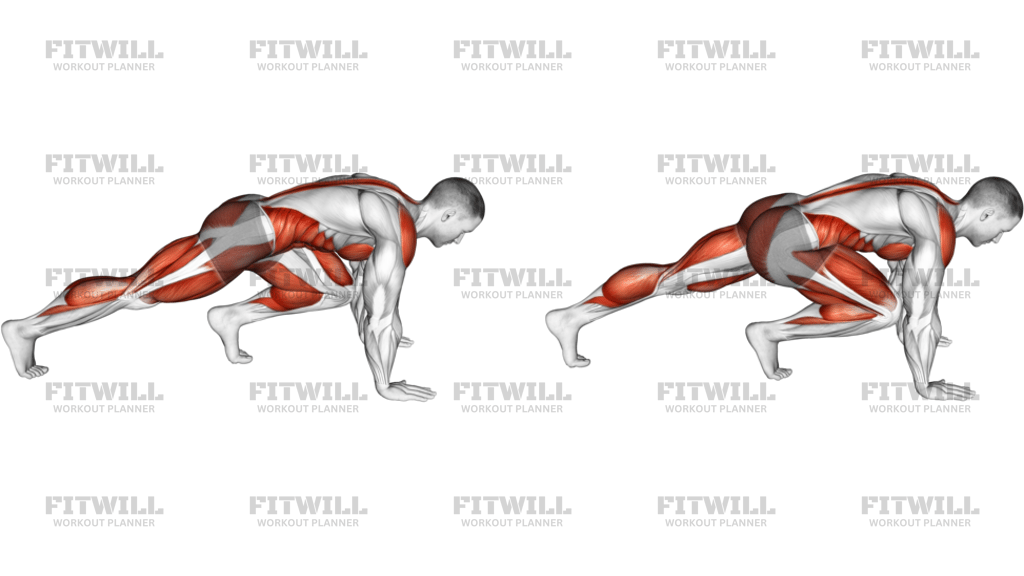
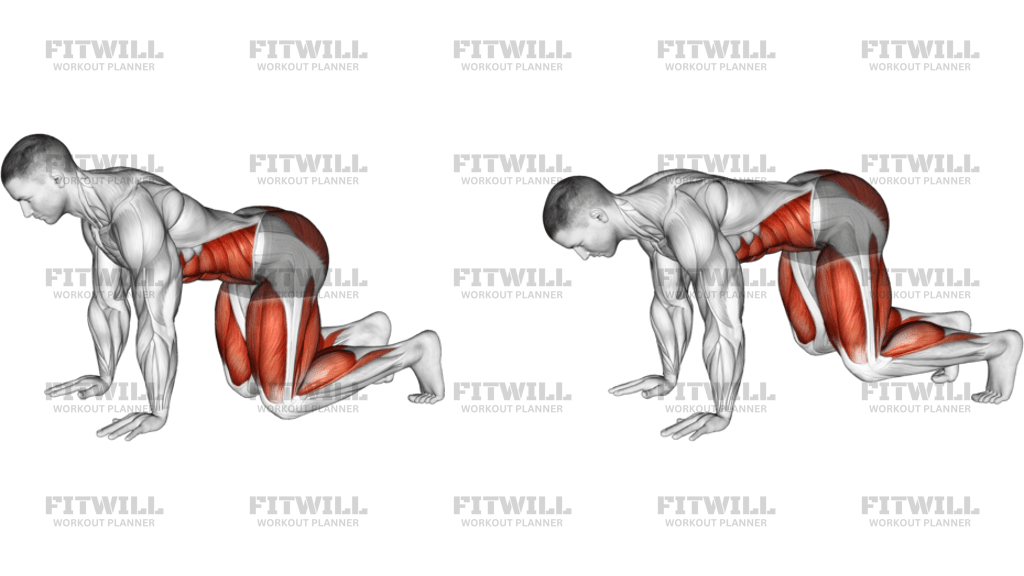
Mountain Climber Jump is a fast bodyweight plyometric built from the high-plank position. One knee drives toward the chest while the other leg reaches long behind you, then the legs switch quickly so the hips stay low and the torso stays quiet. It is a useful option when you want a conditioning drill that also asks the core, shoulders, and hip flexors to keep the body organized.
The exercise is not about sprinting the legs at any cost. The real work comes from holding a strong plank while the knees alternate under the torso without letting the lower back sag or the shoulders collapse. That makes Mountain Climber Jump a good choice for warm-ups, metabolic circuits, core-focused conditioning, or bodyweight sessions where you want repeated explosive knee drives.
The setup matters because the plank position controls the quality of every rep. Hands should be planted under the shoulders, fingers spread for a stable base, and the feet should start on the balls of the toes with the heels lifted. From there, the torso should stay braced so the hips can move just enough to let each knee travel forward without turning the drill into a bouncing pike.
A clean rep looks quick but still organized. The working knee comes in under the chest, the opposite leg stays extended and active, and then the switch happens with enough speed to feel athletic rather than sloppy. Breathing should stay rhythmic, usually a short exhale on each drive or switch, so the trunk stays tight while the legs cycle.
Because Mountain Climber Jump is repetitive and explosive, it rewards crisp mechanics more than high speed. Shorter sets with strong body position usually beat long sets that turn into shoulder shrugging, hip popping, or sloppy foot strikes. If the shoulders or wrists start to lose position, slow the cadence, reduce the range, or stop the set before form breaks down.
[ Workout Log & Planner ]
Put your next workout in Fitwill
Keep your plan and training log ready when you are.


Instructions
- Start in a high plank with your hands under your shoulders, arms straight, fingers spread, and your feet on the balls of your feet.
- Set your shoulders over your wrists, squeeze your glutes, and brace your midsection so your ribs stay down.
- Keep your hips low and your head in line with your spine before you begin the first drive.
- Drive one knee sharply toward your chest while the other leg stays long and active behind you.
- Switch legs quickly so the forward knee snaps back and the back leg comes forward into the next drive.
- Keep your hands planted and your shoulders steady instead of letting your chest rock side to side.
- Land each foot softly and keep the movement light, springy, and close to the floor.
- Breathe with a short exhale on each switch so your core stays braced through the rhythm.
- Stop the set if your hips start piking up, your lower back drops, or your hands begin to creep forward.
Tips & Tricks
- Think of the exercise as a running plank: the torso should stay far quieter than the legs.
- If your wrists get irritated, try spreading your fingers wider and shifting a little more weight into the index finger and thumb side of each hand.
- Shorter, faster knee drives are better than reaching for a huge knee-to-chest range that makes the hips bounce.
- Keep the planted foot on the ball of the toes so the switch stays springy instead of thudding into the floor.
- Do not let the shoulders drift behind the wrists, or the plank will turn into a weak, slanted push-up position.
- If your low back arches, slow the pace and tighten your glutes before each drive.
- Use a cadence you can repeat for the whole set; once the rhythm falls apart, the drill stops being plyometric and turns into flailing.
- For more core demand, keep the knees traveling under the torso rather than letting them swing out wide.
- For less impact, step the feet through one at a time instead of jumping the switch.
Frequently Asked Questions
What muscles does Mountain Climber Jump work?
It mainly trains the core, hip flexors, shoulders, and quads, with the glutes and chest helping hold the plank steady.
Is Mountain Climber Jump good for beginners?
Yes, but start slowly and keep the hips low. If the switch feels too fast, step the legs through one at a time until the plank position feels solid.
What should my hands and shoulders do in Mountain Climber Jump?
Plant your hands under your shoulders and keep the shoulders stacked over the wrists. If the shoulders drift forward, the plank gets unstable and the switch becomes harder to control.
Why does my hips keep bouncing during Mountain Climber Jump?
That usually means you are reaching for too much speed or letting the core relax. Shorten the range, brace harder, and keep the knees traveling close to the floor.
Should Mountain Climber Jump feel more like cardio or core work?
It can be both, but the quality of the plank matters most. If your torso stays stable, you will feel the core and shoulders working even when the pace gets fast.
Can I do Mountain Climber Jump on my wrists?
Yes, but only if your wrists tolerate a loaded plank. If they do not, slow the drill down, use push-up handles, or swap to a forearm plank version.
What is the difference between Mountain Climber Jump and regular mountain climbers?
Mountain Climber Jump is typically faster and more explosive, with a quicker leg switch. Regular mountain climbers are easier to control and are a better option when you want less impact.
How do I make Mountain Climber Jump harder?
Increase the pace without losing plank position, or bring the knee farther forward while keeping the hips level. You can also use longer sets only if your shoulders and trunk stay steady.