Band Assisted Floor Glute Ham Raise
Band Assisted Floor Glute Ham Raise is a kneeling posterior-chain exercise that trains the hamstrings to control your body as you lean from a tall kneel into a long forward line and then come back up. The band reduces part of the bodyweight demand, which makes this movement a useful bridge between easier hamstring drills and a full unassisted glute-ham raise. It is especially helpful for lifters and field-sport athletes who want stronger hamstrings, better knee control, and more trunk stiffness through a long range.
The setup matters because this exercise only feels right when the knees, lower legs, and band all stay organized. Kneel on a padded floor, secure the ankles or feet behind you so they cannot slide, and place the band high across the upper torso so it helps support the body on the way back up. Start tall with the ribs stacked over the pelvis, hips extended, and the neck neutral. If the band yanks you out of position before you begin to lean, the anchor or assistance level is wrong.
On each rep, lower from the knees as one long unit instead of breaking sharply at the waist. Keep the torso rigid, the glutes lightly engaged, and the descent slow enough that the hamstrings stay in control. When you can no longer hold the line, let the hands catch the floor or let the band finish the return without snapping you upright. Exhale as you come back to tall kneeling, then re-stack the body before the next rep.
Band Assisted Floor Glute Ham Raise fits well in hamstring-focused accessory work, sprint prep, or any program that needs stronger posterior-chain control without jumping straight to full bodyweight Nordics. Quality matters more than range, so shorten the descent if the low back starts to arch or the hips fold back first. A good set looks smooth and repeatable, with the hamstrings doing the braking and the band simply making the hardest part of the rep manageable.
Fitwill
Log Workouts, Track Progress & Build Strength.
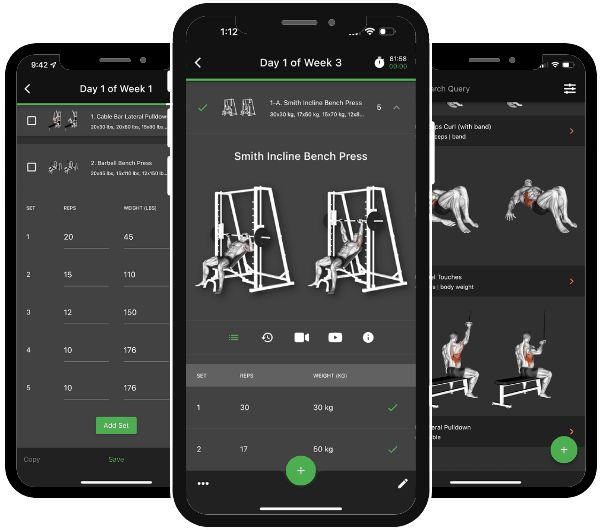
Achieve more with Fitwill: explore over 5000 exercises with images and videos, access built-in and custom workouts, perfect for both gym and home sessions, and see real results.
Start your journey. Download today!


Instructions
- Kneel on a thick pad with your shins on the floor and secure your ankles or feet behind you so they cannot slide.
- Loop the band high behind you and across your upper torso so it helps support the body from the hardest part of the rep.
- Start tall on your knees with your hips extended, ribs stacked over your pelvis, neck neutral, and hands kept out of the way.
- Take a breath, brace your trunk, and begin lowering from the knees as one long line instead of folding at the waist.
- Keep your glutes lightly squeezed and your torso rigid as you lean forward under control.
- Lower only as far as you can keep the body line long; let the hamstrings control the descent before the band takes over.
- Let your hands touch down or let the band finish the bottom of the rep, then use the band to return smoothly to tall kneeling.
- Exhale as you come back up, re-stack your ribs over your pelvis, and reset before the next repetition.
Tips & Tricks
- Use enough band assistance that the last third of the descent is challenging but not a panic drop.
- If the band rides up toward your neck, reset it higher across the upper back or chest before the set starts.
- Keep your knees on a thicker pad than you would use for a regular kneeling drill; pressure on the kneecaps will shorten the set fast.
- Think about holding a straight line from knees to head. If your hips drift back, the rep turns into a hinge instead of a glute-ham raise.
- Let the hands catch the floor only at the bottom. If they start pushing you back up, the set has turned into an arm-assisted reset.
- A slight exhale on the return helps keep the ribs from flaring and the low back from taking over.
- Shorten the descent if the band pulls you upright before the hamstrings do any real braking.
- Stop the set when the return becomes a snap instead of a controlled pull.
Frequently Asked Questions
What muscles does Band Assisted Floor Glute Ham Raise train most?
The hamstrings do most of the work, with the glutes and core helping keep the body in one line. The calves and upper back mostly stabilize the setup.
Where should the band sit on Band Assisted Floor Glute Ham Raise?
It should sit high across the upper back or upper chest so it helps support the torso line. If it drops toward the ribs, the assistance angle is usually off.
How is Band Assisted Floor Glute Ham Raise different from a Nordic curl?
A Nordic curl usually locks the ankles down and puts more of the challenge on the forward lean itself. This floor version uses the band to help you come back from the bottom, so it is a friendlier bridge toward full unassisted work.
Can beginners do Band Assisted Floor Glute Ham Raise?
Yes, if they use a strong band and a short range at first. Start with a partial lean and build control before chasing depth.
Should my hips bend during Band Assisted Floor Glute Ham Raise?
No. Keep the hips extended and let the knees and torso move together as one long line. A big hip break usually means the hamstrings stopped controlling the rep.
Can my hands help on Band Assisted Floor Glute Ham Raise?
They can catch the floor at the bottom, but they should not press you back up. If the hands are driving the return, the hamstrings are no longer getting the main stimulus.
What if the band makes Band Assisted Floor Glute Ham Raise too easy?
Reduce the help by changing the anchor angle or using a lighter band, then make the lowering phase slower. The goal is to keep tension on the hamstrings, not bounce off the band.
What can I substitute if I do not have this setup?
A partner-assisted Nordic curl, a glute-ham machine, or a stability-ball hamstring curl can train similar muscles. None of them are identical, but they can cover the same hamstring-focused slot in a program.