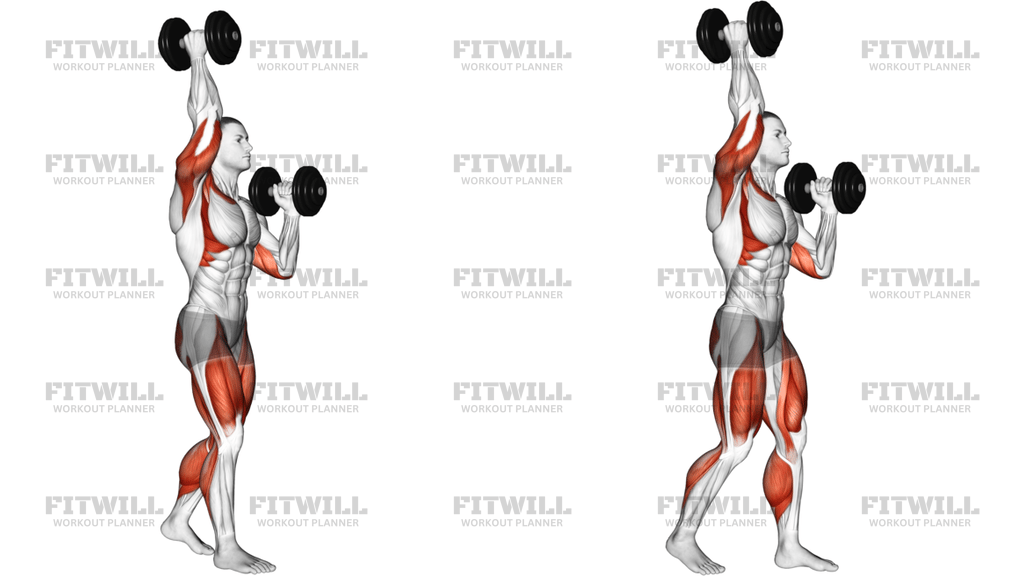
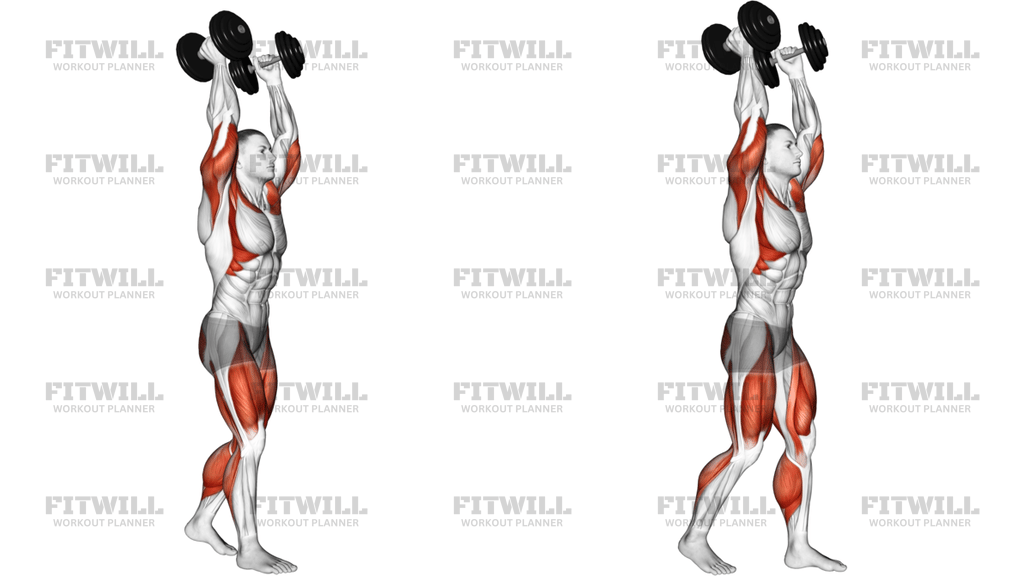
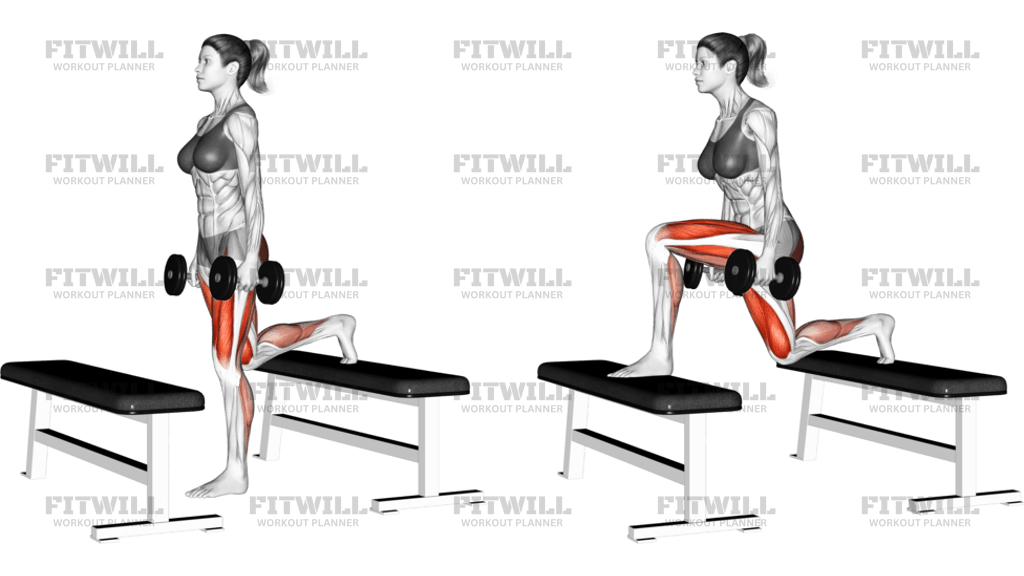
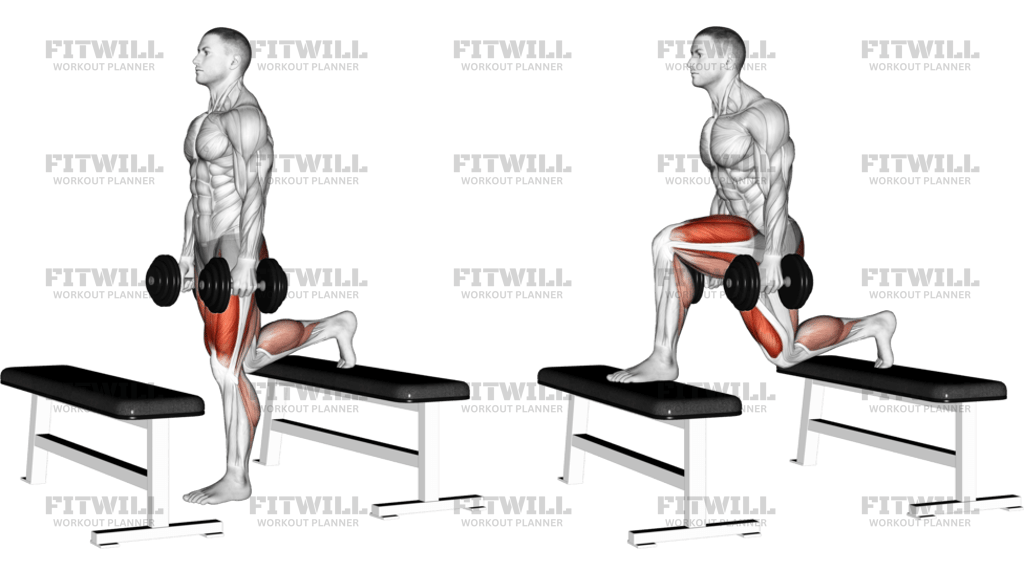
Dumbbell Step-Up Version 2
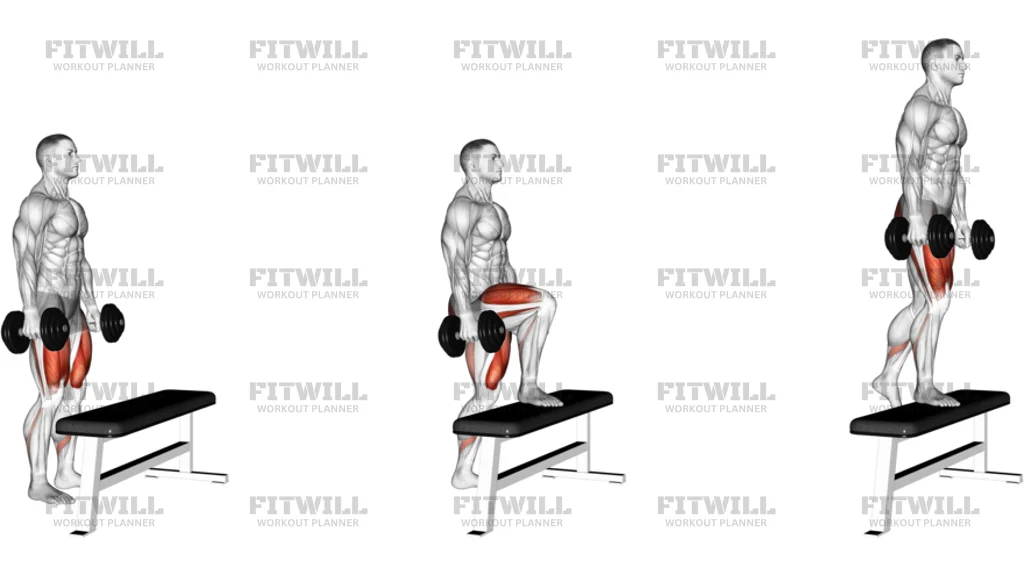
Dumbbell Step-Up Version 2 is a unilateral lower-body exercise that builds leg strength, balance, and coordination by having you climb onto a stable bench or box while holding dumbbells at your sides. It is especially useful for developing the quads and glutes one leg at a time, which helps expose side-to-side differences that bilateral lifts can hide.
The setup matters because the working foot has to own the whole rep. Place the entire foot on the platform, keep the box stable, and choose a height that lets you stand up without twisting your pelvis or bouncing off the floor leg. Holding the dumbbells by your sides keeps the load honest and makes the hip and knee do the work instead of the arms.
Start each rep by bracing lightly and driving through the heel and midfoot of the foot on the bench. Stand tall until the knee and hip of the working leg are fully extended, then bring the trailing leg up only as much as the version you are performing requires. Keep the torso quiet, the knee tracking over the toes, and the descent smooth on the way back down.
This movement carries over well to sports, hiking, stair climbing, and general strength work because it teaches you to produce force from one leg while staying balanced. It also works well as accessory training after squats or deadlifts, when you want more leg volume without loading the spine as heavily as a barbell lift.
Use a controlled pace and stop the set when the knee starts collapsing inward, the platform gets too high, or you begin pushing hard with the back leg. A clean step-up should look and feel like a strong climb, not a jump. If you need to shorten the range slightly or use lighter dumbbells, that is a better trade than turning the rep into a lunge or a hop.
[ Workout Log & Planner ]
Put your next workout in Fitwill
Keep your plan and training log ready when you are.


Instructions
- Stand facing a sturdy bench or box with a dumbbell in each hand and your arms hanging at your sides.
- Place one whole foot on the platform with the heel down and the shin roughly vertical.
- Keep your other foot on the floor and square your hips toward the bench.
- Brace your trunk, look forward, and shift your weight onto the foot on the platform.
- Drive through the heel and midfoot to stand up on the box without bouncing off the floor leg.
- Bring the trailing knee upward, or place the trailing foot on top if that is how you are performing the version.
- Stand tall at the top with the hips level and the working leg fully extended.
- Lower under control, placing the trailing foot down first if needed, then step the working foot back to the floor and reset before the next rep.
Tips & Tricks
- Pick a bench height that keeps your thigh around parallel or slightly below; if you have to hike the hip or twist to finish the rep, the step is too high.
- Keep the whole foot on the platform. Stepping up from the toes makes the ankle and knee work harder and usually reduces power.
- Let the dumbbells hang still beside your thighs. If they swing, the rep is too fast or the load is too heavy.
- Drive through the working heel and midfoot instead of bouncing off the floor leg.
- Keep the knee tracking in line with the second and third toes. If it caves inward, lower the load or lower the step height.
- Stand fully tall at the top instead of leaning over the front thigh.
- Lower slowly and avoid dropping off the box; the descent is where balance and control are tested most.
- If you feel the work mostly in your lower back, shorten the range and keep the ribs stacked over the pelvis.
Frequently Asked Questions
What muscles does Dumbbell Step-Up Version 2 work most?
It mainly trains the quads and glutes, with the hamstrings, calves, and core helping to keep the body stable on the box.
Is Dumbbell Step-Up Version 2 better for quads or glutes?
Both matter, but a more upright torso and a slightly lower box usually shift more work to the quads, while a small forward lean and strong heel drive bring the glutes in more.
How high should the bench be for Dumbbell Step-Up Version 2?
Use a platform that lets the working thigh reach about parallel or a little below. If you have to twist, bounce, or push hard off the floor leg, the bench is too tall.
Should I push off the floor leg during the step-up?
Only lightly. The leg on the bench should do most of the work; if the rear foot is launching you upward, the set has turned into a jump instead of a step-up.
Can beginners do Dumbbell Step-Up Version 2?
Yes. Start with bodyweight or light dumbbells and a low, stable step so you can learn the balance and foot pressure before adding load.
Should I bring my trailing knee up at the top?
If that is the version you are doing, yes. Keep the hips level and avoid leaning back; the knee drive should come after you are already standing tall on the box.
What is the most common mistake in Dumbbell Step-Up Version 2?
The most common problem is letting the working knee cave inward or using the back leg to spring up. Both usually mean the platform is too high or the load is too heavy.
Can I use a box instead of a bench?
Yes. Any stable platform works as long as it does not wobble and gives you full foot contact on the top surface.