Dumbbell Seated External Shoulder Rotation
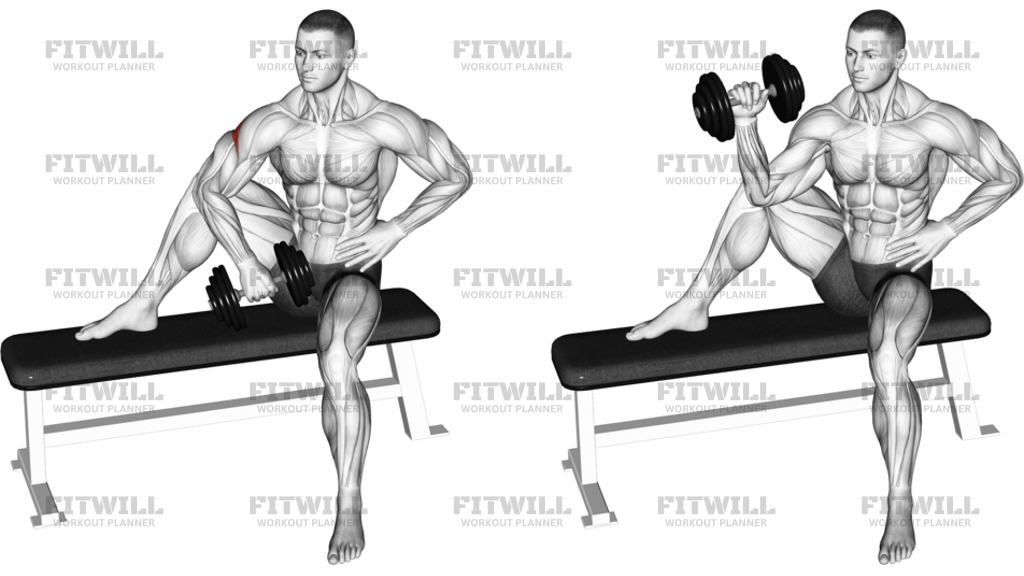
Dumbbell Seated External Shoulder Rotation is a one-arm shoulder isolation drill used to train external rotation control, shoulder stability, and clean joint positioning. The setup matters more than the load here: the upper arm is braced against the inside of the raised thigh, the elbow stays bent at about 90 degrees, and the dumbbell starts across the front of the body before you rotate the forearm outward. That fixed upper-arm position keeps the movement honest and shifts the work to the small stabilizers around the shoulder instead of letting the torso help.
This exercise is usually used for warmups, prehab-style work, or accessory training when you want the shoulder to move smoothly under light tension. It is not a lift for chasing heavy numbers. The goal is to keep the humerus still while the forearm rotates away from the midline, so the shoulder can learn to control external rotation without shrugging, twisting, or sliding the elbow off the thigh. Done well, it can help improve the quality of pressing, overhead work, and any movement that asks the shoulder to stay centered.
The seated position gives you a stable base and makes cheating obvious. You sit sideways on the bench, plant the free foot for balance, and use the raised thigh as a brace for the working upper arm. From there, the wrist and forearm move in a smooth arc while the elbow stays pinned. That short lever makes the exercise feel lighter than it looks, but it also exposes loss of control quickly, which is why a small dumbbell is usually the right choice.
Because the range is small, quality cues matter. The dumbbell should rotate upward only as far as you can control without the shoulder rolling forward or the elbow drifting away from the thigh. At the top, the hand should feel supported rather than forced. On the way down, resist the weight slowly and keep the motion clean all the way back to the start. Breathing should stay calm and rhythmic so the trunk does not tense up and steal the work.
Use this movement when you want precise shoulder work, not fatigue from the whole upper body. It is especially useful if your program includes pressing volume, shoulder health work, or a general need to reinforce scapular and rotator-cuff control. If the setup feels awkward, lighten the dumbbell and reduce the range until you can repeat the same path every rep. The exercise should feel controlled, narrow, and deliberate from start to finish.
Fitwill
Log Workouts, Track Progress & Build Strength.
Achieve more with Fitwill: explore over 9600 exercises with images and videos, access built-in and custom workouts, perfect for both gym and home sessions, and see real results.
Start your journey. Download today!




Instructions
- Sit sideways on a flat bench and brace the working upper arm against the inside of the raised thigh.
- Hold a dumbbell in the working hand with the elbow bent about 90 degrees and the forearm angled across the front of your body.
- Plant the free foot firmly and keep your chest tall without leaning away from the braced arm.
- Set the shoulder down and back just enough to keep the upper arm still before you start rotating.
- Rotate the forearm outward in a smooth arc until you reach your controlled end range.
- Pause briefly at the top without letting the elbow lift off the thigh or the shoulder roll forward.
- Lower the dumbbell slowly back across the body along the same path.
- Keep the wrist neutral and breathe out as you rotate up, then inhale on the return.
- Repeat for the planned reps, stopping if the torso starts twisting or the elbow loses its brace.
Tips & Tricks
- Choose a very light dumbbell first; this movement is about control, not grinding strength.
- Keep the elbow pressed into the thigh the whole time so the shoulder rotates instead of the upper arm swinging.
- If the wrist bends back or forward, the dumbbell gets harder to control and the shoulder loses leverage.
- Rotate only through the range you can own without the chest opening or the torso leaning away from the bench.
- A slow lowering phase matters more than the lift because it teaches the shoulder to resist internal rotation.
- If you feel the trap taking over, reset your shoulder away from your ear before the next rep.
- Do not let the dumbbell drift forward in front of the knee; keep the arc tight and close to the thigh.
- Use this as a crisp accessory set, and stop the set when the elbow starts sliding or the rep path changes.
Frequently Asked Questions
What does Dumbbell Seated External Shoulder Rotation train?
It trains shoulder external rotation control and the smaller stabilizers that keep the joint centered during pressing and overhead work.
Why is the upper arm braced against the thigh?
The thigh brace keeps the upper arm still so the movement comes from the shoulder rotation instead of the whole arm swinging.
Should the elbow move while I rotate the dumbbell?
No. The elbow should stay pinned to the thigh, and only the forearm and hand should travel through the arc.
How heavy should the dumbbell be?
Light enough that you can keep the same elbow position and a smooth path on every rep, usually much lighter than people expect.
How high should I rotate the hand?
Rotate only until you feel a clean end range without the shoulder rolling forward or the torso shifting to help.
Can I do both arms one after the other?
Yes. Most people work one side at a time so the setup stays strict and each shoulder gets the same control work.
Is this a good warmup before pressing?
Yes. It works well before benching, overhead pressing, or any session where you want the shoulder to feel stable and centered.
What is the most common mistake with this exercise?
Letting the elbow leave the thigh or using body twist to finish the rep instead of keeping the shoulder rotation clean.