Elevated Standing Calf Raise
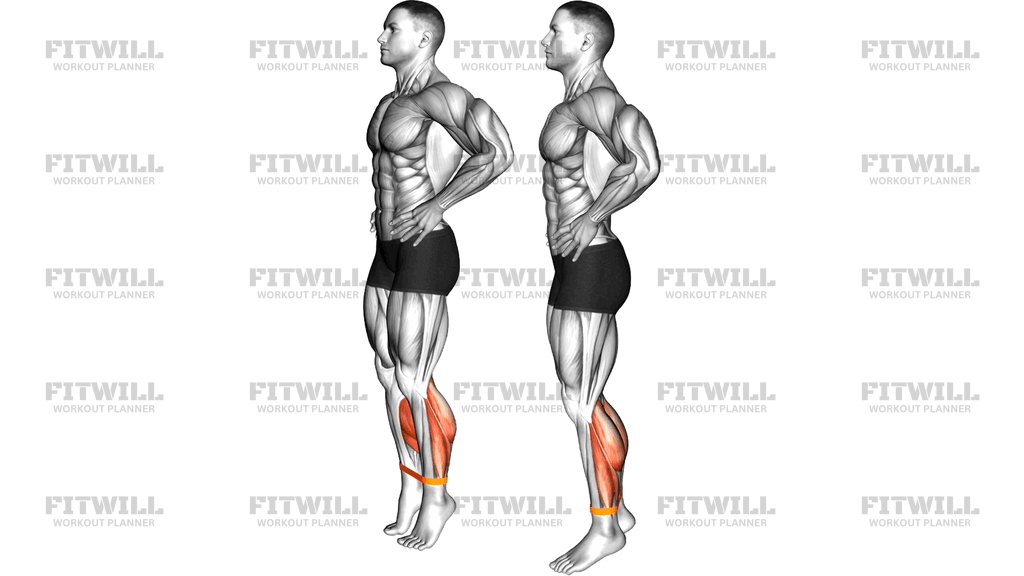
Elevated Standing Calf Raise is a bodyweight calf exercise performed on a raised edge so the heels can travel below the forefoot and the calves can work through a fuller range. It is a simple setup, but the step height, foot placement, and balance point matter a lot because they determine how much stretch and control you get from each rep. The exercise is most useful when you want direct calf work without a machine, cable, or external load.
This movement trains the calf muscles to produce force through ankle plantar flexion while the rest of the body stays quiet and upright. The straight-knee position keeps the emphasis on the gastrocnemius, while the ankle itself still has to stabilize under load through the full range. Because the set is bodyweight-based, it is easy to scale from beginner-friendly balance practice to harder single-leg or weighted variations.
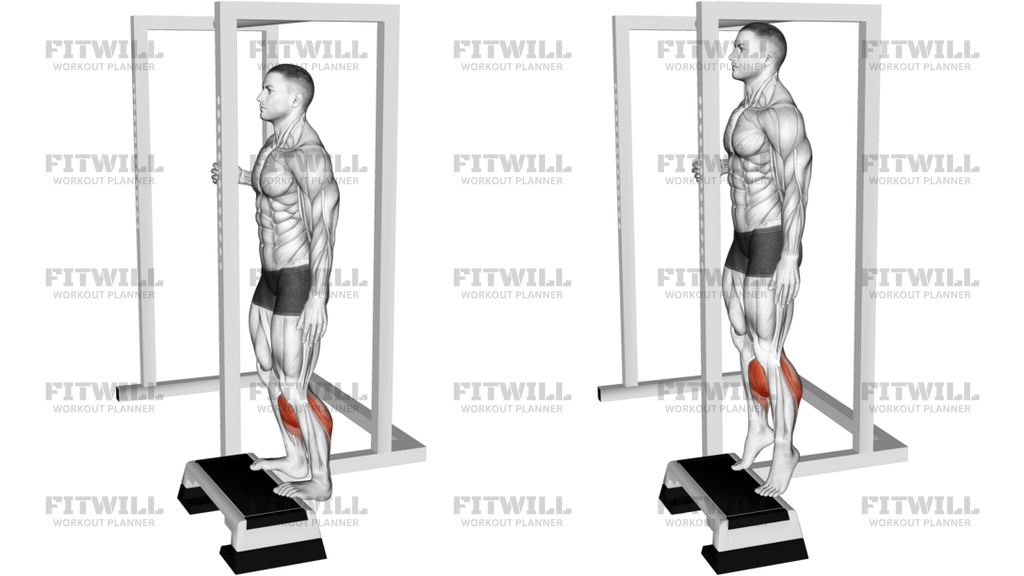
The best version of Elevated Standing Calf Raise starts with the balls of both feet on a sturdy step, heels hanging free, and one hand lightly on a rail, rack, or upright for balance. Keep your weight over the big toe and second toe instead of rolling to the outside edge of the foot, and keep the knees softly unlocked rather than bent into a squat pattern. That setup gives you a stable base while still letting the calves do the work.
From there, lower the heels under control until you feel a strong but manageable stretch through the lower leg, then press through the forefoot to rise as high as possible without leaning forward or bouncing. A short pause at the top helps you own the finish of the rep, and a slow descent keeps tension on the calves instead of letting momentum carry you through. Breathing should stay quiet and regular so the torso does not start driving the movement.
Elevated Standing Calf Raise works well as accessory work after lower-body training, as part of ankle and calf prep, or as a focused finisher when you want clean, repeatable reps. It is especially useful for runners, jumpers, and lifters who need stronger lower legs and better ankle control. Keep the range pain-free, step off the platform carefully after the set, and back off the depth if the Achilles or foot feels irritated rather than stretched.
[ Workout Log & Planner ]
Put your next workout in Fitwill
Keep your plan and training log ready when you are.


Instructions
- Stand on a sturdy step with the balls of both feet on the edge and your heels hanging free, and hold a rail or upright lightly for balance.
- Set your feet about hip-width apart, keep pressure over the big toe and second toe, and let your knees stay soft but not bent into a squat.
- Brace your torso, keep your ribs stacked over your pelvis, and let the support hand stay light instead of pulling your body upward.
- Lower your heels slowly until you feel a controlled stretch through the calves, stopping before the ankles feel pinched or unstable.
- Press through the forefoot and raise your heels as high as possible without rocking forward or letting the arches collapse.
- Squeeze at the top for a brief pause so the ankles finish fully extended and the calves do the last part of the work.
- Lower back down under control for a longer eccentric, keeping steady tension instead of dropping quickly.
- Breathe out as you rise and breathe in as you lower, then step off the platform carefully when the set is done.
Tips & Tricks
- Use a step high enough that your heels can drop below the forefoot, but not so high that you lose balance.
- Keep the support hand light; if you hang on the rail, the calves stop doing most of the work.
- Think about driving through the big toe and second toe instead of rolling onto the outside edge of the foot.
- A slower lowering phase usually gives more calf stimulus than trying to force a bigger top-end lift.
- Pause at the bottom only if the Achilles feels comfortable; do not bounce out of the stretched position.
- Keep the knees nearly straight to keep the emphasis on the gastrocnemius rather than turning it into a bent-knee calf raise.
- If your heels drift inward or outward, shorten the range and reset the foot tripod before the next rep.
- Add load only after every rep reaches the same heel height and the torso stays tall.
Frequently Asked Questions
What muscles does Elevated Standing Calf Raise work most?
It mainly trains the calf muscles, especially the gastrocnemius, with the soleus helping stabilize the ankle through the range.
Why do I need to stand on a step for Elevated Standing Calf Raise?
The raised edge lets your heels drop below the forefoot, which increases the stretch and gives the calves a longer working range than a flat-floor raise.
How should my feet sit on the step?
Place only the balls of your feet on the edge, keep the heel free, and keep pressure centered over the big toe and second toe so the ankle does not roll outward.
Should my knees be locked out?
Keep them softly straight, not aggressively locked. A tiny bend is fine for comfort, but too much knee flexion turns the movement into a different calf pattern.
Can beginners do Elevated Standing Calf Raise safely?
Yes. Beginners should use bodyweight only, keep one hand on a rail or rack for balance, and use a smaller heel drop until the ankles feel comfortable.
Why do I feel it in my feet instead of my calves?
Usually the weight has drifted too far to the outside edge of the foot or the arch has collapsed. Reset the foot tripod and keep the support hand light.
Can I do this one leg at a time?
Yes, the single-leg version is a harder progression and works well if you can keep the pelvis level and avoid twisting through the ankle.
What should I do if my Achilles feels tight?
Reduce the depth of the heel drop and keep the reps smooth. If the stretch turns into a sharp sensation, use a flatter range or stop the set.