Push-Up Jack
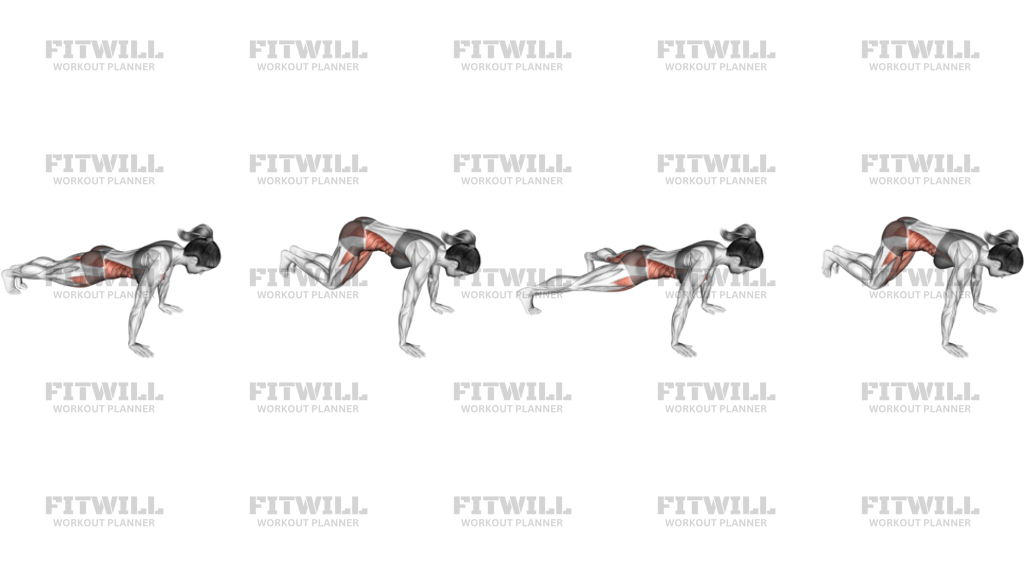
Push-Up Jack is a bodyweight push-up variation that adds jack-style footwork to the pressing pattern. From a high plank, the hands stay planted while the feet move in and out as you work through each rep, so the exercise feels like a mix of a push-up and a jumping-jack rhythm. That combination makes it more demanding than a standard push-up because the upper body has to press while the trunk and hips stay steady through repeated lower-body motion.
The main pressing muscles are the chest, triceps, and front shoulders, but the jack action also challenges the core, glutes, and the muscles around the hips to stop the body from twisting or sagging as the feet change position. The exercise is useful when you want strength-endurance, coordination, and a higher heart-rate bodyweight drill in the same movement. It is not just about doing a push-up faster; it is about keeping the plank organized while the legs move cleanly.
Setup matters because the feet, hands, and torso all have to line up before the first rep starts. Place the hands under or slightly wider than the shoulders, spread the fingers, and create a long plank from head to heels. Keep the ribs down and the glutes lightly tight so the lower back does not take over when the feet jump apart or back together. A smaller, quieter foot hop is usually better than a big leap that throws the hips out of position.
On each rep, lower with control, keep the elbows angled back rather than flaring hard, and use a smooth jack rhythm with the feet. The body should stay level as the chest approaches the floor and presses away again. Breathing should stay steady instead of being held for multiple reps. This exercise works well in conditioning circuits, upper-body finishers, warmups that need more heat, or athletic bodyweight sessions where coordination and trunk control matter.
The biggest form leaks are a sagging midsection, excessive bouncing through the hips, and noisy foot landings that show the movement is getting too aggressive. If the shoulders, wrists, or low back start to complain, reduce the speed, shorten the range, or use a raised surface before pushing intensity. The best version of the exercise looks crisp and repeatable from the first rep to the last, with the push-up and the jack footwork staying synchronized instead of turning into separate actions.
Fitwill
Log Workouts, Track Progress & Build Strength.
Achieve more with Fitwill: explore over 9600 exercises with images and videos, access built-in and custom workouts, perfect for both gym and home sessions, and see real results.
Start your journey. Download today!




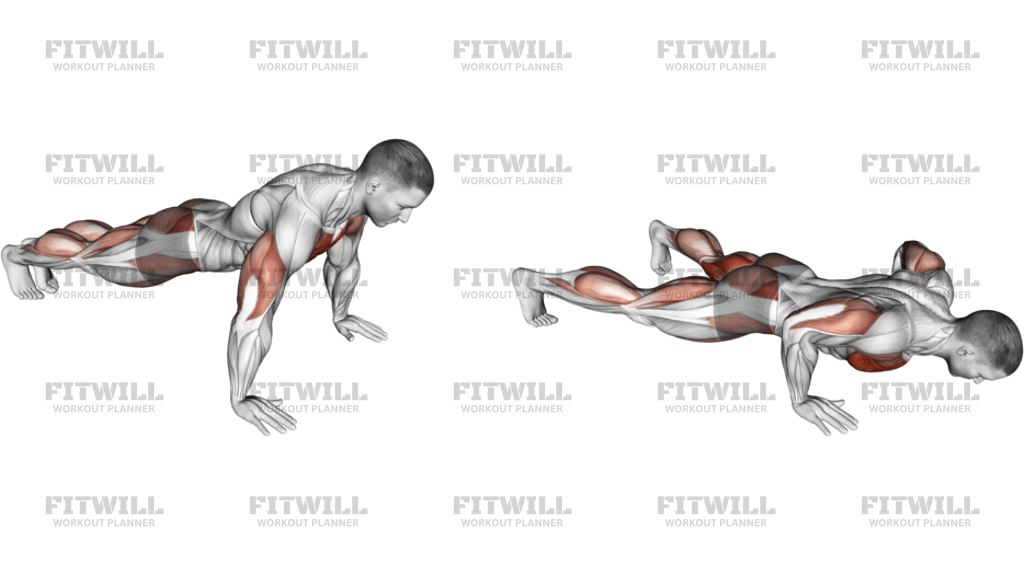
Instructions
- Start in a high plank with your hands under or slightly wider than your shoulders, fingers spread, feet together, and your body in one straight line from head to heels.
- Brace your abs and squeeze your glutes so your ribs stay stacked over your pelvis before the first rep begins.
- Lower your chest toward the floor with your elbows angled back at about 30 to 45 degrees from your torso.
- As you descend, jump or step the feet out into a wider jack stance without letting your hips twist.
- Press the floor away and return to a strong plank while keeping the chest, shoulders, and hips moving together.
- Bring the feet back in as you finish the push-up so the next rep starts from a clean plank position.
- Land softly through the balls of the feet and keep the neck long instead of craning forward.
- Continue for the planned reps while keeping the footwork, push-up depth, and breathing rhythm consistent.
Tips & Tricks
- Keep the hand position stable and let the feet do the traveling; if the hands slide, the plank is no longer organized.
- Use a smaller jack width if the hips start rocking side to side or the low back arches as the feet move.
- Quiet foot landings are a good sign that you are controlling the impact instead of bouncing through the rep.
- Stop the descent a little higher if your shoulders lose position before the push-up is complete.
- Keep the elbows tracking back rather than flaring hard out to the sides, especially near the bottom of the push-up.
- If the wrists are sensitive, place the hands on dumbbells, handles, or an elevated surface instead of forcing the floor version.
- Exhale as you press away from the floor and bring the feet back in, then inhale as you lower into the next rep.
- Choose a tempo you can repeat cleanly; once the footwork becomes sloppy, the conditioning benefit drops quickly.
Frequently Asked Questions
What muscles does Push-Up Jack work?
It mainly trains the chest, triceps, and front shoulders, while the core, glutes, and hip muscles work hard to keep the plank steady during the jack footwork.
Is Push-Up Jack harder than a normal push-up?
Usually yes, because you have to press while also controlling the feet moving in and out. The extra coordination and trunk demand make it feel more taxing.
How should my feet move during the rep?
Keep the jack pattern smooth and controlled. The feet should land softly and return to a stable plank without making the hips bounce or rotate.
Can beginners do Push-Up Jack?
Yes, but it is smarter to start with a smaller hop, an incline surface, or a step-out version before trying to move fast on the floor.
What is the biggest form mistake?
Letting the hips sway or the lower back sag when the feet change position is the most common problem. The torso should stay as level as possible.
Should I lower all the way to the floor?
Only if you can keep the plank and jack rhythm intact. A slightly shorter range is better than losing shoulder position or collapsing through the midsection.
Where does this exercise fit in a workout?
It works well in a conditioning circuit, upper-body finisher, or athletic bodyweight session where you want strength-endurance and a higher heart rate.
What should I do if my wrists or shoulders get irritated?
Reduce the speed, raise the hands on a bench, or switch to a less aggressive variation. The rep should stay smooth and pain-free.