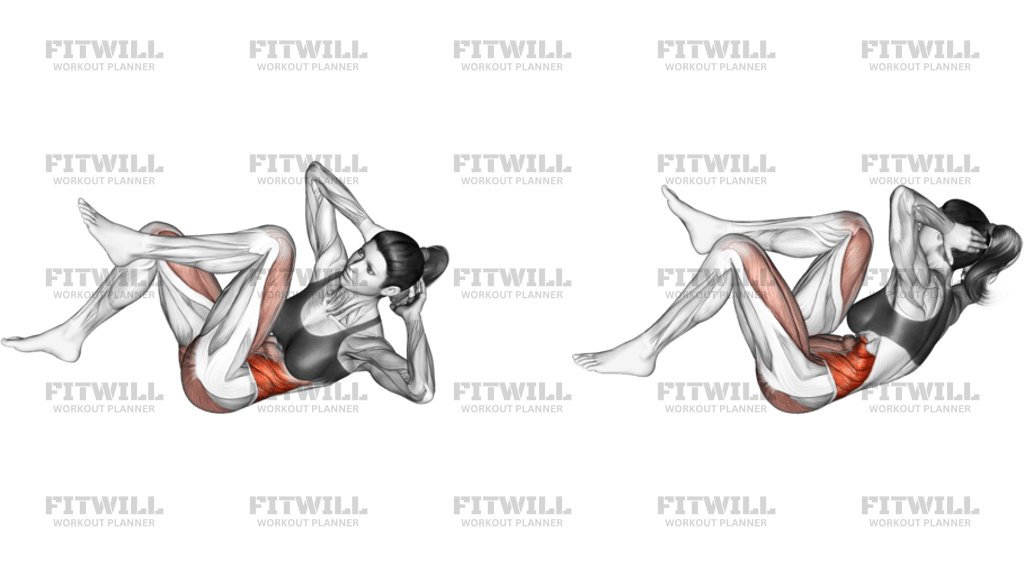
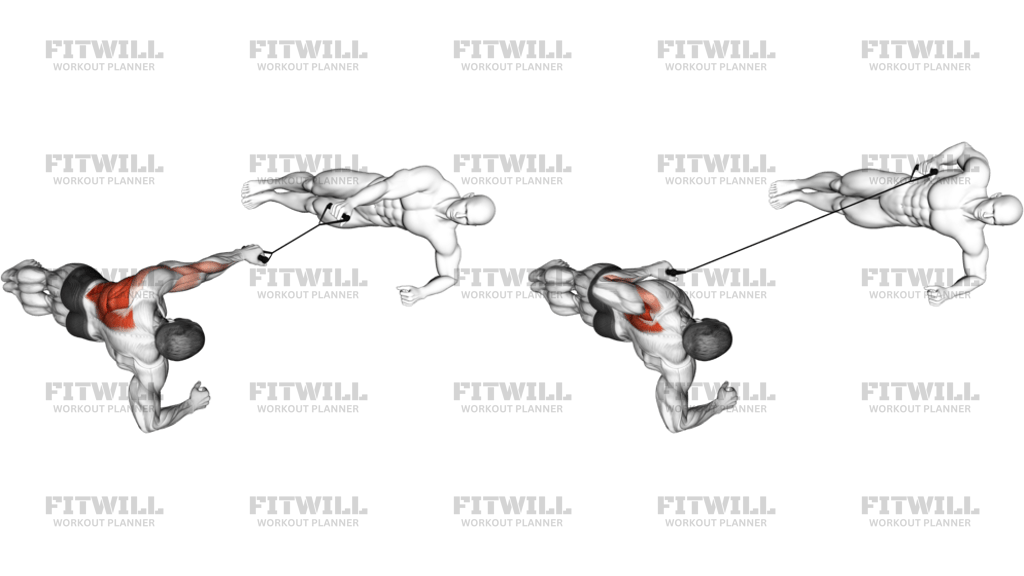
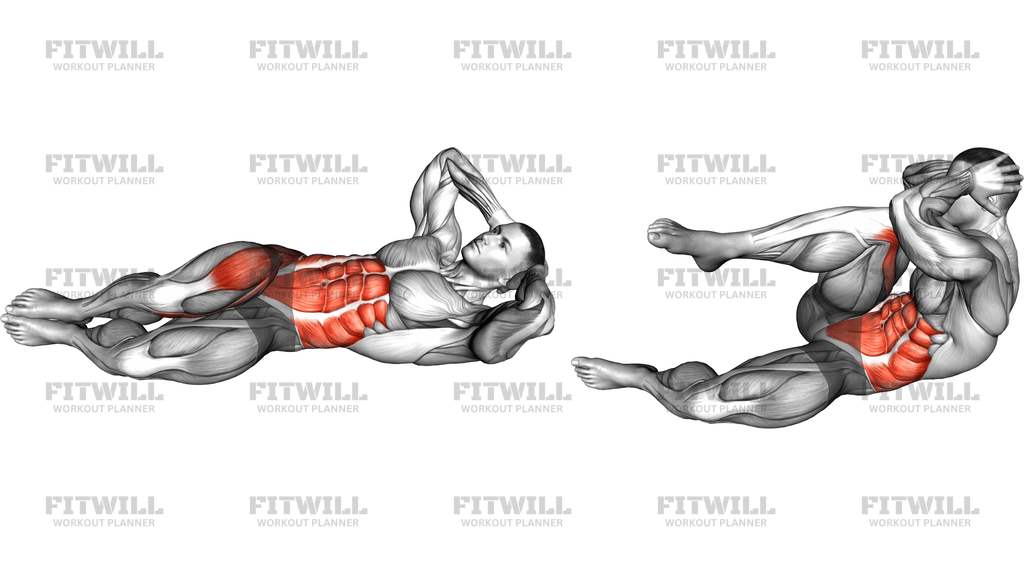
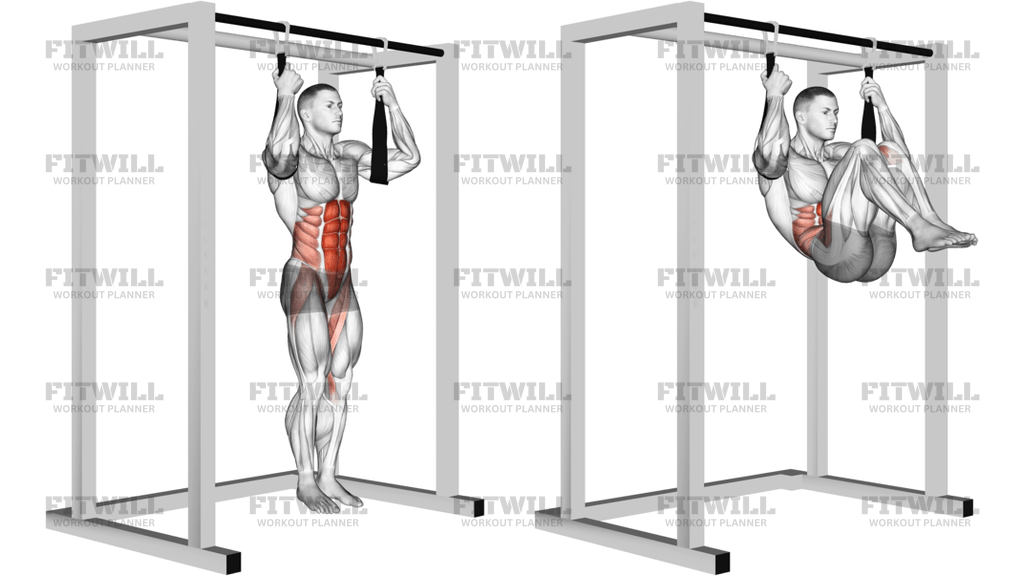
Leg Raise Oblique Crunch
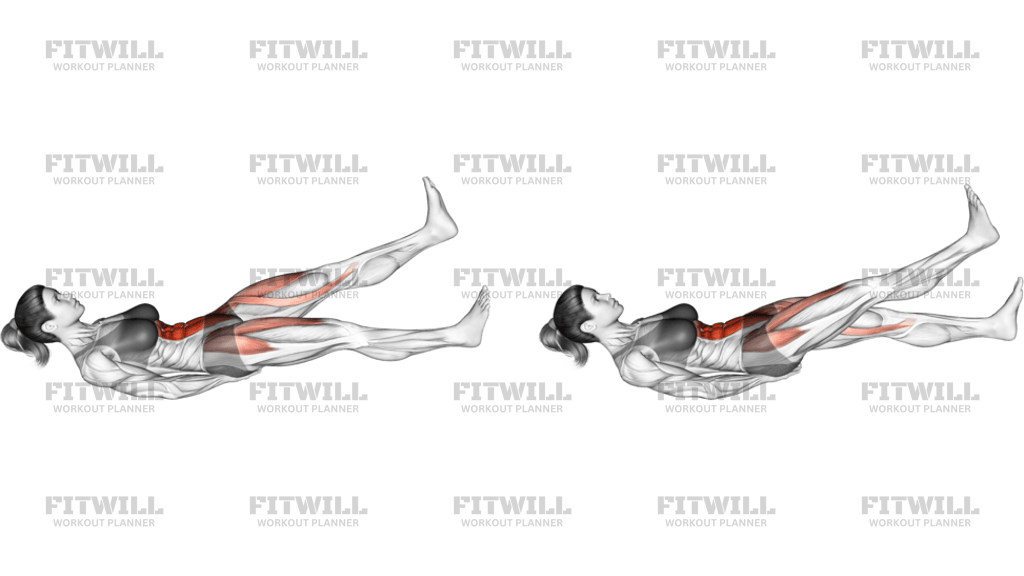
Leg Raise Oblique Crunch is a side-lying bodyweight floor exercise that combines an oblique crunch with a controlled leg raise. It is built to train the side waist, but it also asks the abs, hip flexors, and shoulder stabilizers to keep the body organized while the torso closes and the top leg lifts. Because you are supporting yourself on one forearm, the exercise rewards clean positioning more than speed or range.
The setup matters. Lie on one side on a mat, stack your body in one line, and place the lower elbow directly under the shoulder. The lower forearm stays firm on the floor so the rib cage can stay lifted instead of collapsing. Keep the top hand lightly behind the head, the neck long, and the pelvis stacked so the torso does not roll backward as the leg comes up.
Each rep should feel like a controlled side crunch rather than a kick. Lift the top leg while you draw the top ribs toward the top hip, keeping the movement smooth and precise. The elbow should stay open and the head should not yank forward. Pause briefly when the obliques are tight, then lower both the torso and leg slowly until you are back in the start position with tension still on the side waist.
This exercise is a good fit for core-focused sessions, accessory work, warmups, or finishers when you want a low-load movement that still demands coordination. Keep the range of motion honest: a smaller, cleaner rep is better than a high leg lift that twists the pelvis or arches the lower back. If the neck, shoulder, or lower back starts taking over, shorten the set and reset the side support before continuing.
[ Workout Log & Planner ]
Put your next workout in Fitwill
Keep your plan and training log ready when you are.


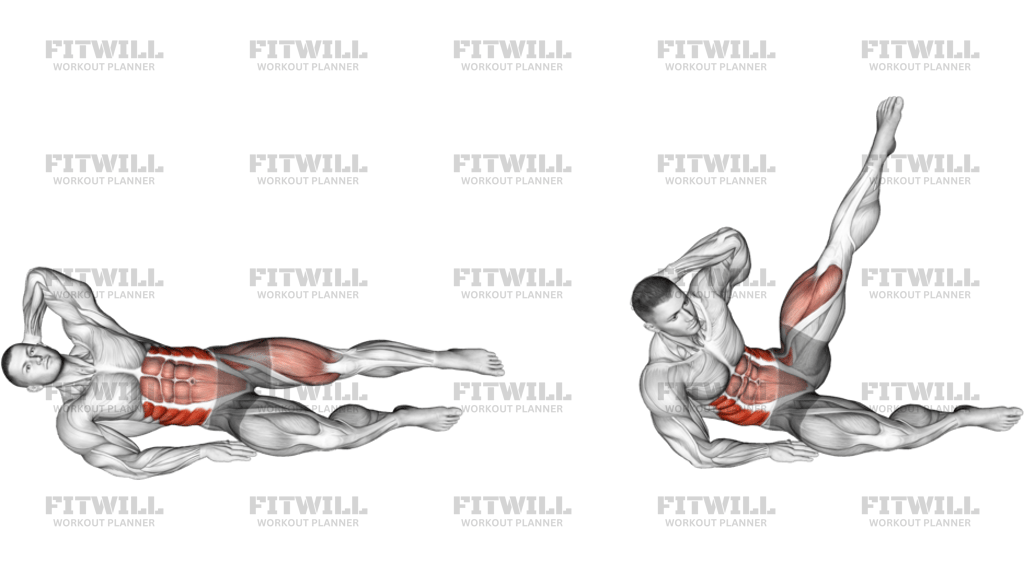
Instructions
- Lie on one side on a mat and prop yourself on the forearm closest to the floor, with the elbow stacked under the shoulder.
- Stack your hips and extend the bottom leg along the floor; let the top leg start long in line with your torso.
- Place the top hand lightly behind your head and keep the elbow open so the neck stays relaxed.
- Press the forearm into the floor and lift the ribs away from the mat to create a stable side-body position.
- Exhale and raise the top leg while you crunch the top ribs toward the top hip.
- Keep the pelvis stacked and avoid rolling backward or letting the shoulder collapse.
- Pause briefly at the top when the obliques are fully shortened.
- Lower the torso and leg slowly until you are back in the start position without losing control.
- Finish the set on that side, then switch and repeat on the other side.
Tips & Tricks
- Keep the supporting elbow directly under the shoulder so the forearm can bear weight without shrugging.
- If the lower waist collapses into the floor, reset and lift the ribs before starting the next rep.
- Do not pull on your head with the top hand; the hand only supports the neck.
- The crunch should come from the side waist, not from swinging the leg.
- A smaller leg raise is fine if it keeps the pelvis stacked and the low back quiet.
- Exhale as the ribs move toward the hip to help the obliques shorten cleanly.
- Move slowly on the way down; the eccentric phase is where the side body has to keep working.
- If the shoulder gets crowded, widen the elbow slightly and keep pressure through the forearm.
- Stop the set when you start twisting the chest open or losing balance on the support side.
Frequently Asked Questions
What muscle does Leg Raise Oblique Crunch target most?
The obliques are the main target, with the abs, hip flexors, and shoulder stabilizers helping keep the side-lying position steady.
Is the top hand supposed to pull my neck forward?
No. Keep it light behind the head and let the ribs move toward the hip instead of yanking the neck.
Do I need to keep the bottom leg straight?
Not necessarily. You can bend the bottom leg slightly for balance if it helps you keep the pelvis stacked.
Why does the exercise use the forearm?
The forearm gives you a stable base so the side waist can work without the torso collapsing into the floor.
How high should I raise the leg?
Only as high as you can keep the hips stacked and the torso controlled. Range matters less than clean position.
What is the most common mistake?
Letting the body roll backward or using momentum to swing the leg instead of controlling the side crunch.
Can beginners do this exercise?
Yes. Start with slow reps, a short range, and a brief set so the support side and neck stay comfortable.
How can I make it harder?
Add a pause at the top, slow the lowering phase, or add ankle resistance only after the form stays strict.
Should I feel this more in the waist or the hip?
The waist should drive the crunch, while the hip flexors and leg help manage the lift.