Lying Prone W To T
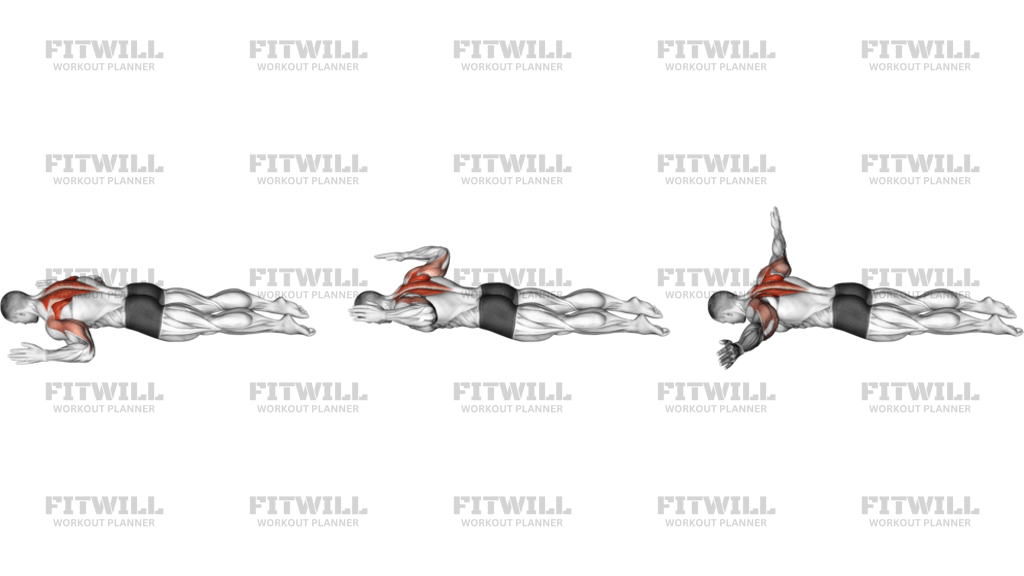
Lying Prone W to T is a floor-based upper-back and shoulder control drill that moves the arms from a bent-elbow W shape into a straight-arm T shape while you stay face down. It is useful when you want cleaner scapular movement, better posture under tension, and stronger awareness of the muscles that hold the shoulder blades in place. The exercise looks simple, but the quality of each rep depends on keeping the neck long, the ribs quiet, and the motion small enough to stay strict.
The main work comes from the upper back and rear shoulder area, especially the muscles that retract, depress, and stabilize the shoulder blades. That makes Lying Prone W to T a practical accessory movement for people who press, pull, sit at a desk, or need more control through overhead and horizontal arm positions. Because the load is just body weight, the challenge is not brute strength. It is the ability to create shape and tension without arching the low back or shrugging the shoulders toward the ears.
A good setup starts with lying face down on the floor, forehead resting on a towel or mat, legs straight, and the pelvis settled so the low back stays long. From there, the arms begin in a W position with the elbows bent and the upper arms slightly below shoulder height. That starting position matters because it gives you a clear path to open the chest and arms without forcing the shoulders into a pinchy or overextended position.
During each repetition, move slowly from the W to the T by lifting the arms just enough to clear the floor, then opening them until the upper arms line up with the shoulders. The chest should stay mostly quiet, and the movement should come from the shoulder blades and upper back rather than from swinging the arms. A brief pause in the T position helps you feel the end range without losing control, and the return to W should be just as deliberate as the lift.
This exercise fits well in warm-ups, upper-back accessory work, posture-focused sessions, and shoulder-prep circuits. It is also a good option when heavier pulling work would be too much but you still want to train control through the scapular plane. If the floor feels too demanding, an incline bench can reduce the leverage. If the shoulders feel crowded, shorten the range and keep the thumbs turned up so the movement stays smooth and pain-free.
[ Workout Log & Planner ]
Put your next workout in Fitwill
Keep your plan and training log ready when you are.


Instructions
- Lie face down on the floor with your forehead on a towel or mat, legs straight, and your pelvis settled so your low back stays long.
- Reach your arms into a W shape with the elbows bent about 90 degrees and the upper arms slightly below shoulder height.
- Set your ribs heavy into the floor and lightly brace your abs and glutes before you start the first rep.
- Lift your hands, forearms, and elbows a few inches off the floor by pulling the shoulder blades back and down.
- Open the arms into a T until the upper arms line up with the shoulders and the chest stays mostly quiet.
- Pause briefly in the T position and squeeze the upper back without shrugging the shoulders toward your ears.
- Lower slowly back through the W position, keeping the same control and tension on the way down.
- Breathe out as you lift and open, then inhale as you return to the floor.
- Reset your head, ribs, and shoulder position between reps if you start losing control or feeling neck tension.
Tips & Tricks
- Keep the forehead supported so you are not turning the neck to look forward during every rep.
- Think about sliding the shoulder blades down and back before the arms open, not just swinging the hands farther apart.
- If your lower back lifts off the floor, reduce the range and keep the ribs heavier against the mat.
- Thumbs-up hand position usually feels cleaner than forcing the palms flat when the shoulders are tight.
- Only lift a few inches; this drill is about control, not how high the arms can rise.
- A slow 2- to 3-second lowering phase makes the W and T positions feel much more precise.
- Stop the set when the upper traps start taking over or the shoulders begin to shrug.
- If the floor version feels crowded, do the same pattern on an incline bench to make the angle easier.
Frequently Asked Questions
What muscles does Lying Prone W To T work?
It mainly trains the upper back and rear shoulders, especially the muscles that control the shoulder blades, plus the rotator cuff and core stabilizers.
Can beginners perform this exercise?
Yes. It is beginner-friendly because it uses body weight, but the movement should stay small and strict so the shoulders and neck do not take over.
Should my chest leave the floor during Lying Prone W To T?
Only slightly, if at all. The goal is to keep the ribs quiet and let the shoulder blades and upper back do the work, not to turn it into a back extension.
Where should I feel Lying Prone W To T most?
You should feel it between and around the shoulder blades, along the back of the shoulders, and into the upper back more than in the neck.
Why do my upper traps keep taking over on the T position?
That usually means you are lifting too high or shrugging as the arms open. Keep the neck long, lower the range, and think about reaching the shoulders away from the ears.
Can I do Lying Prone W To T on a bench instead of the floor?
Yes. An incline bench makes the drill easier and can help if the floor version makes it hard to keep the ribs and neck relaxed.
What is the biggest mistake to avoid in the W to T transition?
Do not swing the arms open with momentum. The movement should come from the shoulder blades and upper back, with a brief pause in the T position.
How many reps should I do for this exercise?
Use slow sets of about 8-15 reps or short holds at the T position. Choose the range that lets you stay precise rather than forcing fatigue.
Is Lying Prone W To T the same as a Y-T-W raise?
It is related, but this version focuses on the W-to-T pattern. The key difference is the bent-elbow start and the controlled opening into the T shape.