Side Bridge With Bent Leg
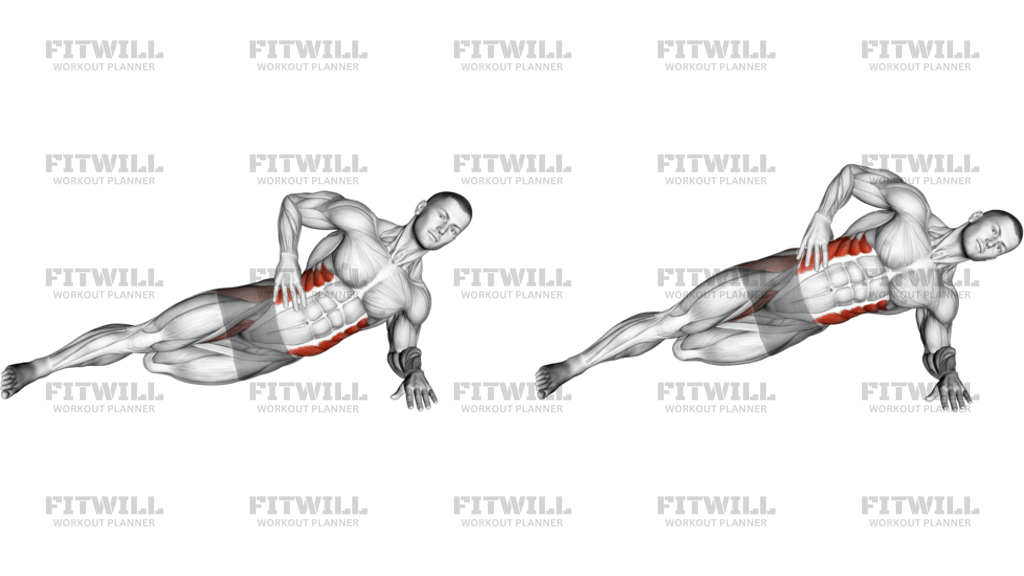
Side Bridge With Bent Leg is a side-plank variation that challenges the lateral core, hip stabilizers, and shoulder support muscles while reducing the leverage demands of a straight-leg side bridge. In the pictured version, the body is braced on one forearm with the lower leg bent, which shortens the position and makes it easier to learn how to keep the torso stacked, the pelvis level, and the shoulder packed while resisting side bending and rotation.
This exercise is useful when you want more control than a full side plank but still need strong work from the obliques, quadratus lumborum, glute medius, and the small stabilizers around the shoulder. The bent-leg position gives you a steadier base, so you can focus on clean alignment instead of fighting balance. It fits well in core sessions, warmups, accessory work, and conditioning blocks where trunk endurance matters for squats, deadlifts, carries, change of direction, and running mechanics.
Set the elbow directly under the shoulder, press the forearm into the floor, and organize the body before the first lift. The working side should feel long from the shoulder through the ribs and into the hip, with the knees or feet providing a stable support point depending on the exact version you are using. Keep the chest open, the ribs tucked, and the neck relaxed so the side of the trunk can do the work instead of the shoulder or lower back taking over.
From there, lift the hips into a strong side bridge or perform small controlled hip lifts if the program calls for reps rather than a hold. The path should be smooth and repeatable: press up, pause briefly in the stacked position, then lower only as far as you can keep tension and alignment. Breathe behind the brace so the torso stays firm without becoming rigid and shallow.
Use load progression through longer holds, more reps, or a harder leg position rather than rushing the movement. If the shoulder shrugs, the chest rotates forward, or the pelvis drops, the set is already too hard. The best reps look calm and organized from the first to the last, with the side body, glutes, and shoulder stabilizers sharing the work instead of momentum.
[ Workout Log & Planner ]
Put your next workout in Fitwill
Keep your plan and training log ready when you are.


Instructions
- Lie on your side with the support forearm on the floor and the elbow directly under the shoulder.
- Bend the lower leg so the knee or shin can act as the base, and keep the upper leg stacked in line with the torso.
- Place the top hand on your hip or across your torso, then set your ribs and pelvis before you lift.
- Press the forearm down, tighten the glutes, and brace the midsection as if you are preparing to resist a side push.
- Lift the hips into a strong side bridge until the body forms one long line from shoulder through hip.
- Hold the top position or perform a small hip-lift range while keeping the torso from rolling forward or backward.
- Exhale as you rise or squeeze, then inhale as you lower without letting the waist collapse.
- Lower the hips smoothly to the floor and reset before the next rep or the next hold.
Tips & Tricks
- Keep the elbow slightly in front of the shoulder if that helps you avoid shrugging into the joint.
- Drive the floor away through the forearm and bent leg so the shoulder does not sink into the mat.
- Stack the ribs over the pelvis at the top; if the chest opens too much, the trunk is rotating instead of bracing.
- Squeeze the upper-side glute to help keep the hips level and prevent the waist from folding.
- Use a shorter lever by keeping the bent knee closer to the body when you need an easier version of the bridge.
- Keep the neck long and the gaze neutral; looking up often twists the torso and pulls the shoulder out of position.
- Think about moving the hips in a straight up-and-down path instead of drifting forward or backward.
- Stop the set when the supporting shoulder, neck, or lower back starts taking over the work.
Frequently Asked Questions
What muscles does Side Bridge With Bent Leg train?
It strongly trains the obliques and other lateral core muscles, plus the glute medius, quadratus lumborum, and shoulder stabilizers that keep the side bridge stacked.
Why use the bent-leg version instead of a full side plank?
Bending the lower leg shortens the lever and makes the position more manageable, which is helpful when you are building side-core endurance or shoulder stability.
Where should my elbow and shoulder be set up?
Place the elbow directly under the shoulder and press the forearm down firmly so the joint stays stacked and the shoulder does not collapse.
Should my hips stay square during the rep?
Yes. Keep the pelvis stacked and avoid rolling the chest forward or backward, which shifts work away from the side of the trunk.
Can I hold the position instead of doing reps?
Yes. Isometric holds are a good choice for endurance and alignment, while short hip lifts add a little more movement demand.
What should I feel working first?
You should feel the side of the trunk, the upper glute, and the shoulder stabilizers working before you feel strain in the lower back or neck.
How do I make the exercise harder?
Make the hold longer, add more controlled hip lifts, or move toward a straighter-leg side plank once the bent-leg version feels solid.
What is the most common mistake?
Letting the hips sag or letting the torso twist forward are the biggest errors, because both reduce the work on the side core.