Bodyweight Svend Press
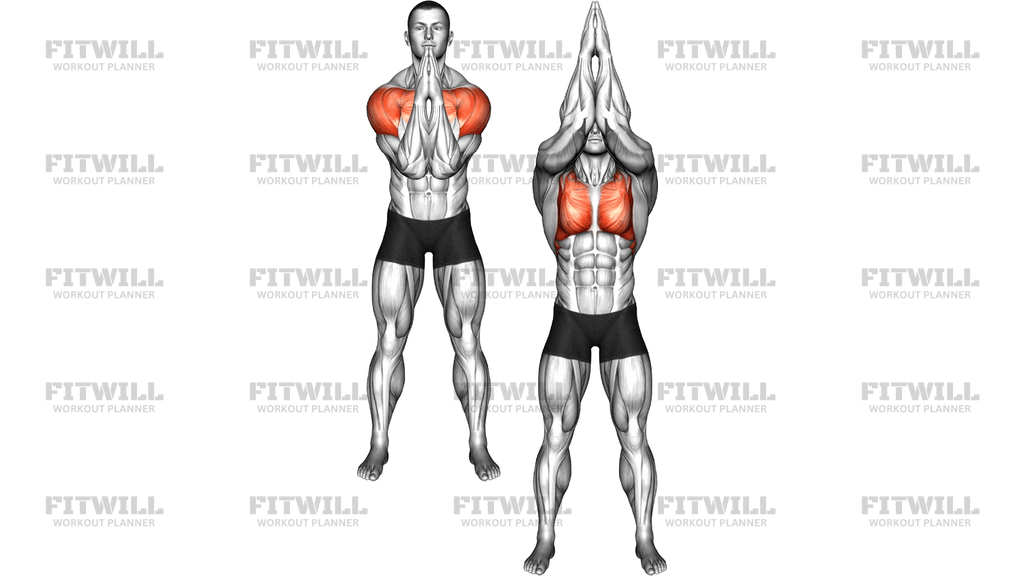
Bodyweight Svend Press is a standing chest drill that teaches you how to create tension through the palms, arms, and upper body at the same time. In this version, the hands stay pressed together while you move them forward at chest height, so the exercise emphasizes chest contraction, shoulder control, and clean posture more than heavy loading. It works well as a light pressing accessory, a warm-up drill, or a finishing movement when you want the pecs working without a bench or external weight.
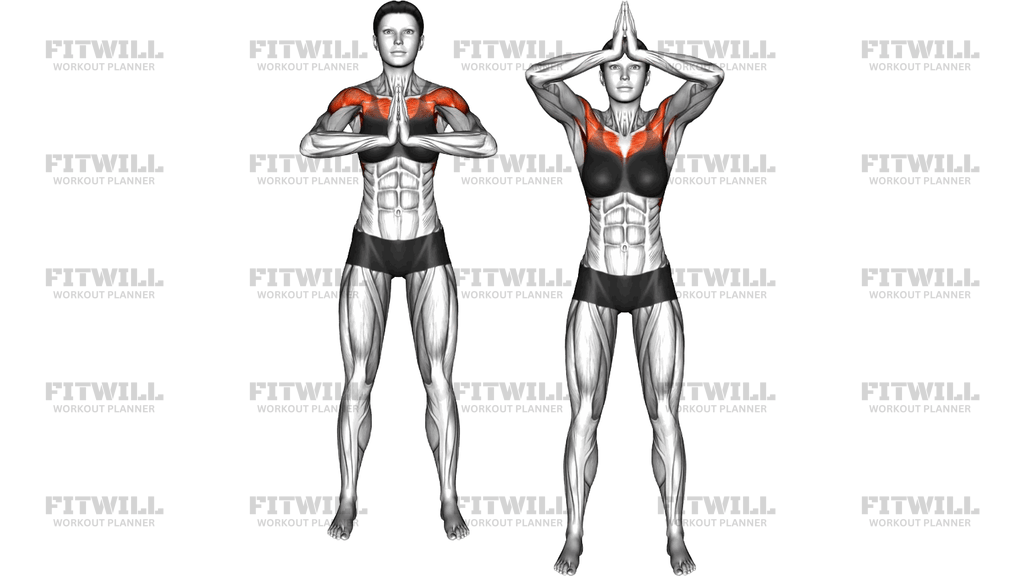
The setup matters because the position of the ribs, shoulders, and hands determines whether the press stays in the chest or leaks into the neck and front of the shoulders. Stand tall with your feet about hip-width apart, knees soft, and palms pressed firmly together in front of your sternum. Keep your elbows slightly out from your sides, lift your chest without flaring the ribs, and set your shoulders down before you start each rep.
As you press the hands forward, keep continuous inward pressure between the palms so the chest never relaxes. The arms should travel straight out at chest height, not up toward the face or down toward the stomach, and the torso should stay stacked instead of leaning into the press. At the end of the reach, the arms should be long but not aggressively locked out, with the chest still squeezed and the neck staying quiet.
The return is just as important as the press. Bring the hands back toward the chest under control, keeping the palms together and resisting the urge to let the shoulders roll forward. Breathe out as you press forward, then inhale as the hands come back in, keeping the motion smooth enough that every repetition looks and feels the same. If the shoulders shrug, the wrists bend back, or the ribs pop forward, the load is too aggressive or the range is too long.
Bodyweight Svend Press is useful when you want a simple chest-focused pattern that does not depend on machines, dumbbells, or a spotter. It can help beginners learn how to feel the pecs working and can also serve experienced lifters as a low-fatigue activation drill before heavier pressing. The goal is not speed or load; it is to keep tension steady from the start of the press to the controlled reset so the chest, shoulders, and arms all stay organized through the same line of force.
[ Workout Log & Planner ]
Put your next workout in Fitwill
Keep your plan and training log ready when you are.


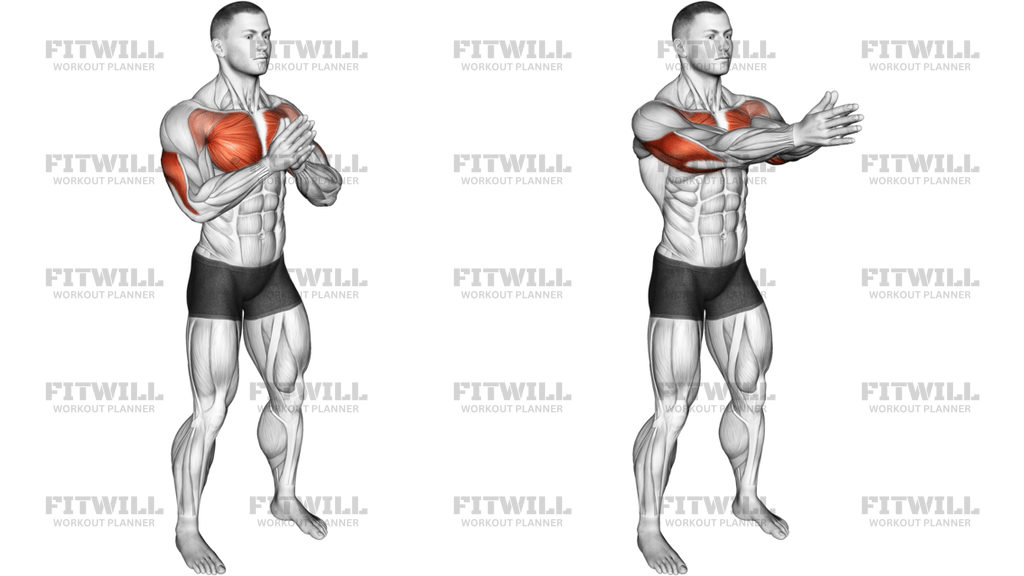
Instructions
- Stand tall with your feet about hip-width apart and hold your palms together in front of your sternum at chest height.
- Keep your elbows slightly out from your sides, stack your ribs over your hips, and set your shoulders down away from your ears.
- Press your palms hard into each other before the first rep so your chest and upper arms are already under tension.
- Exhale and drive your hands straight forward at chest height until your arms are nearly straight.
- Keep pressing the palms together as the hands travel forward so the chest stays active through the whole press.
- Pause briefly at full reach without shrugging your shoulders or arching your lower back.
- Inhale and draw your hands back to your sternum under control, keeping the same inward pressure between the palms.
- Repeat for the planned reps, then lower your hands and relax the tension before stepping away.
Tips & Tricks
- Think about crushing the palms together for the entire set; if that pressure fades, the chest work fades too.
- Keep the hands at chest height so the press stays on the pecs instead of turning into a shoulder raise.
- Do not let the elbows drop behind the torso on the way back in, or the shoulders will take over the movement.
- Use a shorter forward reach if your ribs flare or your lower back arches as the hands travel out.
- A small elbow bend is fine, but do not turn the press into a locked-out arm push.
- If your neck tightens, reset the shoulders down before the next rep and soften the upper traps.
- Smooth tempo matters more than speed; the best reps feel steady both out and back.
- Stop each set when the palms stop staying firmly together or the chest squeeze disappears.
Frequently Asked Questions
What muscles does Bodyweight Svend Press work?
It mainly targets the chest, with the front shoulders and triceps helping through the forward press and hold.
Do I need any equipment for Bodyweight Svend Press?
No equipment is required for this version. You just need enough space to stand tall and press your palms together at chest height.
How is Bodyweight Svend Press different from a regular chest press?
A regular press moves an external load, while Bodyweight Svend Press uses constant palm pressure to teach chest tension and shoulder control without heavy loading.
Where should my hands be during Bodyweight Svend Press?
Keep them at chest height in front of the sternum. If the hands drift too high or too low, the tension moves away from the chest.
Should my elbows stay tucked in Bodyweight Svend Press?
Keep them slightly out from the torso, not pinned hard to the ribs. That lets the chest stay involved without turning the movement into a triceps-dominant push.
Can beginners do Bodyweight Svend Press safely?
Yes. It is a good beginner drill because the load is low and the main challenge is control, posture, and chest tension rather than brute strength.
Why do my shoulders feel Bodyweight Svend Press more than my chest?
Usually the hands are too high, the shoulders are shrugging, or the ribs are flaring. Lower the shoulders and keep the press traveling straight out from the chest.
Where does Bodyweight Svend Press fit in a workout?
It fits well in a warm-up, chest accessory block, or finisher when you want a low-fatigue chest activation drill.