Dumbbell Single-Arm Underhand Front Raise
Dumbbell Single-Arm Underhand Front Raise is a standing shoulder isolation exercise that uses one dumbbell at a time and a palm-up grip to train the front of the shoulder through a smooth forward raise. It is most useful when you want direct delt work without relying on heavy momentum, and the single-arm setup makes it easier to notice side-to-side differences in control, range, and shoulder position.
The underhand grip changes the feel of the lift. With the palm facing up, many lifters feel the front delt working hard while the arm stays slightly more organized than in a fast, swinging front raise. The goal is not to curl the weight or throw it upward. The goal is to keep the torso quiet, keep the shoulder from shrugging, and move the dumbbell in a clean arc that stays in front of the body.
The setup matters because this exercise punishes sloppy posture quickly. Stand tall with feet about hip-width apart, hold the dumbbell at your side with a relaxed elbow, and keep the opposite arm quiet instead of using it to swing or counterbalance aggressively. Keep the ribs stacked over the pelvis, chin neutral, and shoulder down before the first rep so the raise starts from a stable base instead of a leaning or twisting position.
On each rep, lift the dumbbell forward until the arm reaches about shoulder height or slightly below, then lower it under control along the same path. A small elbow bend is fine, but the arm should stay fixed enough that the movement comes from the shoulder rather than turning into a biceps curl. The return phase matters just as much as the lift, because a slow lower keeps tension on the delt and limits the urge to bounce into the next repetition.
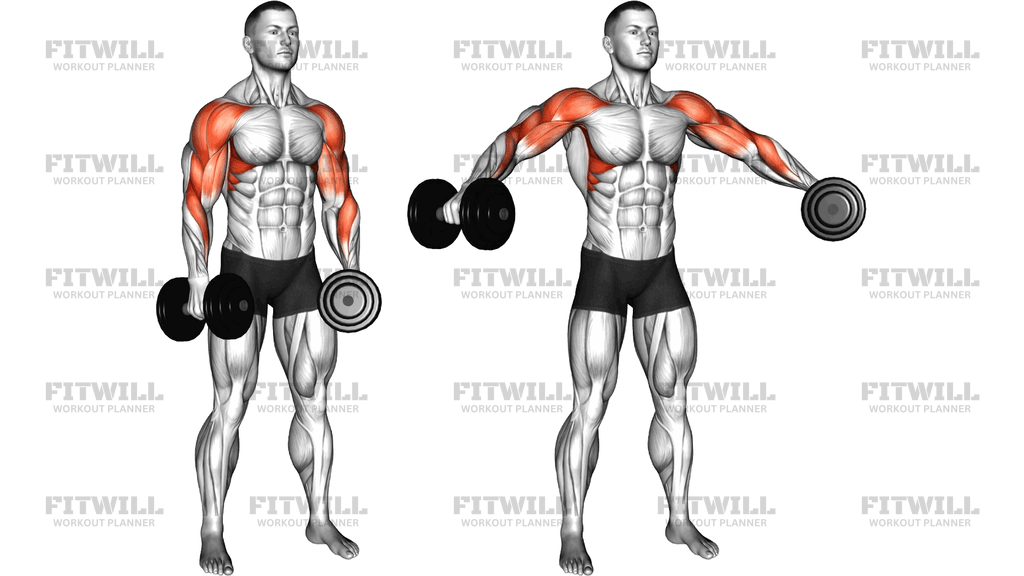
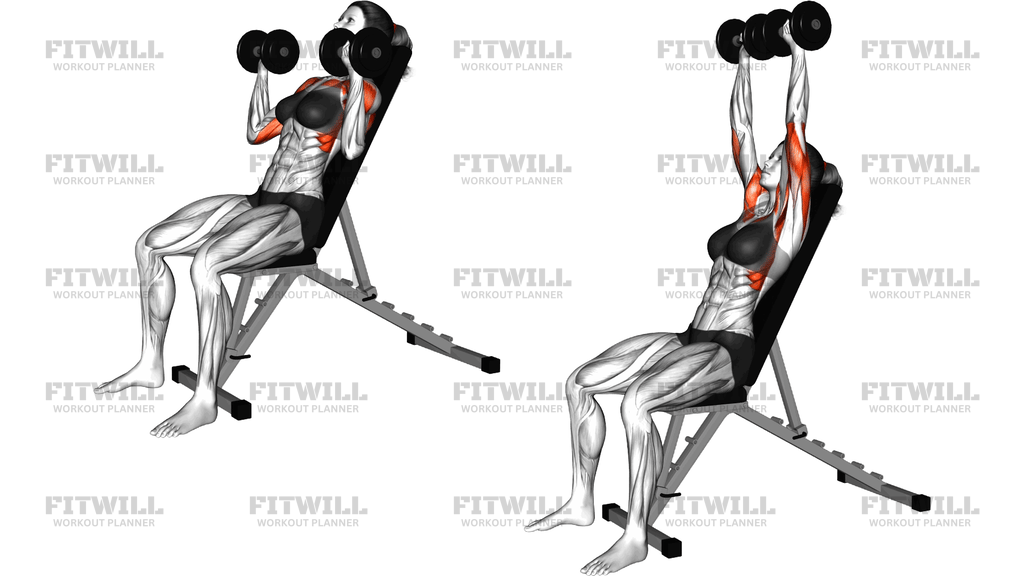
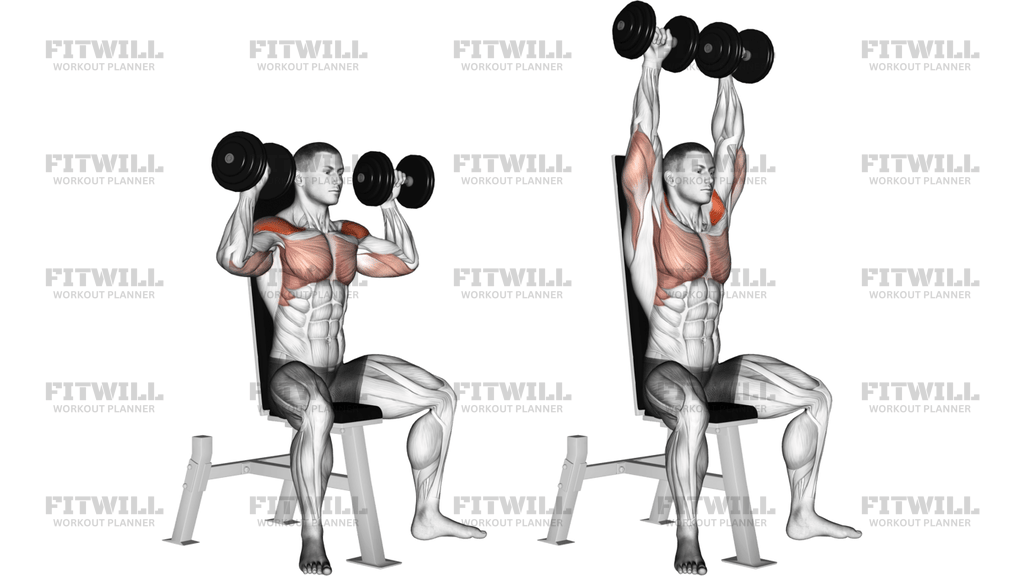
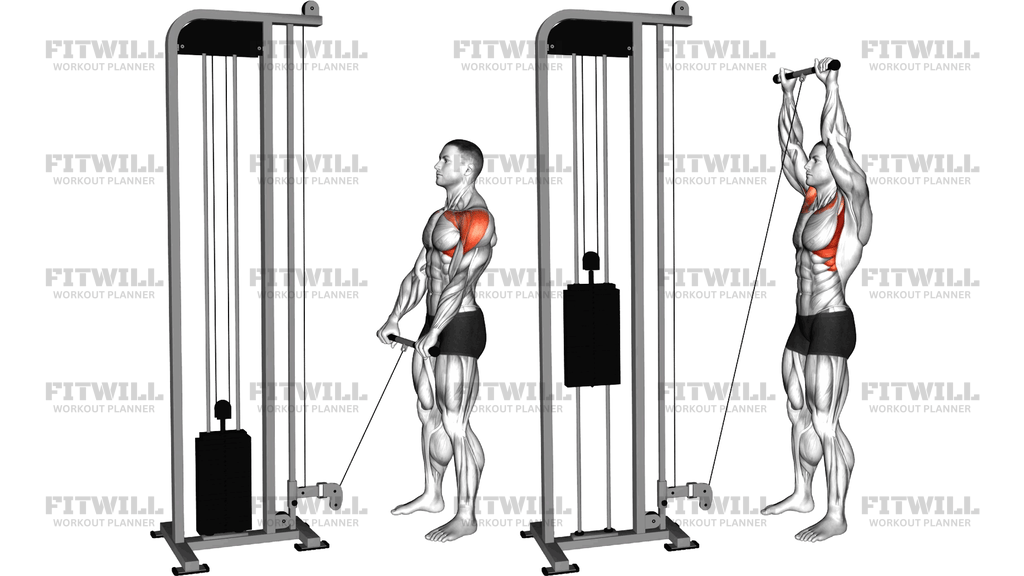
This movement fits well as accessory work, warm-up volume, or a lighter shoulder block when you want clean front-delt loading without pressing. It also works well for beginner practice because the setup is simple and the load should stay modest. Keep the range pain-free, avoid excessive height, and back off immediately if the shoulder starts to shrug, pinch, or rotate away from the path shown in the image.
[ Workout Log & Planner ]
Put your next workout in Fitwill
Keep your plan and training log ready when you are.


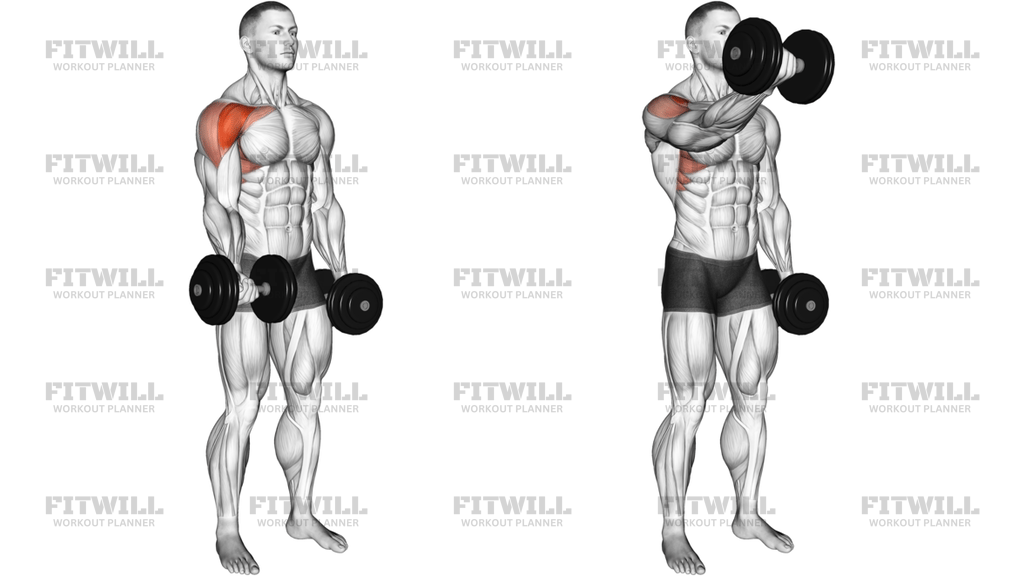
Instructions
- Stand tall with feet about hip-width apart and hold one dumbbell at your side with a palm-up grip; let the other arm hang quietly for balance.
- Set your ribs over your pelvis, soften the knees, and keep the working shoulder down before the first rep.
- Keep a slight bend in the elbow and a neutral wrist so the arm stays long without turning the lift into a curl.
- Raise the dumbbell in a smooth arc straight in front of your body, keeping it just outside the midline.
- Lift until your hand reaches about shoulder height or slightly below, stopping before the traps take over.
- Pause briefly at the top without leaning back or shrugging the shoulder toward the ear.
- Lower the dumbbell along the same path with control until it returns to the thigh.
- Reset your posture, breathe, and repeat for the planned reps before switching sides if needed.
Tips & Tricks
- Use a lighter dumbbell than you would for a two-arm front raise; the single-arm, palm-up position gets difficult fast.
- Keep the dumbbell in front of the shoulder line instead of letting it drift across the body.
- Stop near shoulder height; going higher usually shifts tension into the upper traps and makes the torso lean.
- If the palm-up grip irritates the wrist or elbow, shorten the range and reduce the load before changing tempo.
- Do not let the free arm swing you upward; it should stay quiet and only help you stay balanced.
- A soft elbow bend is enough, but too much bend turns the movement into a front curl.
- Lower the weight slowly for two to three seconds to keep tension on the front delt.
- If you feel pinching in the shoulder, lower the raise height and keep the shoulder blade from rolling forward.
- Keep the neck long and relaxed so the shoulder does not hitch up toward the ear.
- Choose reps that look identical from the first rep to the last; once the torso starts swaying, the set is done.
Frequently Asked Questions
What muscle does Dumbbell Single Arm Underhand Front Raise target most?
The front deltoid does most of the work, with the upper traps and upper arm helping stabilize the lift.
Can beginners perform this exercise?
Yes. Start with a very light dumbbell and practice keeping the torso still before you add load.
Should my palm stay facing up the whole time?
Keep the palm-up position as long as it feels comfortable and the wrist stays neutral; do not force the rotation if it bothers your elbow or shoulder.
How high should I raise the dumbbell?
Raise it to about shoulder height or slightly below. Higher than that usually increases shrugging and reduces front-delt tension.
Is this just a front raise with a different grip?
It is a front raise, but the single-arm setup and underhand grip change the stability demand and make control more important than load.
Why does the non-working arm stay down at my side?
Keeping the free arm quiet helps prevent body sway and keeps the rep focused on the working shoulder instead of turning it into a full-body swing.
What is the most common form mistake?
Curling the dumbbell, leaning back, or shrugging the shoulder are the main ways people lose the target tension.
What should I do if I feel shoulder pinching?
Reduce the range of motion, lower the load, and keep the raise slightly lower in the pain-free zone instead of forcing a higher finish.