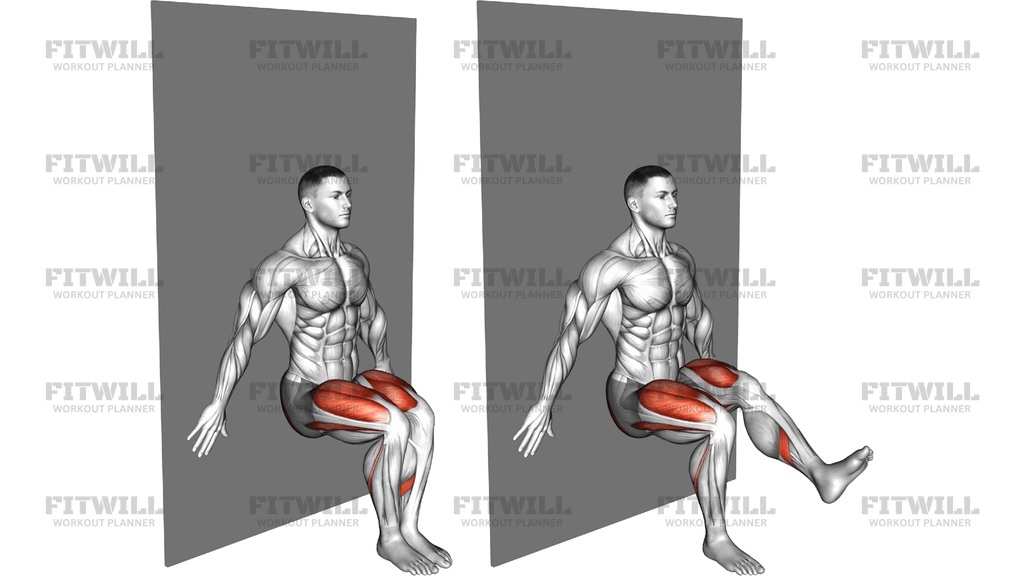
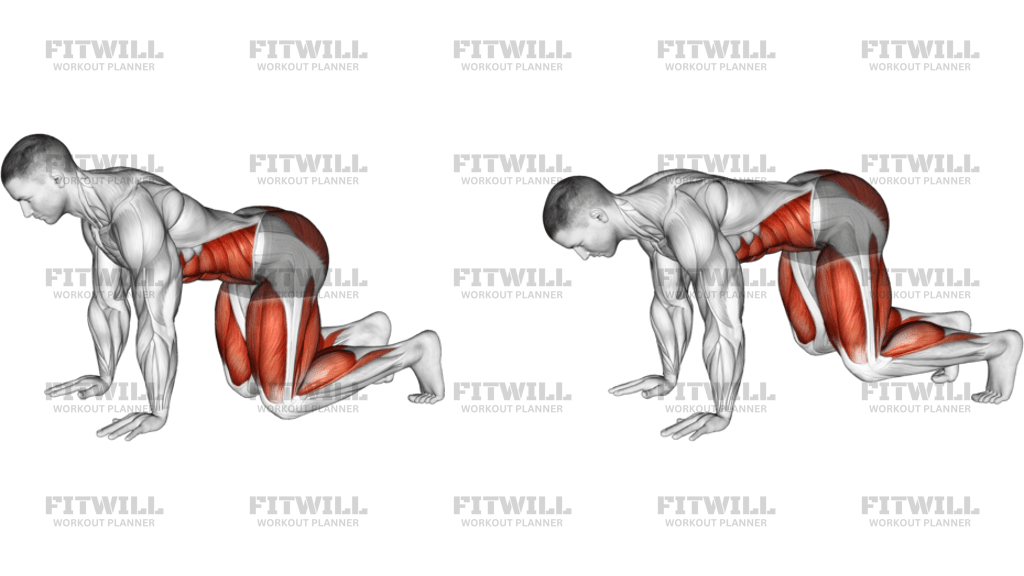
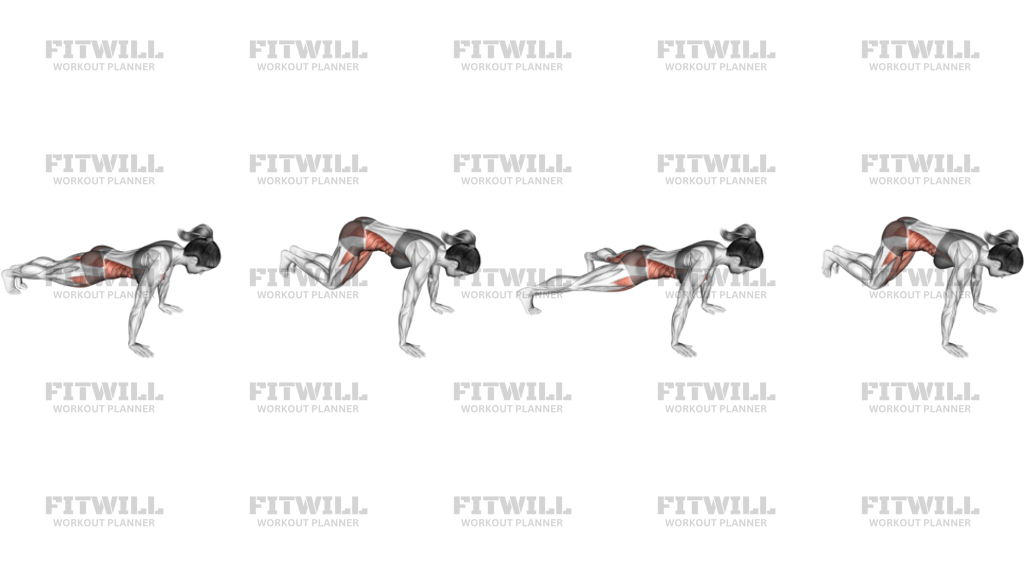
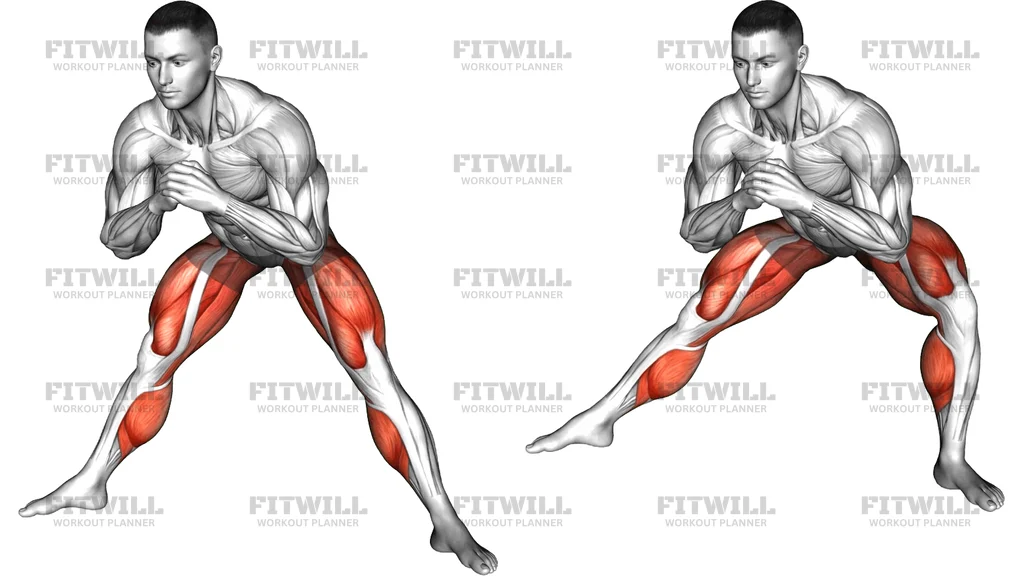
Alternate Toe Tap Leg Lift
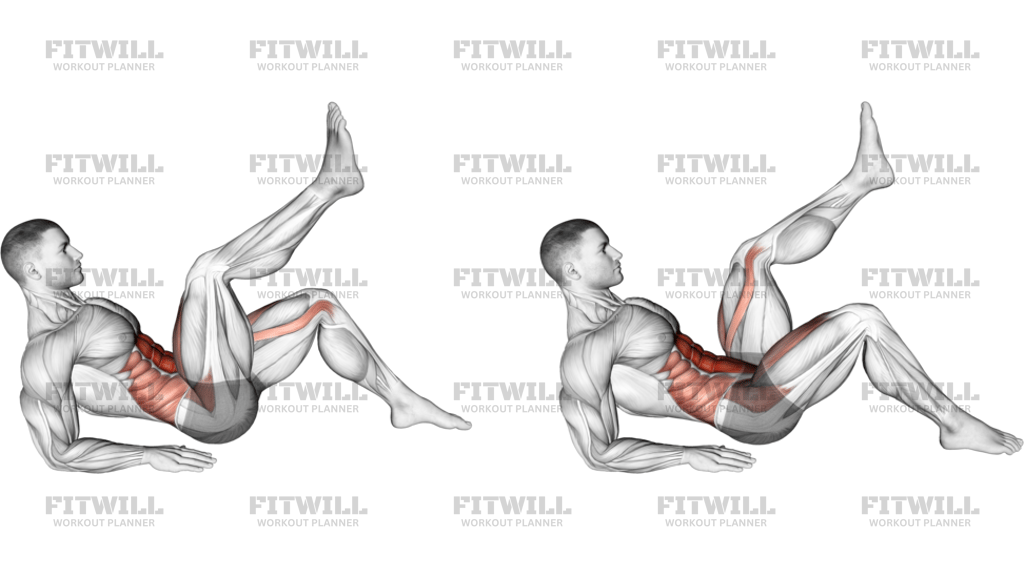
Alternate Toe Tap Leg Lift is a bodyweight floor drill that combines a supported lean-back position with alternating single-leg lifts and toe taps. It is built to challenge the lower abdominals, hip flexors, and deep trunk stabilizers while teaching you to keep the pelvis quiet as the legs move.
The setup matters more than the range of motion. With the torso propped on the forearms, the shoulders, ribs, and pelvis need to stay stacked so the lower back does not take over. Each rep should feel like a controlled switch between one leg lifting toward the ceiling and the other leg lowering to a light toe tap or near-tap without losing tension through the midsection.
This movement is useful when you want a core exercise that is more dynamic than a static hold but still controlled enough to expose side-to-side leaks in stability. It fits well in warmups, core blocks, and accessory work, especially for trainees who need better pelvic control during leg-lift patterns, running prep, or general athletic conditioning.
The exercise should feel concentrated in the abs and hip flexors, with the shoulders and neck staying relaxed. If the lower back starts to arch, the legs swing, or the pelvis rolls side to side, the lever is too long or the tempo is too fast. Shorten the range, slow the switch, or bend the knee slightly so you can keep the trunk position fixed from the first rep to the last.
Use it as a technical core drill, not a momentum exercise. Clean alternation, steady breathing, and controlled lowering matter more than how high the leg climbs. When done well, Alternate Toe Tap Leg Lift reinforces front-of-hip strength, trunk control, and a smoother transition between flexion and extension through the lower body.
[ Workout Log & Planner ]
Put your next workout in Fitwill
Keep your plan and training log ready when you are.


Instructions
- Sit on the floor and lean back onto your forearms, placing your elbows under your shoulders and keeping your chest open.
- Extend one leg long and set the other leg in the starting position shown in the image, with your torso reclined and your neck relaxed.
- Press your forearms into the floor and lightly tuck your pelvis so your ribs stay down and your lower back does not arch.
- Lift one leg toward the ceiling while the other leg lowers under control toward a light toe tap or near-tap.
- Keep both knees and feet moving in a smooth alternating pattern instead of swinging the legs.
- Pause only long enough to keep the trunk steady, then switch sides without letting your hips roll.
- Lower each leg slowly enough to keep tension in the lower abs and hip flexors.
- Breathe out as the leg lifts and in as you switch, keeping the same torso angle through the entire set.
- Finish the set by lowering both legs together under control and relaxing the forearms only after the movement is complete.
Tips & Tricks
- Keep your elbows under your shoulders so the forearms can support the lean-back position without collapsing the chest.
- Think about drawing the front of your ribs toward your pelvis before you start the first rep.
- If the lower back arches, shorten the lever by bending the moving knee slightly or lowering the leg less.
- Touch the floor lightly on the toe-tap side; do not slam the heel down or use momentum to bounce into the next rep.
- The lifted leg should stop where the pelvis stays level, not where the hamstring stretch looks biggest.
- Move one leg at a time with a steady switch so the midsection has to resist rotation.
- Keep your jaw and neck soft; the effort should stay in the abs and hips, not the shoulders.
- A slower lowering phase usually makes this exercise work better than trying to raise the leg higher.
- Stop the set as soon as your torso starts rocking or your forearms begin to push you into a different posture.
Frequently Asked Questions
What does Alternate Toe Tap Leg Lift train most?
It mainly trains the lower abdominals, hip flexors, and deep core muscles that keep the pelvis steady while the legs alternate.
Do I need to keep my forearms planted the whole time?
Yes. The forearms are your anchor, and pressing them into the floor helps you keep the torso angle stable while the legs move.
How high should the lifting leg go?
Only as high as you can raise it without arching your lower back or letting your hips roll. Height is less important than control.
Why does one leg toe tap while the other lifts?
The alternating pattern forces your trunk to resist rotation and keeps tension on the abs through both sides of the movement.
Can beginners do this exercise?
Yes, but beginners may need a smaller range of motion, a slightly bent knee, or slower switches to keep the lower back quiet.
What is the biggest mistake on this movement?
The most common error is letting the low back arch and using leg swing instead of controlled abdominal tension.
Is this the same as a straight-leg raise?
Not quite. The alternating toe tap adds a switch from side to side, so the exercise demands more pelvic control than a simple bilateral leg raise.
How can I make it harder without changing the exercise?
Slow the lowering phase, extend the legs farther, or keep the toes hovering closer to the floor while maintaining the same torso position.