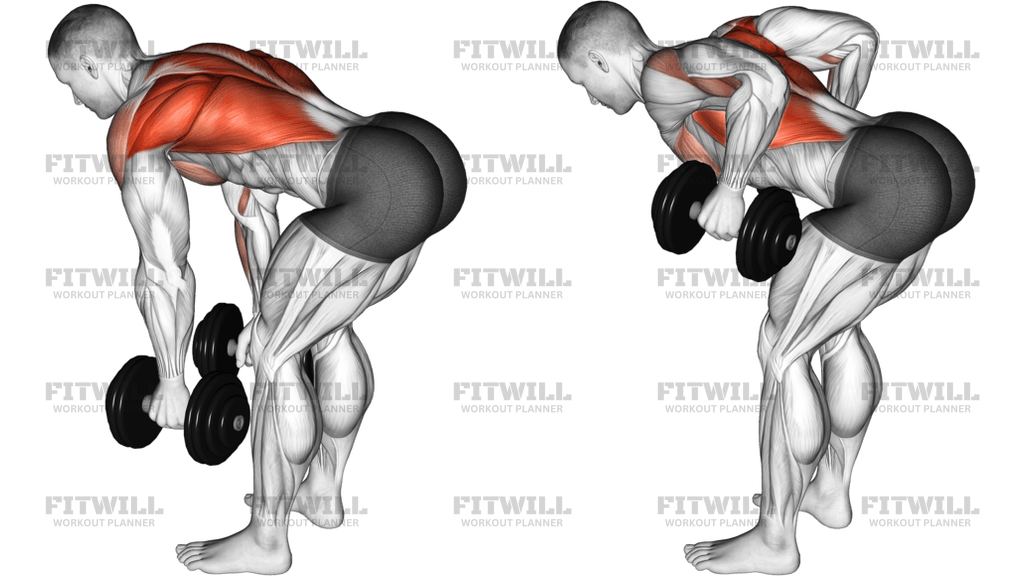
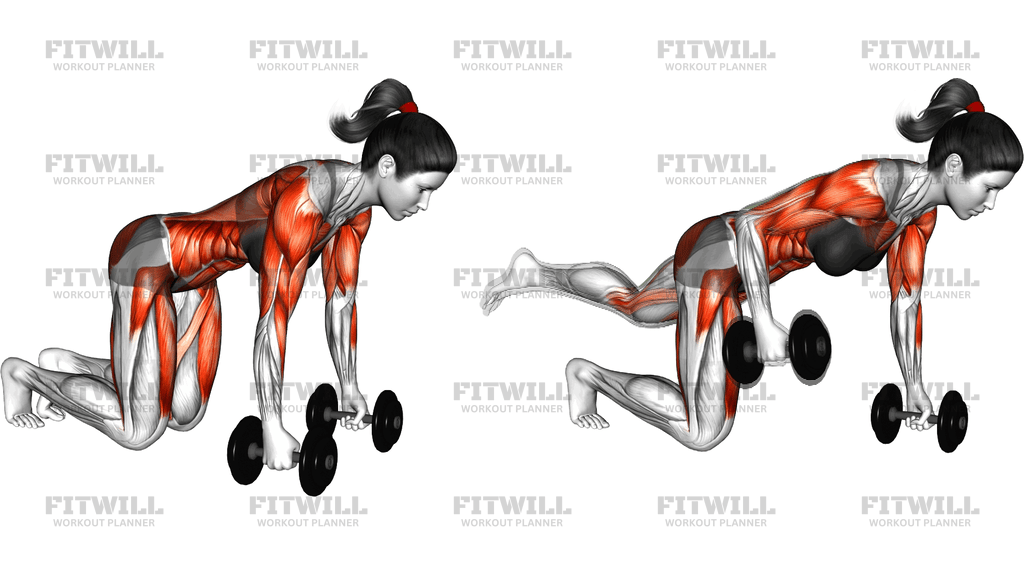
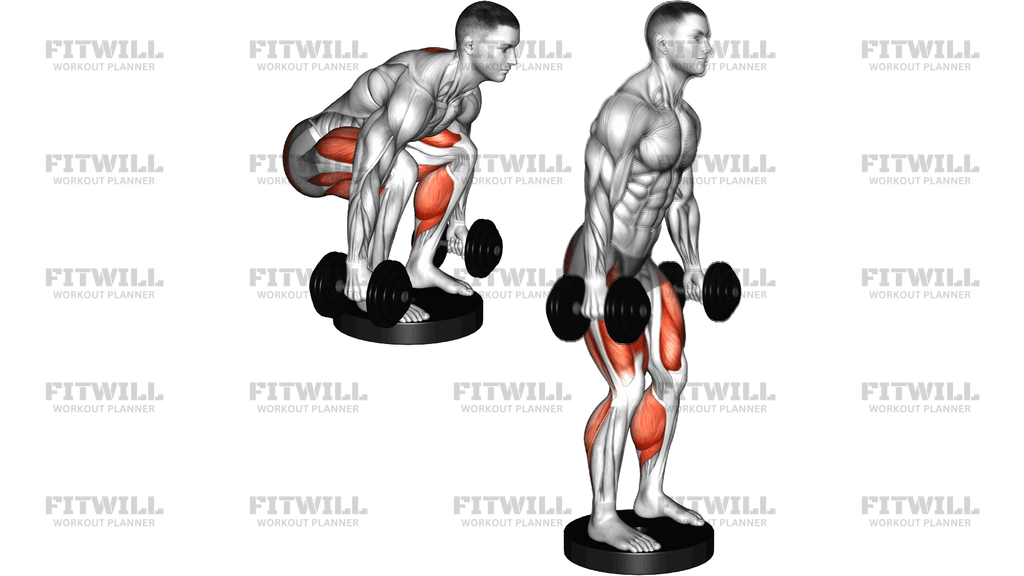
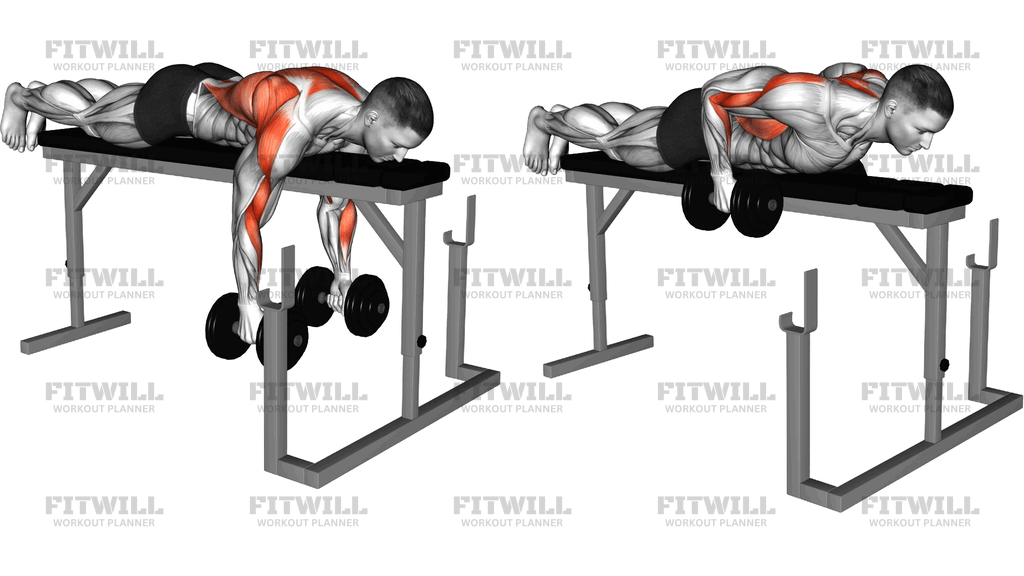
Dumbbell Deadlift Version 2
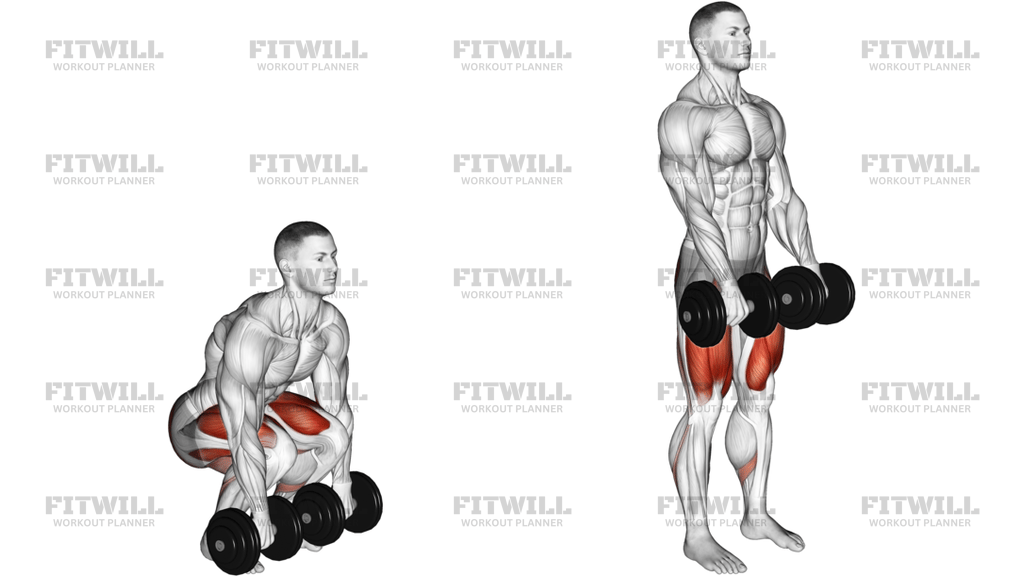
Dumbbell Deadlift Version 2 is a bilateral hip-hinge exercise that trains the glutes, hamstrings, and spinal stabilizers while teaching you how to lift from the floor with a neutral spine. The dumbbells sit outside the feet, which makes this version a practical option when you want a deadlift pattern without a barbell or a fixed machine. Because the load is held at your sides, the exercise also asks the grip, upper back, and core to stay organized while the hips and knees do most of the work.
The setup matters more than people expect. A good deadlift starts with the feet planted, the dumbbells close to the shins, and the torso set before the first rep begins. If the weights drift forward or the chest collapses, the lift turns into a back-dominant pull instead of a clean hinge. Keeping the shoulders slightly in front of the dumbbells at the start lets you load the posterior chain, then stand up by driving the floor away and extending the hips.
On the way up, the knees and hips should rise together until you are standing tall. On the way down, the hips move back first, the knees bend only as much as needed, and the dumbbells track close to the legs. The goal is a smooth path with no yank off the floor, no shrugging at the top, and no bouncing through the bottom. A controlled return teaches the same pattern in reverse and keeps tension on the target muscles.
This movement fits well in lower-body strength sessions, hinge-focused accessory work, and general conditioning blocks where you want a simple, effective free-weight deadlift pattern. It is also useful for beginners learning how to brace and hinge because the hand position is natural and the load can be scaled easily. Use a range of motion you can own from the floor to standing, and stop the set when your back position, balance, or dumbbell path starts to change.
[ Workout Log & Planner ]
Put your next workout in Fitwill
Keep your plan and training log ready when you are.


Instructions
- Stand with your feet about hip-width apart and place a dumbbell just outside each foot so the handles are over the midfoot.
- Hinge at the hips, bend your knees, and reach down to grab both dumbbells with a neutral grip.
- Set your chest long, keep your back flat, and let your shoulders stay slightly in front of the weights.
- Brace your torso before the first pull so your ribs do not flare and your lower back does not round.
- Press through the floor and drive your hips and shoulders up together until you are standing tall.
- Squeeze your glutes at the top without leaning back or shrugging the dumbbells.
- Lower the weights by pushing your hips back first, then bending your knees as the dumbbells slide down close to your legs.
- Set the dumbbells back on the floor with control, reset your brace, and repeat for the planned reps.
- Breathe in and brace before each rep, then exhale as you stand back up.
Tips & Tricks
- Keep the dumbbells close to your shins and thighs; if they drift forward, the lever becomes harder on your low back.
- Think about pushing the floor away instead of yanking the weights off the ground.
- If your hips shoot up faster than your chest, the load is too heavy or your setup is too low.
- At the top, finish with tall posture and hip extension, not with a big lean-back.
- Let your knees bend just enough for the dumbbells to clear the floor, then keep the hinge as the main driver.
- Use a grip width that keeps the dumbbells outside your legs without forcing your shoulders to roll forward.
- A controlled eccentric should take as much attention as the lift; dropping the weights removes tension from the hamstrings and glutes.
- Keep your neck in line with your spine by looking a few feet ahead on the floor, not straight up.
- Choose dumbbells you can place on the floor quietly and reset between reps without losing your bracing.
Frequently Asked Questions
What muscles does Dumbbell Deadlift Version 2 work most?
It primarily trains the glutes and hamstrings, with the core, upper back, and grip working hard to keep the dumbbells and torso stable.
How should the dumbbells sit at the start?
Set them just outside your feet, close enough that you can grab them without reaching forward or rounding your back.
Do I start with a squat or a hinge?
Start with a hinge pattern: hips back, chest long, knees bent just enough to reach the handles, and a flat back before you pull.
How do I know if my back position is right?
Your spine should stay neutral, your ribs should stay down, and your shoulders should not collapse forward as you lift.
Should the dumbbells touch my legs during the rep?
Yes. Keeping the weights close to your shins and thighs helps you stay balanced and reduces stress on the lower back.
Can beginners use this version?
Yes. It is a beginner-friendly deadlift if the load is light enough to keep the hinge, brace, and dumbbell path consistent.
What is the most common mistake with this deadlift?
Letting the dumbbells drift away from the body or letting the hips rise faster than the shoulders are the two biggest form breakers.
How can I make the set harder without changing the exercise?
Use a slightly slower lowering phase, pause the dumbbells near the floor with tension, or increase the weight only if your setup stays clean.