Dumbbell Sumo Squat
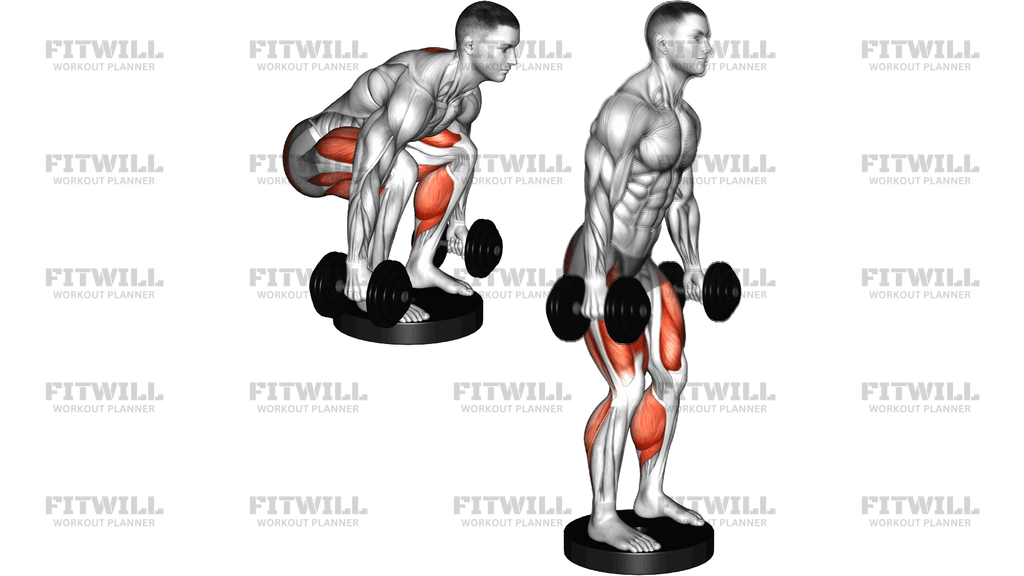
Dumbbell Sumo Squat is a wide-stance lower-body squat that asks you to sit the hips down between the feet while holding a single dumbbell close to the body. The stance and the load position matter because they keep the torso upright and let the legs do the work instead of turning the movement into a forward fold. It is a practical squat pattern for building strength, size, and control in the glutes, quads, and inner thighs.
The wide stance and turned-out toes change the line of pull at the hips, so the movement usually feels more open in the groin and more upright through the chest than a standard squat. That makes Dumbbell Sumo Squat useful for lifters who want a squat variation that emphasizes hip control and adductor involvement, or who need a lower-body pattern that is often a little easier to keep balanced with a moderate load. The dumbbell stays centered under the body, which helps reinforce even pressure through both feet.
Set up with the feet wider than shoulder width, toes angled out, and the dumbbell hanging vertically between the legs with both hands on the top end or the handle. Before you descend, brace the torso, keep the ribs stacked over the pelvis, and let the knees track in the same direction as the toes. The goal is not to chase the deepest possible squat, but to find the deepest position you can control without the heels lifting or the lower back rounding.
On the way up, drive the floor apart and stand by pushing through the midfoot and heel while keeping the dumbbell close to the body. The knees should continue to open as the hips extend, and the top position should finish tall without leaning back or throwing the hips forward. Controlled tempo matters here because rushing the descent often turns the squat into a bounce, which reduces tension on the working muscles and makes the bottom position less stable.
Dumbbell Sumo Squat fits well in warm-ups, accessory work, or general strength sessions when you want a squat pattern that is easy to load and easy to monitor for clean technique. Keep the reps smooth and repeatable, stop the set when your torso starts tipping forward, and reduce the load if your knees cave inward or your feet shift around. A well-performed set should feel strong through the hips and legs, with the trunk providing support rather than fighting for position.
[ Workout Log & Planner ]
Put your next workout in Fitwill
Keep your plan and training log ready when you are.


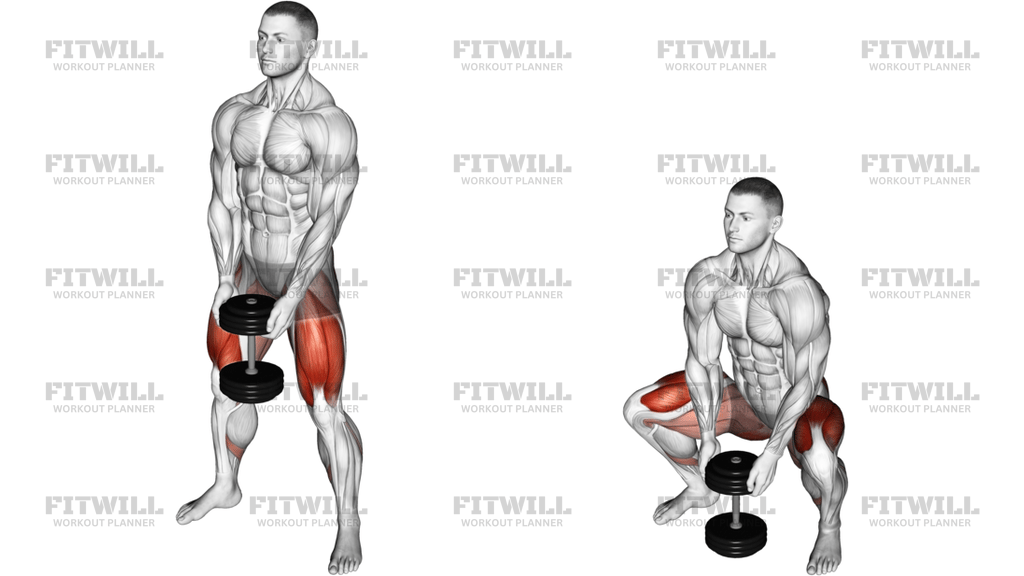
Instructions
- Stand with your feet wider than shoulder width, turn your toes out, and hold one dumbbell vertically by the top end with both hands between your thighs.
- Brace your torso, stack your ribs over your pelvis, and let the dumbbell hang straight down in front of your hips.
- Bend at the hips and knees at the same time, sitting down between your legs while keeping your chest lifted.
- Track your knees in line with your toes and keep the dumbbell close to your body as you descend.
- Lower until your thighs are parallel to the floor or as deep as you can stay balanced without rounding your lower back.
- Pause briefly at the bottom and feel tension in the glutes, quads, and inner thighs.
- Drive through your midfoot and heels to stand up, pushing the floor apart as you extend the hips and knees.
- Finish tall with your glutes tight and your ribs still stacked, not leaning back.
- Reset your breath and repeat for the planned reps before carefully lowering the dumbbell to the floor.
Tips & Tricks
- Hold the dumbbell low and centered so it does not pull you forward.
- A slightly wider stance often makes it easier to keep the chest up and the knees open.
- Think about screwing both feet into the floor to stop the arches from collapsing.
- If your heels lift, shorten the depth or narrow the stance a little.
- Keep the descent slow enough that you can pause without bouncing out of the bottom.
- Let the knees travel out over the toes instead of letting them cave toward the center line.
- Stop the set when the dumbbell starts drifting away from your body or your torso starts folding.
- Use a load that lets you keep the same squat depth on every rep.
Frequently Asked Questions
What muscles does Dumbbell Sumo Squat train most?
It mainly hits the glutes, quadriceps, and inner thighs, with the core working to keep the torso steady.
How is Dumbbell Sumo Squat different from a regular squat?
The wider stance and turned-out toes usually shift more work to the hips and adductors, and the torso often stays more upright.
How should I hold the dumbbell?
Hold one end of the dumbbell vertically with both hands centered under your body, like a goblet hold between your legs.
How deep should I go?
Go as low as you can while keeping your heels down, knees open, and lower back neutral. Depth is only useful if you can own it.
Why do my knees cave in on this exercise?
The stance may be too narrow or the load too heavy. Widen the feet slightly and think about pushing the knees out in line with the toes.
Is Dumbbell Sumo Squat good for beginners?
Yes. A light dumbbell and a controlled tempo make it a very beginner-friendly squat variation.
Can I use this exercise if my hips feel tight?
Usually yes, but shorten the range and turn the toes out enough to let the hips open naturally. Do not force a deeper bottom position.
What should I feel at the top?
A strong lockout should feel like the hips are fully extended and the glutes are working, not like you are leaning backward to finish the rep.