Jumping Single Leg Lunge
Jumping Single Leg Lunge is a bodyweight plyometric that combines a single-leg lunge, an explosive takeoff, and a controlled landing on the same leg. It is used to build power, balance, and lower-body coordination while asking the hip, knee, and ankle to stay organized under speed. The movement is more about crisp mechanics than about load, so the quality of the takeoff and the softness of the landing matter more than how high you jump.
The exercise is most useful when you want athletic single-leg work that challenges glute, quad, calf, and trunk control at the same time. The working leg has to absorb force, then produce it again immediately, which makes the pattern valuable for runners, field sports, and general conditioning. The free leg and the arms help with balance, but the planted leg should do the real work.
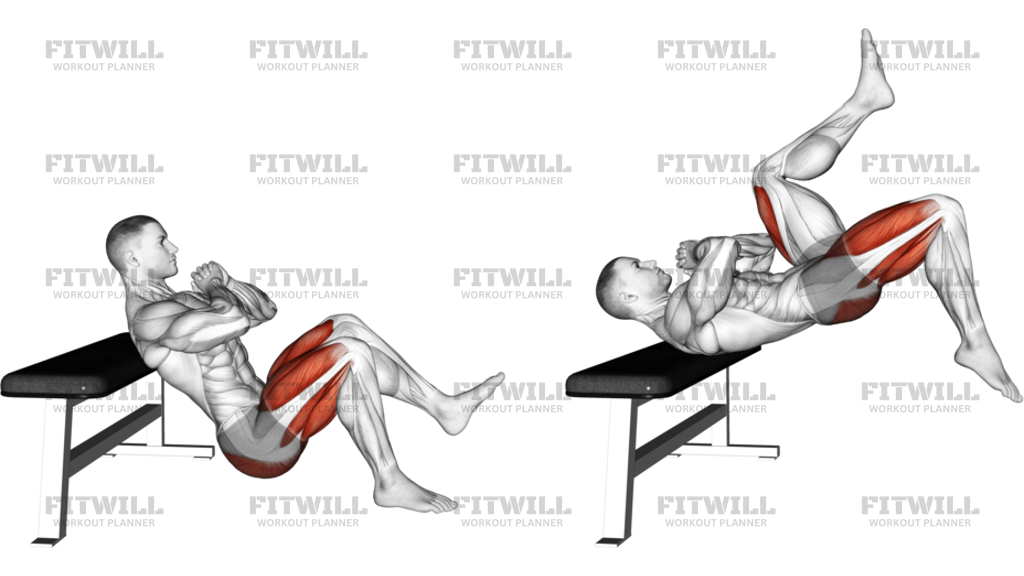
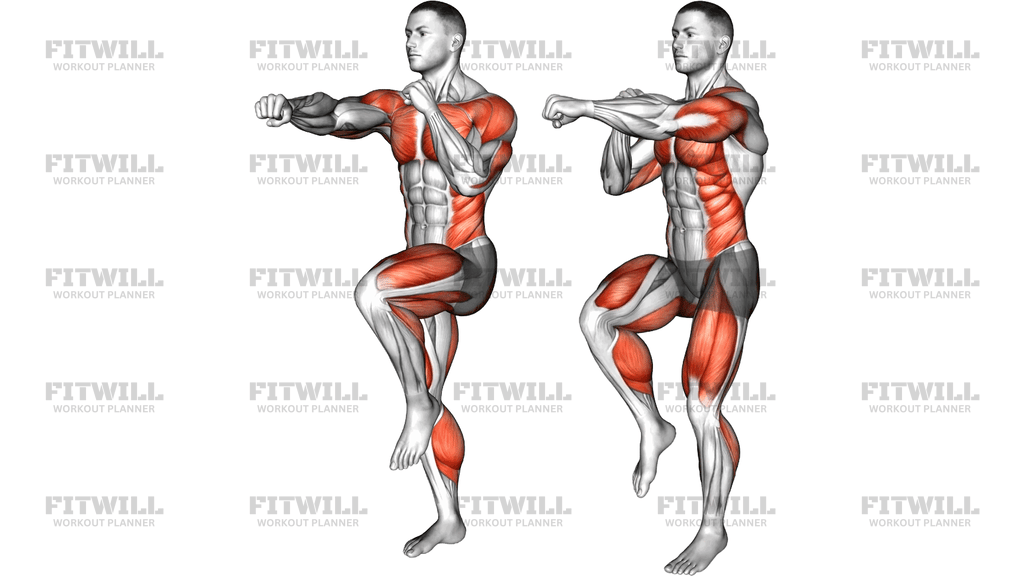
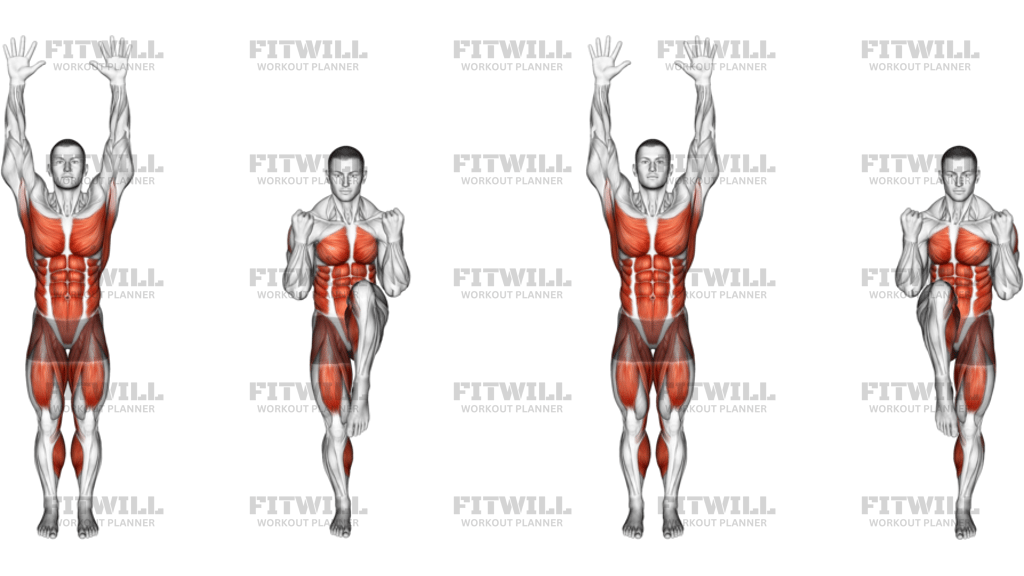
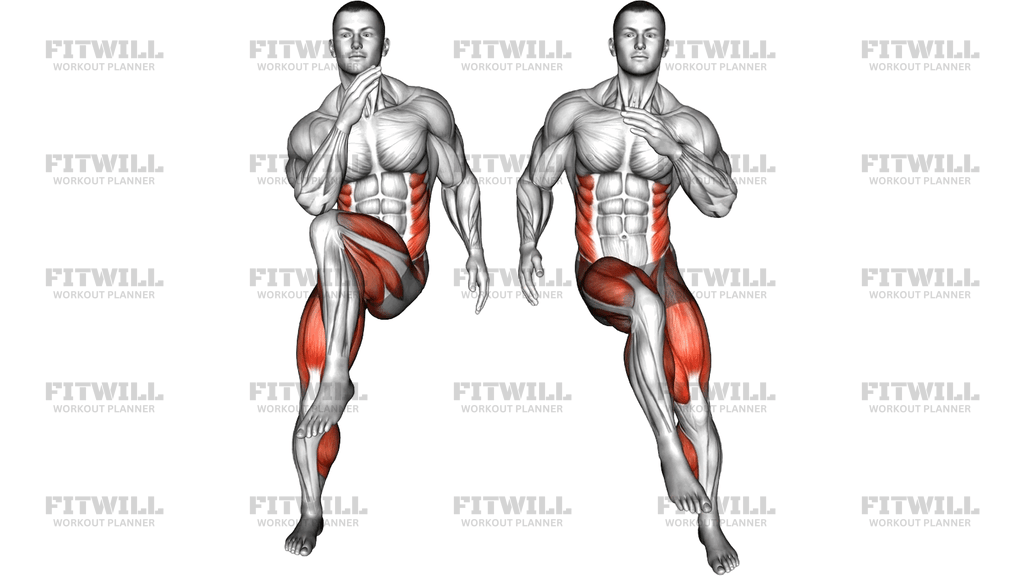
The setup is simple but important. Start in a split stance with most of your weight on the front leg, torso tall, ribs stacked over the pelvis, and the rear leg light and ready to move. From there, drop into the lunge with control, then drive forcefully through the front foot to jump and switch into a knee-drive position. The image shows a high-knee finish, which is the cue to finish the rep by standing tall rather than folding forward or crashing into the floor.
Because this is a plyometric, the landing should be quiet and deliberate. Bend the hip, knee, and ankle as you absorb the floor, keep the knee tracking over the toes, and reset before the next rep if you lose control. The goal is a clean spring-like action, not a frantic series of hops. If the landing gets noisy, the torso starts tipping, or the knee caves inward, the set is too fast or too hard.
Use Jumping Single Leg Lunge when you want a short, focused power block or a conditioning drill that still respects single-leg mechanics. It fits well after a warm-up and before fatigue-heavy lifting. Keep the reps sharp, stop before technique slips, and treat each landing as a chance to re-establish balance before the next explosive drive.
Fitwill
Log Workouts, Track Progress & Build Strength.
Achieve more with Fitwill: explore over 9600 exercises with images and videos, access built-in and custom workouts, perfect for both gym and home sessions, and see real results.
Start your journey. Download today!




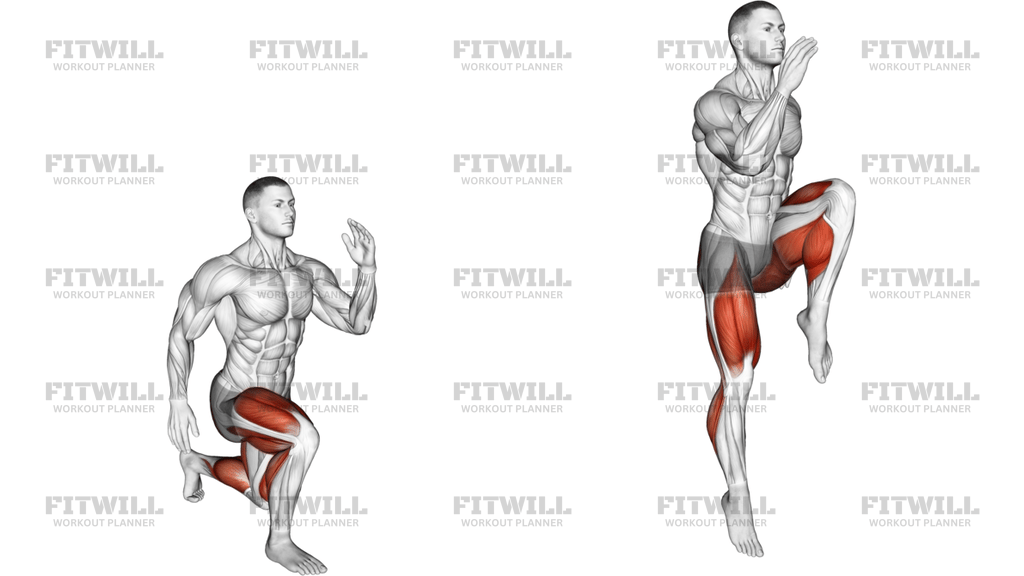
Instructions
- Stand on one leg in a split-lunge stance, keeping the front foot flat and the rear leg light behind you.
- Stack your ribs over your pelvis, lift your chest, and hold your hands in front of you for balance if needed.
- Lower into the lunge by bending the front hip, knee, and ankle while keeping the front knee lined up with the toes.
- Reach the bottom under control, with the rear knee dropping toward the floor without resting on it.
- Drive hard through the front foot and explode upward into a jump.
- Bring the free knee up as you leave the floor so you finish tall instead of folding forward.
- Land softly on the same leg, absorbing through the hip, knee, and ankle with a quiet foot strike.
- Reset your balance for a moment if needed, then repeat for the planned reps.
- Breathe in on the descent and exhale as you jump and land.
Tips & Tricks
- Keep the front foot tripod-heavy: big toe, little toe, and heel should all stay active on the landing leg.
- Let the front knee travel forward naturally, but do not let it collapse inward when you push off or land.
- Use your arms to help balance and rhythm, but do not swing so hard that they pull your torso off line.
- Think of the jump as a quick drive straight up, not a long forward leap that turns the rep into a skip.
- Land with a bent ankle, knee, and hip so the landing looks springy, not stiff.
- If the rear knee taps the floor or the torso folds, shorten the range before trying more speed.
- Start with low-amplitude reps before chasing height; the exercise should feel elastic, not maximal.
- Stop the set when the planted leg starts wobbling or the foot strike gets loud.
Frequently Asked Questions
What muscles does Jumping Single Leg Lunge work?
It mainly trains the quads, glutes, and calves on the working leg, with the hips and trunk helping you stay balanced and controlled.
Is Jumping Single Leg Lunge a strength exercise or a power exercise?
It is mainly a power and coordination drill. The load is your body weight, but the goal is to move quickly and land with control.
Should my rear knee touch the floor?
No. The rear knee should travel close to the floor, but the rep should stay springy and controlled rather than turning into a kneeling lunge.
How do I keep my balance on the landing leg?
Keep your chest tall, press through the whole front foot, and use your hands as balance markers instead of letting your torso tip forward.
What is the most common mistake with this movement?
Most people jump too far, land too hard, or let the front knee cave inward. Clean vertical power matters more than distance.
Can beginners do this exercise?
Yes, but only if they can hold a stable single-leg lunge first. If balance is shaky, practice slower split squats before adding the jump.
How should the landing feel?
The landing should be quiet, soft, and controlled, with the hip, knee, and ankle all bending to absorb force.
How can I make Jumping Single Leg Lunge harder?
Increase the speed of the takeoff, add more reps per set, or pause longer in the bottom position before each jump. Keep the landing quality strict.