Mountain Climber Slide With Towel
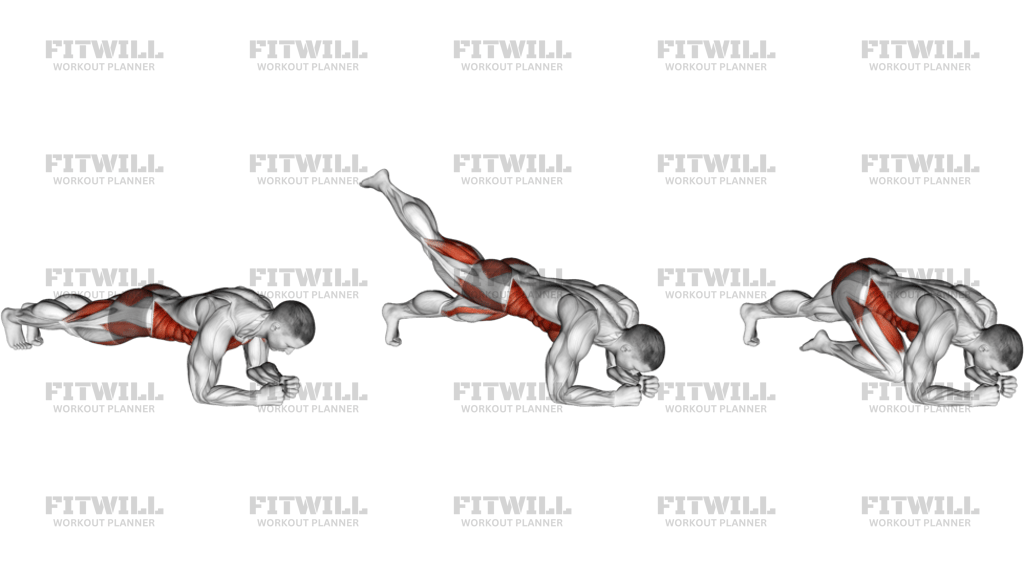
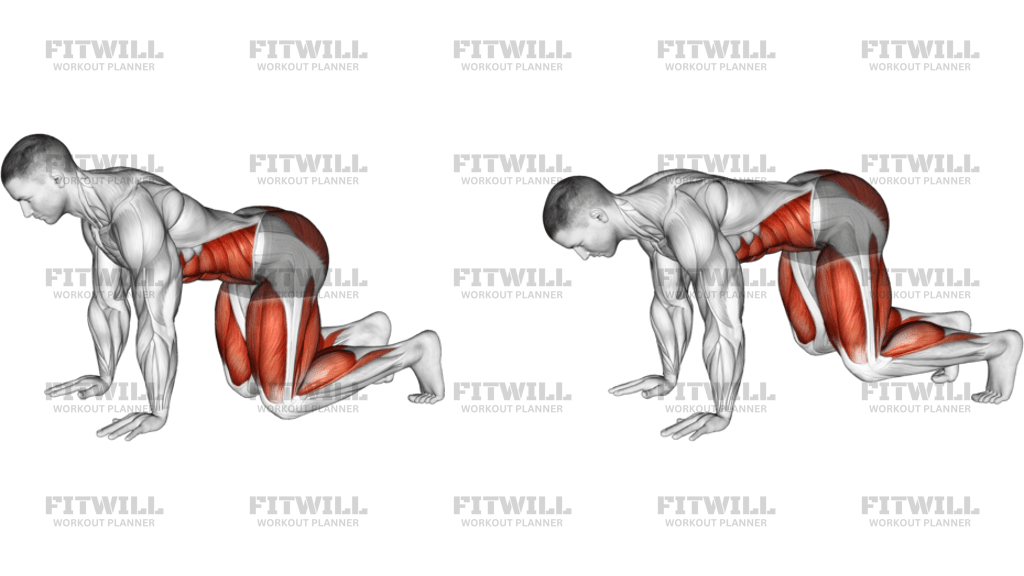
Mountain Climber Slide With Towel is a floor-based core exercise that combines a high plank with a sliding knee drive. The towel makes the movement smoother and more demanding at the same time: one foot has to glide across the floor while the trunk stays braced, the shoulders stay stacked, and the hips resist twisting. It is a useful bodyweight drill for building core control, hip flexor strength, and shoulder stability without needing a machine or heavy load.
What makes Mountain Climber Slide With Towel different from a regular mountain climber is the sliding foot. Instead of simply lifting the knee, you have to control how the leg travels in and out while keeping tension through the midsection. That extra slide increases the need for coordination, especially if your floor is smooth and the towel moves freely. The exercise works best when the motion stays crisp and quiet rather than fast and bouncy.
The setup matters more than it first appears. A strong high plank gives you a straight line from shoulders to heels, with hands planted under the shoulders and the chest slightly pushed away from the floor. Once you start the slide, keep the pelvis level and avoid letting the low back sag or the hips hike up. The torso should stay organized while one knee drives forward and the other leg extends back, so the abs and hip flexors do the work instead of momentum.
Mountain Climber Slide With Towel is often used in warmups, core circuits, conditioning blocks, or as a low-equipment finisher. It can raise heart rate quickly, but the best version still looks controlled and athletic. Beginners can shorten the range and slow the pace, while more advanced lifters can lengthen the slide or increase the tempo without losing trunk position. If the movement turns into a bouncing sprint, the towel has stopped serving the exercise and is just hiding sloppy reps.
Treat every repetition as a test of position first and speed second. Keep breathing steady, press firmly through the floor with the planted foot, and return the sliding leg with control before switching sides. When the shoulders start to wobble, the hips rotate, or the knee no longer tracks cleanly under the torso, the set is done. Done well, Mountain Climber Slide With Towel is a simple drill that teaches the core to resist movement while the legs keep working through a fast, athletic pattern.
[ Workout Log & Planner ]
Put your next workout in Fitwill
Keep your plan and training log ready when you are.


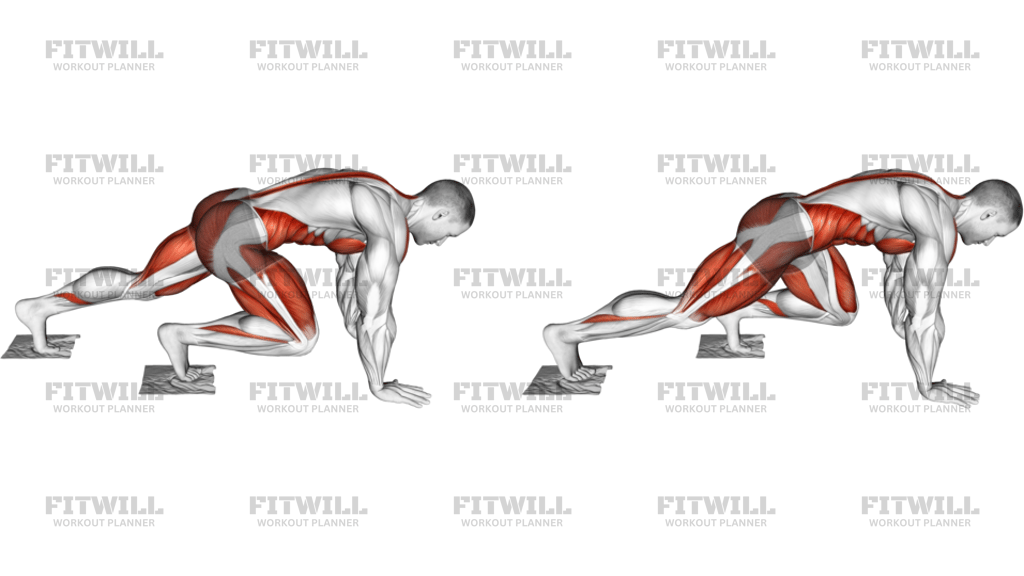
Instructions
- Place a folded towel under the sliding foot on a smooth floor, then set up in a high plank with hands under your shoulders and both legs straight.
- Stack your shoulders over your wrists, press the floor away, and tighten your abs so your body forms one long line from head to heel.
- Keep one foot planted while the other foot rests on the towel, with the sliding leg extended back and the hips level.
- Drive the sliding knee forward under your torso as the towel glides toward your hands, keeping your chest steady and your low back from sagging.
- Finish the drive with the knee tucked close to the same-side elbow or toward the centerline, depending on your range of motion.
- Push the towel back out to the starting position under control, fully extending the sliding leg without letting the pelvis twist.
- Alternate sides for each rep or switch after the planned number of reps, maintaining the same plank height and tempo on both legs.
- Breathe out as the knee drives in, inhale as the leg slides back, and lower to the floor or rest only when your set is complete.
Tips & Tricks
- Use a towel that slides smoothly; if it grabs the floor, the exercise turns into a jerky lunge instead of a clean core drill.
- Keep your shoulders square to the floor. If one shoulder drops toward the planted knee, shorten the slide and slow the pace.
- Think about pulling the floor toward you with the planted foot while the sliding foot glides back, so the hips stay quieter.
- Do not let the towel leg lock out so hard that your hip twists open. A soft knee bend on the return usually keeps the line cleaner.
- If your low back arches, reduce the slide distance and bring the knee in less aggressively until you can hold a flatter plank.
- The exercise should feel like abs, hip flexors, and shoulders working together, not like a sprint. Speed only helps after position stays fixed.
- Keep your hands planted a little wider if your wrists or shoulders feel crowded in a narrow plank stance.
- Stop the set when your hips start bouncing side to side; the sliding towel makes compensation obvious, so use that feedback early.
Frequently Asked Questions
What does Mountain Climber Slide With Towel train most?
It mainly trains the core, especially the abs and obliques, while also challenging the hip flexors, shoulders, and the planted leg's stability.
Do I need a special floor for Mountain Climber Slide With Towel?
You need a smooth surface so the towel can glide. Carpet usually creates too much friction and makes the slide choppy.
Should both feet be on towels for Mountain Climber Slide With Towel?
The exercise is usually done with the sliding foot on a towel and the other foot planted, because that makes the plank easier to control and the rotation easier to spot.
How do I keep my hips from twisting during Mountain Climber Slide With Towel?
Keep your hands spread evenly, press the floor away, and shorten the slide until you can move the knee without the pelvis swinging side to side.
Is Mountain Climber Slide With Towel beginner-friendly?
Yes, if you slow it down and keep the slide short. Beginners should prioritize a stable plank and smaller knee drives before trying faster reps.
What are the most common mistakes in Mountain Climber Slide With Towel?
The biggest mistakes are bouncing the hips, letting the low back sag, and rushing the slide so the towel moves faster than your trunk can stay stable.
How many reps should I do?
Use short sets of alternating reps, usually 8-20 total slides, or time-based intervals if you are using it in a conditioning circuit.
Can I make Mountain Climber Slide With Towel harder?
Yes. Increase the slide distance, slow the return, or use faster alternations only after you can keep the shoulders square and the plank solid.