Single Leg Glute Bridge With External Rotation
Single Leg Glute Bridge With External Rotation is a floor bridge variation that trains hip extension, pelvic control, and glute activation with one foot working at a time. The externally rotated leg position shifts the focus toward the glutes and the small stabilizers around the hip, which makes the exercise useful when you want unilateral work without a lot of spinal loading.
The setup matters because the bridge is only effective when the pelvis stays level and the working side does the lifting. Lie on your back with one foot planted close enough to your glute that the shin can stay near vertical at the top. Keep the other leg in the externally rotated position shown in the image, with the knee opened out instead of letting it drift across the midline. That position helps you feel hip control before the rep even starts.
As you bridge, exhale, brace your ribs down, and press through the planted heel and outer edge of the foot. Lift the hips until the torso and planted thigh make a straight line, then pause long enough to feel the planted-side glute finish the rep. The goal is not to arch the lower back higher; the goal is to create clean hip extension while the pelvis stays square.
This movement works well as a warmup, accessory drill, or lower-body control exercise on days when you want to wake up the glutes and clean up side-to-side differences. It can also be a helpful regression before heavier single-leg hip thrusts, because it teaches you to hold tension through one hip without needing a bench or external load.
The most common mistakes are overreaching the top, letting the planted knee collapse inward, or twisting the hips to chase more range. If the hamstring starts taking over, move the foot slightly closer to the body and shorten the range a little. If your low back feels pinched, lower only as far as you can keep your ribs stacked and your pelvis controlled.
[ Workout Log & Planner ]
Put your next workout in Fitwill
Keep your plan and training log ready when you are.


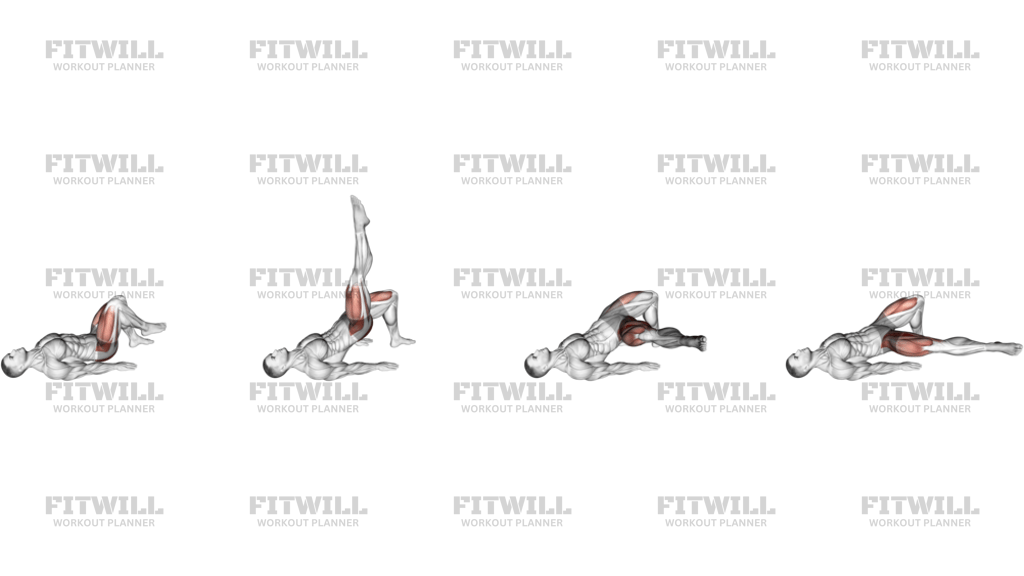
Instructions
- Lie on your back with one foot planted on the floor and the other leg set in the externally rotated position shown in the image.
- Place the planted heel close enough to your glutes that the shin can stay close to vertical when you reach the top.
- Keep both ribs down, tuck the pelvis slightly, and brace so your lower back stays long on the floor.
- Turn the planted thigh slightly outward and keep the knee tracking over the middle of the foot.
- Exhale and drive through the planted heel and outer foot to lift the hips off the floor.
- Raise until your shoulders, hips, and planted knee form a straight line without arching your lower back.
- Pause briefly at the top and squeeze the planted-side glute while keeping the free leg opened outward.
- Lower your hips slowly until they hover just above the floor or touch lightly, then reset before the next rep.
Tips & Tricks
- Keep the planted heel close enough that you feel the glute, not just the hamstring, at the top.
- Match the knee and foot angle on every rep so the externally rotated setup does not collapse inward.
- Press through the whole foot, but bias the heel and outer edge to keep the glute doing the work.
- Do not chase height by flaring the ribs; stop when the hips are fully extended and the trunk stays stacked.
- If the hamstring cramps, move the foot a little farther away and shorten the range before the next rep.
- Keep the free leg quiet and open rather than letting it pull the pelvis across to one side.
- Use a two-count lower to keep tension on the glute through the eccentric phase.
- Start each set on the weaker side first so you do not let fatigue hide a side-to-side imbalance.
Frequently Asked Questions
What muscle does Single Leg Glute Bridge With External Rotation target most?
The planted-side glute is the main target, with the hamstrings, core, and hip stabilizers assisting.
Why does the working leg stay externally rotated?
That position helps you keep the hip organized and shifts more of the challenge onto the glute rather than letting the knee cave inward.
Where should my planted foot be on the floor?
Place it close enough that your shin is near vertical at the top of the bridge, which usually gives the glute the best leverage.
Should I feel this in my lower back?
No. You should feel the work mostly in the glute and hamstring on the planted side. If your low back takes over, lower less and keep your ribs down.
Can beginners do this version before a heavier bridge or hip thrust?
Yes. It is a useful stepping stone because it teaches single-leg pelvic control without needing a bench or added load.
What should I do if my hamstring cramps?
Move the planted foot a little farther away, reduce the range of motion, and focus on driving through the heel instead of forcing a higher bridge.
How is this different from a regular single-leg glute bridge?
The external rotation makes the hip position more specific and asks the stabilizers to control the knee and pelvis more deliberately.
How can I make the exercise harder without adding weight?
Use a longer pause at the top, slow the lowering phase, or hold the free leg position more strictly so the hip stabilizers have to work harder.