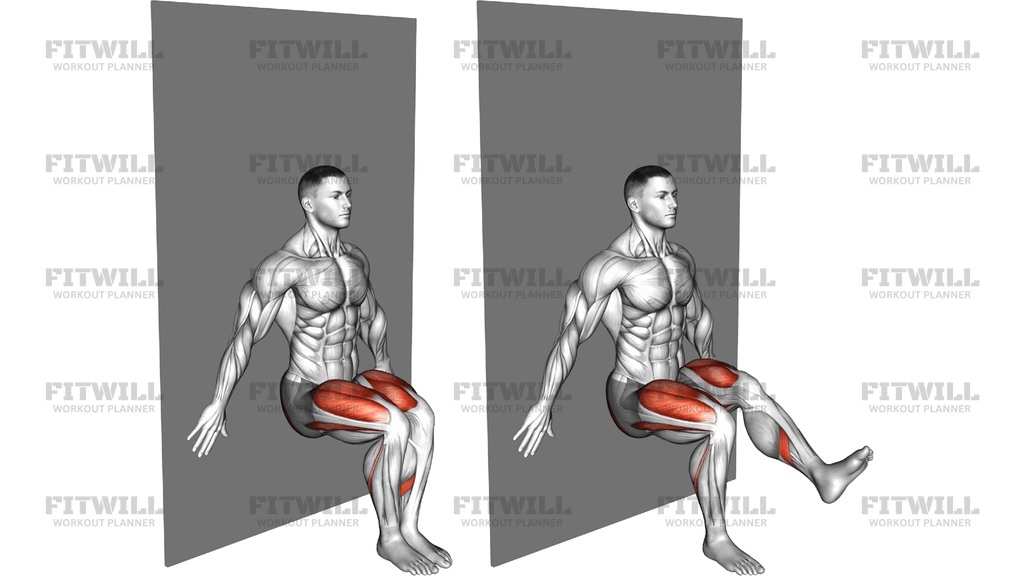
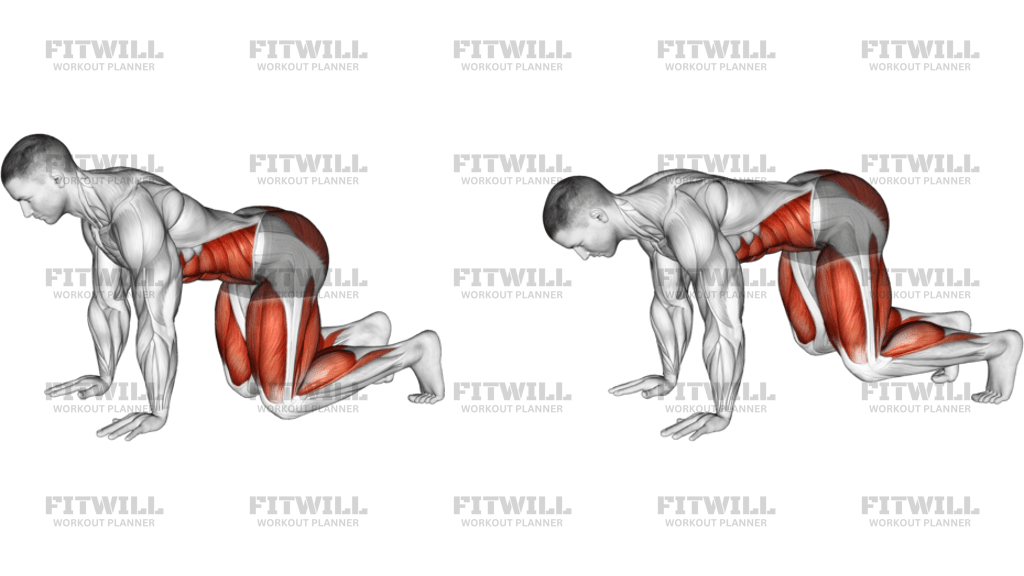
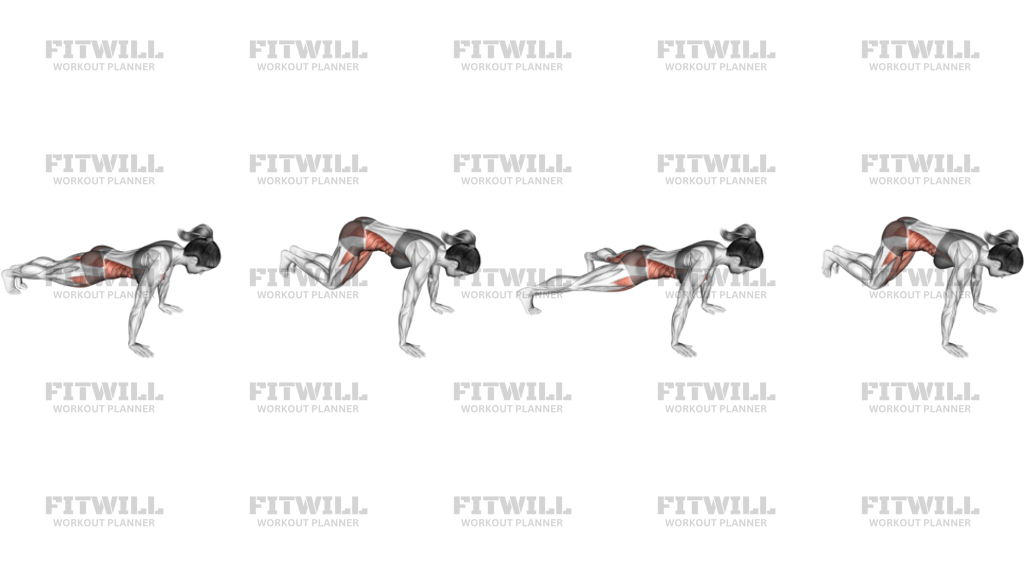
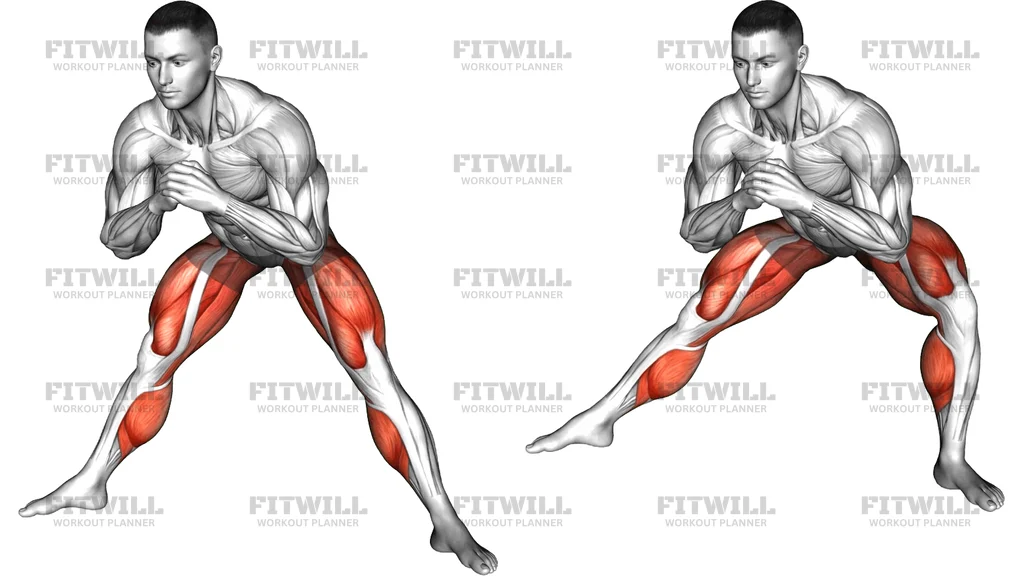
Standing Hip Adduction Version 2
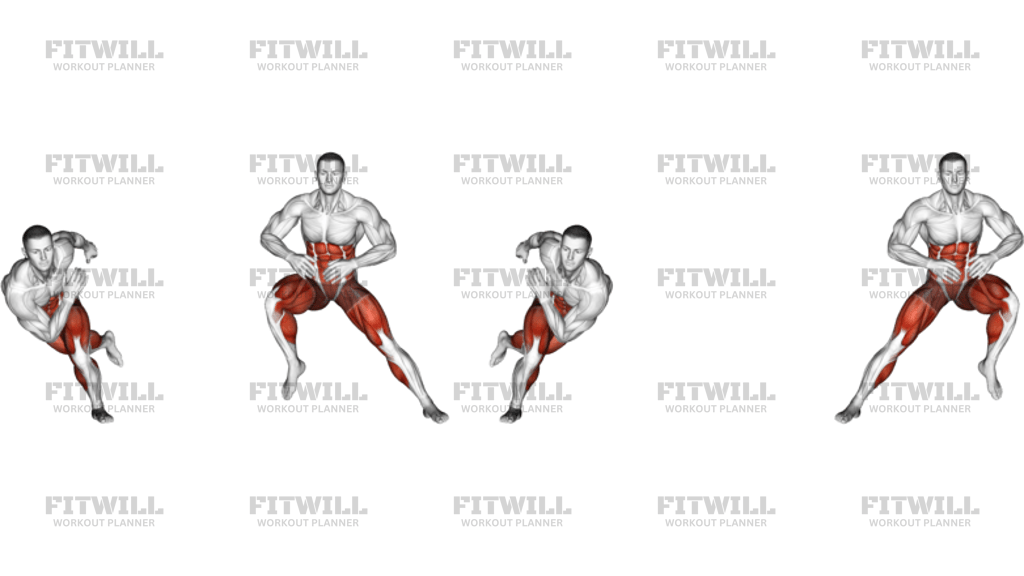
Standing Hip Adduction Version 2 is a bodyweight standing drill for the hip adductors, inner thigh control, and pelvic stability. In this version, one leg travels across the body's midline while the torso stays tall and the support leg keeps the body stacked. The exercise looks simple, but the value comes from staying organized through the crossing pattern instead of letting the movement turn into a sway or a twist.
The setup matters because the line of pull changes as soon as the pelvis shifts or the torso leans. Stand upright with your weight mostly on the support leg, keep both feet pointed forward, and let the working leg move inward on a clean path. If the standing knee caves, the hips rotate, or the ribs flare, the adductors lose tension and the rep becomes more of a balance correction than a hip-strength drill.
Each rep should feel deliberate. Bring the working leg across the body until you feel a clear squeeze along the inner thigh, then return it slowly without snapping the leg back out. Exhale as the leg comes in and inhale as it opens back out. A small pause at the most crossed-in position helps you own the contraction without using momentum.
This movement fits well as accessory work, warm-up activation, or a low-load control drill before squats, lunges, running, or change-of-direction work. It is especially useful when you want adductor strength without equipment, but the set should stop as soon as balance or knee alignment starts to drift. Quality of position matters more than how far the leg crosses.
[ Workout Log & Planner ]
Put your next workout in Fitwill
Keep your plan and training log ready when you are.


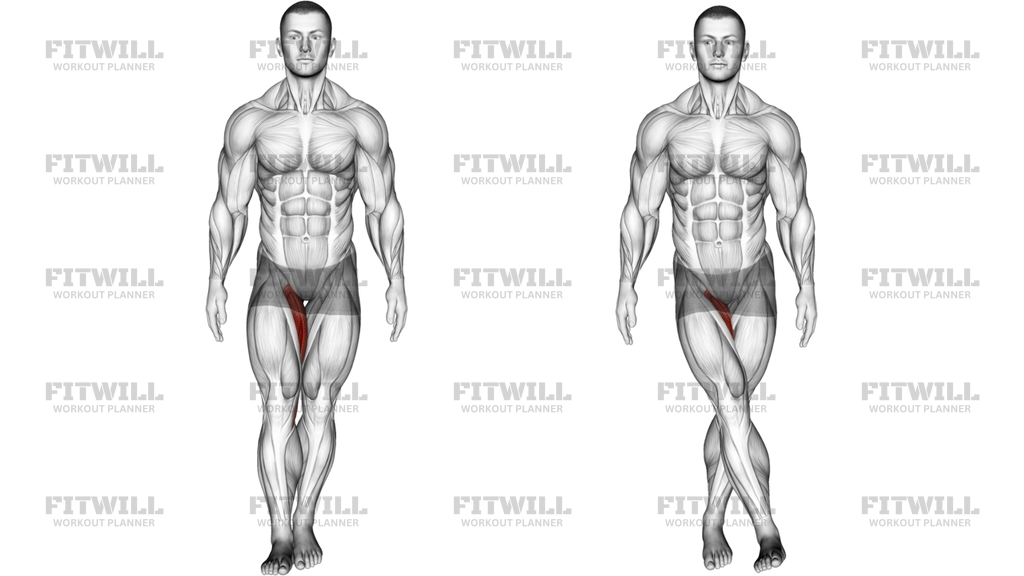
Instructions
- Stand tall with your feet about hip-width apart and shift most of your weight onto the support leg.
- Keep the pelvis level, the ribs stacked, and both toes pointing forward before you start the rep.
- Move the working leg across the body in front of the standing leg without leaning your torso.
- Let the foot travel close to the floor if needed so you can keep the motion smooth and controlled.
- Squeeze the inner thigh of the moving leg as it reaches the farthest comfortable crossed-in position.
- Pause briefly, then return the leg out to the side under control instead of letting it swing back.
- Keep the standing knee soft and lined up over the middle toes as you hold the position.
- Exhale as the leg comes across and inhale as it opens back out, then repeat on the other side if programmed.
Tips & Tricks
- Use a small crossing range at first; the goal is hip adduction, not a dramatic leg swing.
- If you feel the work in your low back, shorten the reach and keep the ribs stacked over the pelvis.
- A slight bend in the standing knee usually helps balance and keeps the pelvis from hiking.
- Keep the moving foot pointed mostly forward so the hip does not turn out to cheat the rep.
- Think about the inner thigh pulling the leg across instead of swinging the foot by momentum.
- Hold a wall or rack lightly only if balance is limiting the adductor contraction.
- Move slower on the way back out; the controlled return is part of the exercise.
- Stop the set when the standing hip shifts or the knee collapses inward.
Frequently Asked Questions
What does Standing Hip Adduction Version 2 work most?
It mainly trains the inner thigh adductors while the standing leg, glutes, and core stabilize the body.
Is this more of a balance drill or a strength exercise?
It is both. The moving leg works the adductors, but the standing leg and trunk have to keep you stacked and steady.
Which leg should cross in front during the rep?
The working leg crosses inward across the midline. You can train either side, depending on the set or circuit.
How far should the working leg move across?
Only as far as you can keep the pelvis level and the torso tall. If the hips rotate, the range is too big.
Can I hold onto a wall or rack for support?
Yes. Light support is fine if it helps you keep the adductors working instead of fighting for balance.
Why does my standing knee cave inward on this exercise?
Usually the leg is crossing too far or the foot is turned out. Shorten the range and keep the knee tracking over the middle toes.
Is Standing Hip Adduction Version 2 beginner-friendly?
Yes. Start with bodyweight, a small range, and light wall support if you need it.
What should I avoid while doing this movement?
Avoid swinging the leg, leaning the torso, and forcing the foot so far across that the pelvis twists.