Cable Standing Close-Grip Row
Cable Standing Close-Grip Row is a standing horizontal pulling exercise performed on a cable machine with a close neutral handle. It trains the back, rear shoulders, and arms while forcing the trunk and hips to resist the pull of the cable. Because you are not braced against a bench or chest pad, the setup matters: your feet, hinge angle, and cable distance all affect whether the rep stays strict or turns into a sway-and-yank movement.
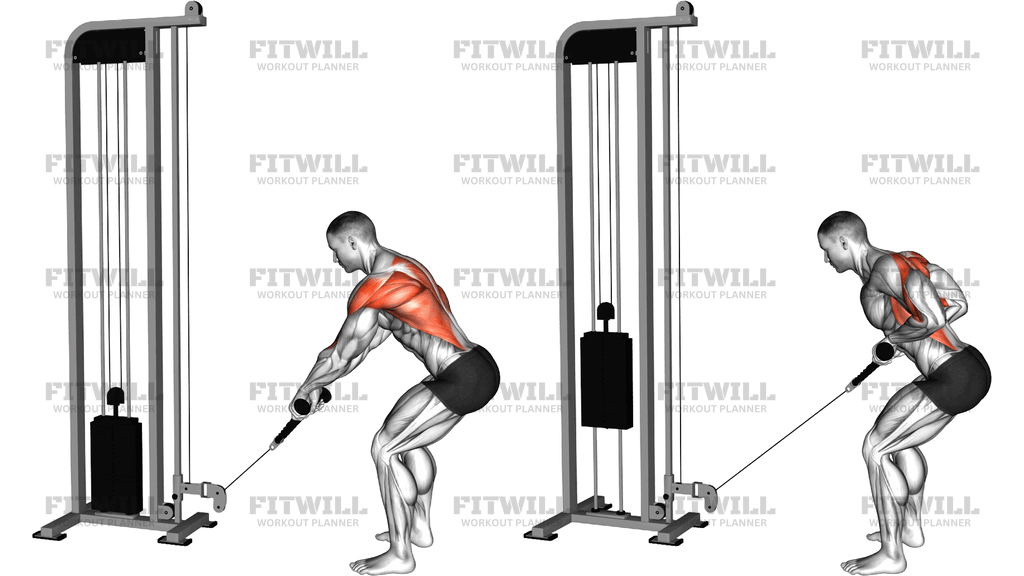
The image shows a lifter facing the stack with a small staggered stance, soft knees, and a slight hip hinge. That position helps keep the torso organized while the arms start long and the cable stays under tension. The goal is to row the handle toward the lower ribs or upper waist by driving the elbows back close to the body, not by shrugging the shoulders or leaning farther back as the set gets harder.
The pull should feel smooth and deliberate. Start by reaching forward just enough to let the shoulder blades glide, then pull through the elbows, squeeze briefly at the torso, and return slowly until the arms are long again. A controlled return keeps the lats, mid-back, and scapular stabilizers working through the full range instead of letting the stack snap you back into position.
This is a useful accessory exercise for back thickness, posture control, and general pulling strength. It fits well after heavier rows, pull-ups, or deadlift work, or as a lighter technique-focused row when you want continuous cable tension. Beginners can use it safely with a light load, but only if they can keep the ribcage stacked, the neck relaxed, and the torso from twisting or rocking.
If the weight forces you to lean back, flare the ribs, or finish the rep with momentum, it is too heavy for this pattern. Keep the handle path consistent, use a load that lets you pause at the torso, and let the set end before the low back starts doing the work for the upper back.
[ Workout Log & Planner ]
Put your next workout in Fitwill
Keep your plan and training log ready when you are.


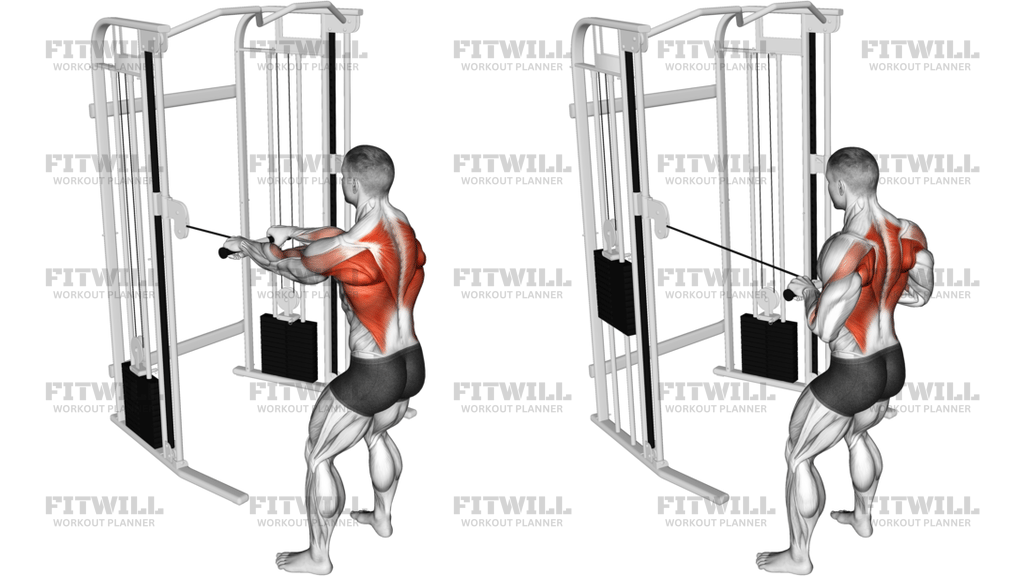
Instructions
- Clip a close-grip handle to the cable and set the pulley so the line of pull meets your midsection.
- Stand facing the stack with feet about hip-width apart, one foot slightly behind the other, and knees softly bent.
- Grip the handle with a neutral grip, step back until the cable is taut, and let your arms straighten in front of you.
- Hinge slightly at the hips and keep your ribs stacked over your pelvis with your chest lifted but not flared.
- Set your shoulders down and let the shoulder blades reach forward a little without rounding your lower back.
- Pull the handle toward your lower ribs or upper waist by driving your elbows back close to your sides.
- Pause briefly at the torso and squeeze your mid-back without shrugging or leaning farther away from the stack.
- Lower the handle slowly until your arms are long again, then repeat while exhaling on the pull and inhaling on the return.
Tips & Tricks
- Keep the handle traveling toward the lower ribs or upper waist; if it rises toward the chest, the elbows usually flare and the shoulders take over.
- Think about moving the elbows back, not just pulling with the hands.
- Keep your neck long and your chin neutral so the upper traps do not dominate the rep.
- Let the shoulder blades protract slightly at the start, but do not lose the brace in your lower back.
- Use a small staggered stance if the cable wants to pull you forward off balance.
- Pause for a beat at peak contraction so the stack does not turn the rep into a swing.
- Choose a load that allows a slow, quiet return without the weight plates crashing.
- If your torso starts rocking or twisting, stop the set or reduce the load immediately.
Frequently Asked Questions
What muscles does the Cable Standing Close-Grip Row work?
It primarily hits the lats, rhomboids, middle and lower traps, rear delts, biceps, and forearms, with the core helping keep the torso still.
Can beginners perform this exercise?
Yes. Beginners usually do best with a light stack setting, a stable staggered stance, and a strict pause at the torso.
Where should the handle land on each rep?
Pull the handle to your lower ribs or upper waist. That keeps the elbows tucked and makes the row feel like a back exercise instead of a shrug.
Should I lean back to finish the rep?
No. A small hip hinge is fine, but leaning back to move the handle usually turns the set into a body-swing and removes tension from the back.
What makes this different from a seated cable row?
The standing version asks your hips and trunk to stabilize the load, so you get less support and more demand on posture control.
Why use a staggered stance?
A slight stagger helps you resist the cable without being pulled forward, especially when the stack gets heavier.
What are the most common mistakes?
Shrugging the shoulders, flaring the ribs, swinging the torso, and letting the weight stack slam back are the biggest problems.
How should I progress this row over time?
Add load only when you can keep the same torso angle, pause at the body, and control the return on every repetition.