Cable Standing Hip Extension Version 2
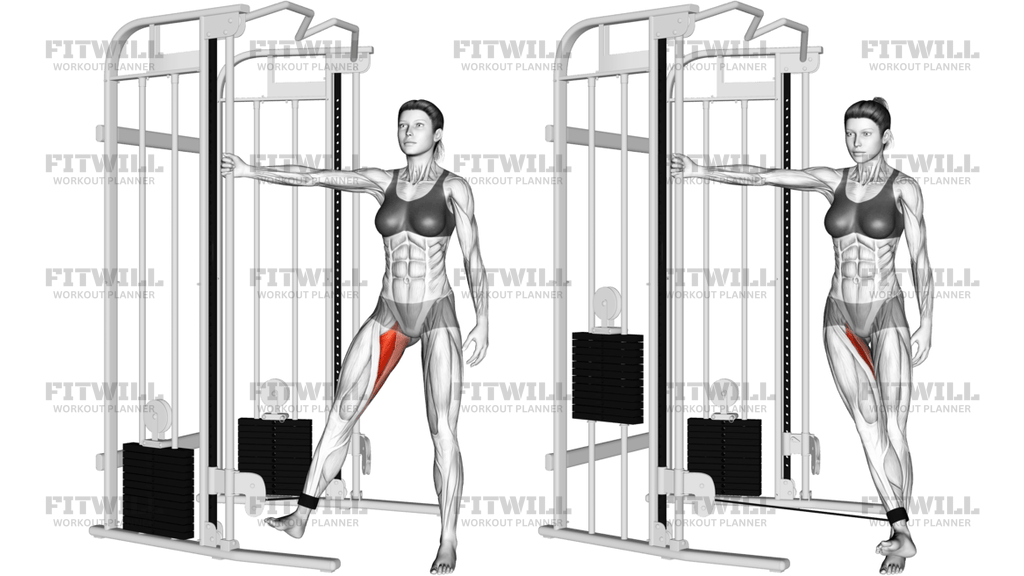
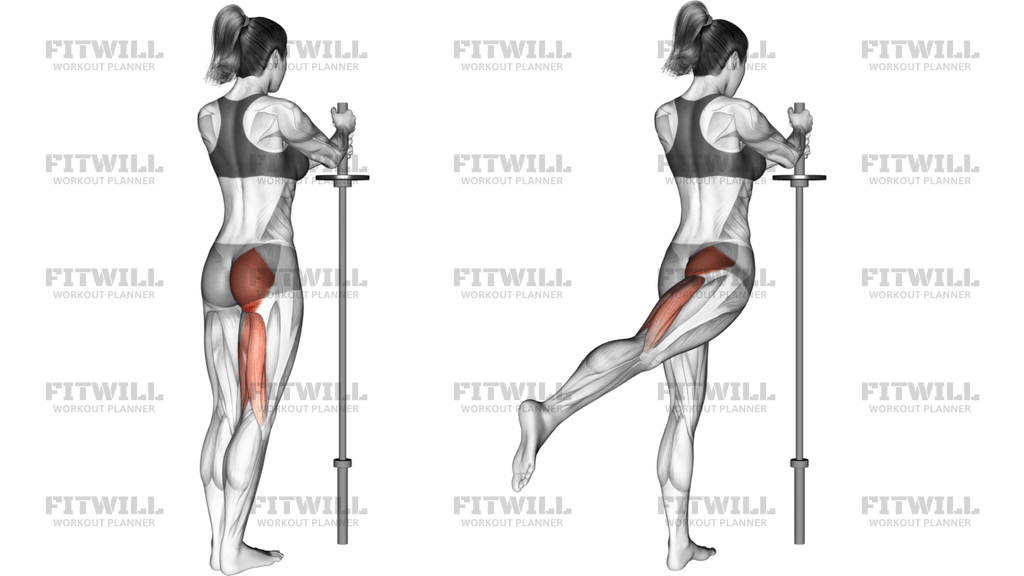
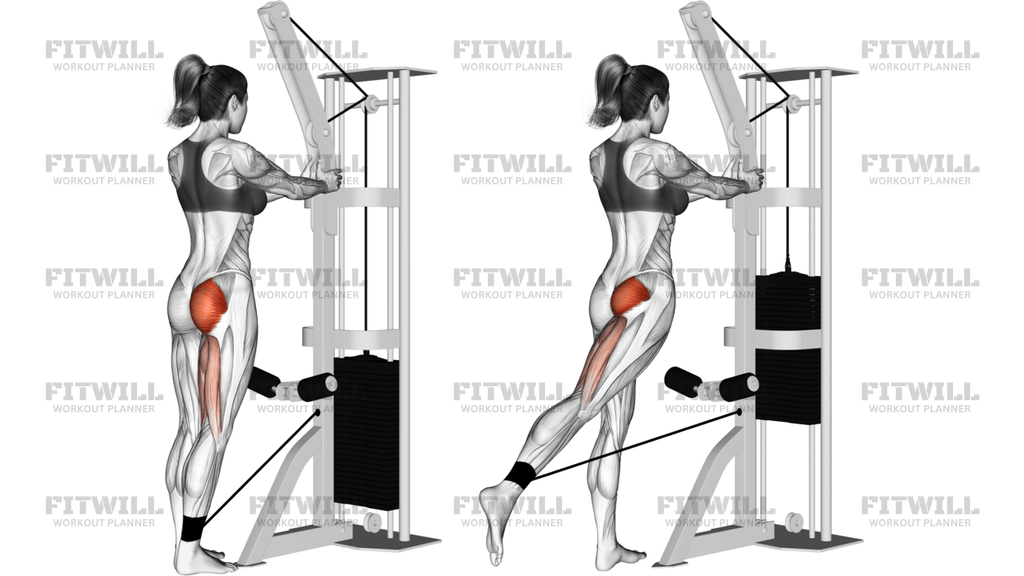
Cable Standing Hip Extension Version 2 is a single-leg glute exercise performed with an ankle cuff attached to a low cable. You stand facing the machine, use the frame or handles for balance, and drive the working leg backward from the hip while keeping the torso mostly still. The image shows a slight forward lean, which helps load the glute without turning the movement into a lower-back swing.
This exercise is mainly used to train hip extension strength, glute activation, and pelvic control in a standing position. The primary target is the gluteus maximus, with the hamstrings helping to extend the hip and the core and trunk muscles resisting rotation. Because the cable pulls from behind and below, the setup matters: the standing foot, the braced torso, and the cuffed leg all need to stay organized so the glute does the work instead of momentum.
A good rep starts with the working foot planted lightly and the cable already under tension. Hold the machine for support, set the pelvis square to the floor, and keep the standing knee soft rather than locked. From there, press the cuffed leg back and slightly up only as far as you can keep the ribs down and the pelvis level. At the top, the glute should feel fully shortened, not pinched in the lower back.
Return the leg slowly until the cable pulls the hip back into the stretched position, then repeat without letting the stack crash. This version is useful in glute-focused sessions, lower-body accessory work, warmups, and rehab-style control work when you want a standing pattern instead of a floor-based bridge. It is also a practical option for beginners if the load stays light and the range stays strict, but it becomes much less effective if you sway the torso, rotate the hip open, or use a big kick instead of a controlled extension.
[ Workout Log & Planner ]
Put your next workout in Fitwill
Keep your plan and training log ready when you are.


Instructions
- Attach the ankle cuff to one leg and stand facing the cable machine with the working leg closest to the low pulley.
- Hold the machine frame or upright with both hands for balance, then step the support foot into a stable stance.
- Keep the working knee slightly soft, square your hips, and lean the torso forward only enough to feel balanced and braced.
- Start with the cable already taut and the cuffed leg just behind the body so the stack does not jerk on the first rep.
- Brace the ribs down and keep the pelvis level before you move.
- Drive the cuffed leg straight back from the hip while keeping the foot low and the chest still.
- Squeeze the glute at the end of the rep without arching the lower back or twisting the hips open.
- Lower the leg slowly until the hip is back under control and the cable tension is restored.
- Reset your stance and breathing before the next repetition, then repeat for the planned reps.
Tips & Tricks
- Keep the standing foot heavy and tripod-like so the support side does not wobble when the cable loads the leg.
- Think of the moving leg as a straight hip drive, not a bent-knee kickback that turns into a hamstring curl.
- Do not let the pelvis rotate toward the working side; square hips are what keep this on the glute.
- A small forward lean is fine, but if your torso keeps chasing the leg, the load is too heavy.
- Pause for a moment at full extension to eliminate swing and make the glute finish the rep.
- Lower the cuff slowly so the returning stretch stays in the hip and does not become a sloppy free fall.
- Use the machine handles only as balance assistance, not as a way to pull your body through the rep.
- Keep the working foot relaxed and pointed mostly down or slightly back so the hip extends cleanly.
- If your lower back feels more active than your glute, shorten the range and lighten the stack.
- Start with a light cuff position and increase resistance only after you can keep the pelvis still for every rep.
Frequently Asked Questions
What does Cable Standing Hip Extension Version 2 train most?
It primarily trains the gluteus maximus, with the hamstrings and core helping stabilize the movement.
Why do I hold the machine during this exercise?
The hand support helps you balance so the working leg can extend back without the torso swaying or twisting.
Where should the cable and ankle cuff sit?
The cuff should be on the working ankle or lower shin, with the cable coming from a low pulley behind you.
Should my knee stay straight on the working leg?
Keep it slightly soft rather than locked out. That helps you drive from the hip instead of turning the movement into a jerky kick.
Why is my lower back taking over?
Usually the load is too heavy, the range is too large, or the pelvis is tipping forward instead of staying level.
Is this the same as a glute kickback?
It is very similar, but the standing setup with hand support and a slightly forward torso lean makes the hip extension more controlled.
Can beginners use this exercise?
Yes. It works well for beginners if the stack is light and the torso stays quiet during each rep.
What is the biggest mistake to avoid?
The main mistake is swinging the leg back with momentum and arching the lower back to fake a bigger range.