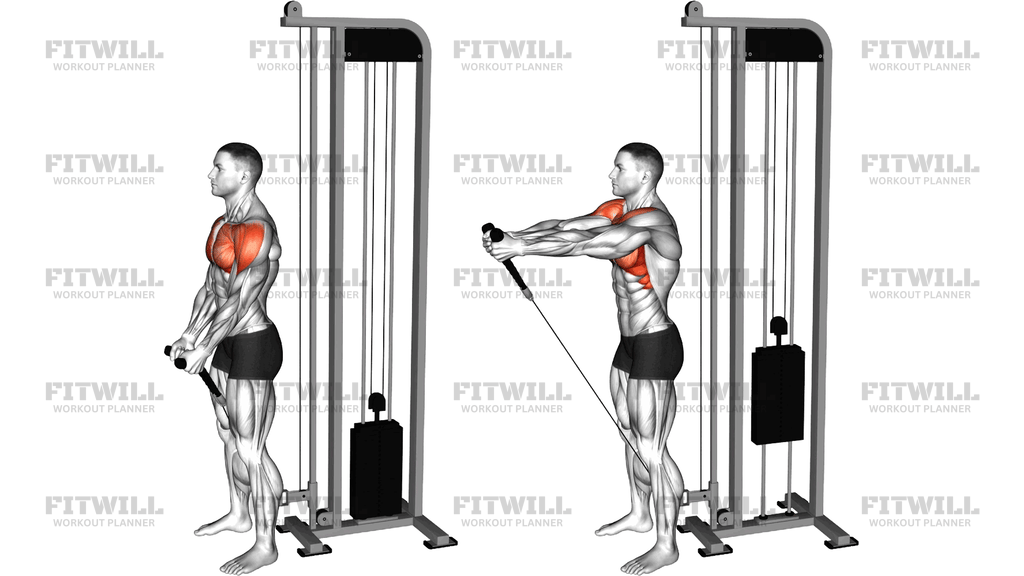
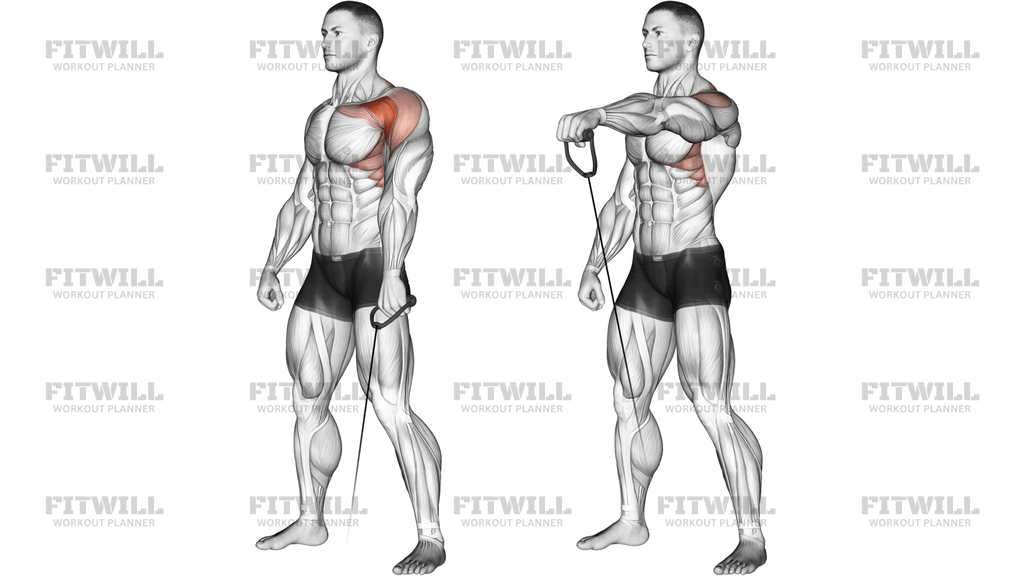
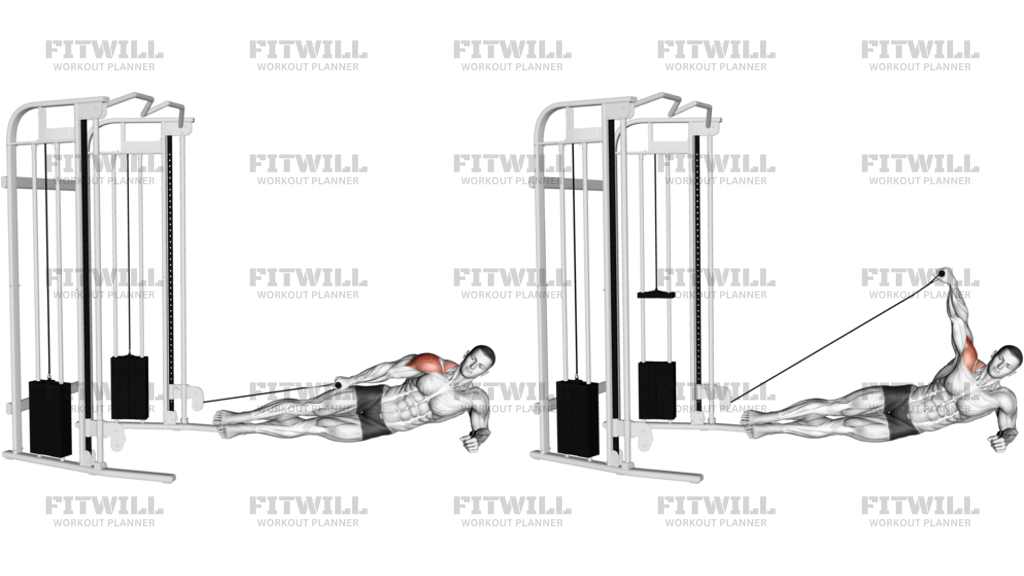
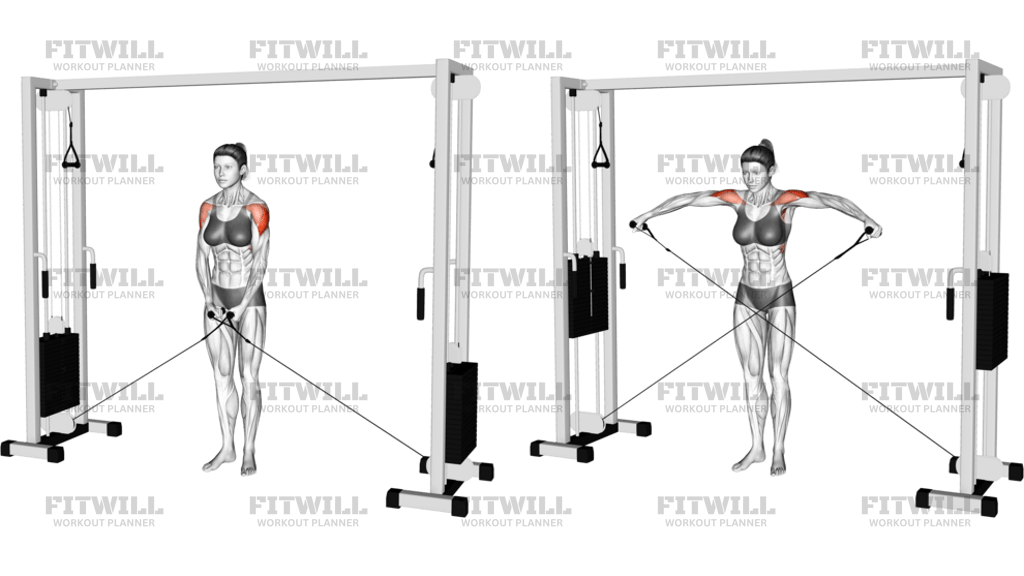
Cable Rope Standing Face Pull
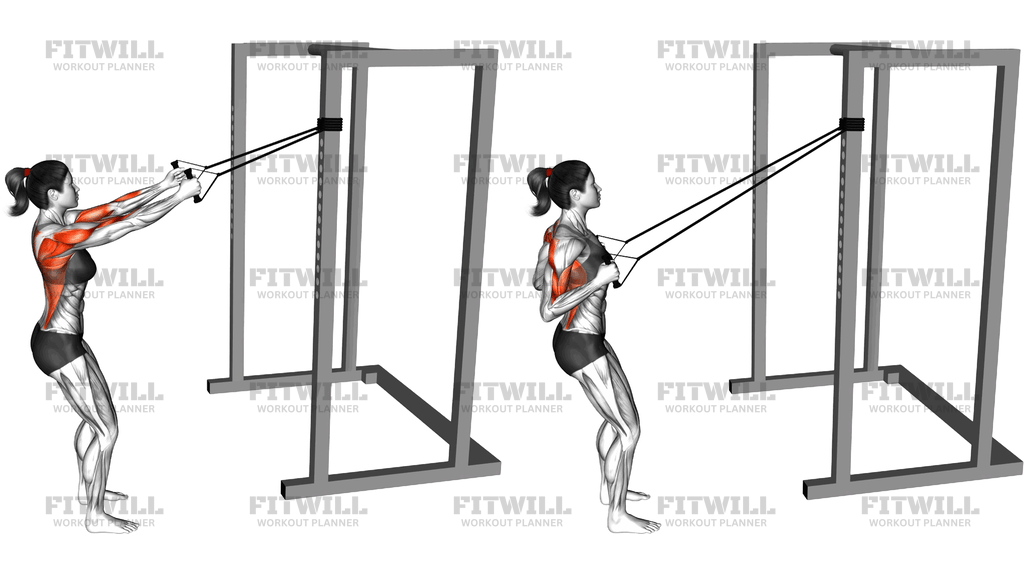
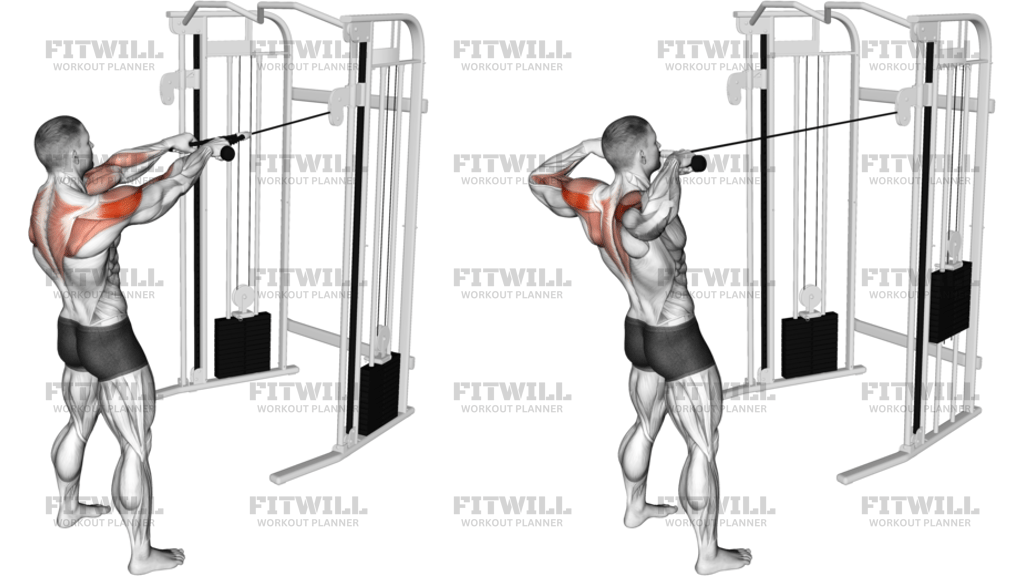
Cable Rope Standing Face Pull is a standing cable exercise for the rear shoulders and upper back. The rope starts at about face height and the finish brings the hands toward the eyes, forehead, or temples while the elbows stay high and flare out. That line of pull shifts the work away from the chest and front delts and onto the rear delts, rhomboids, mid and lower traps, and the rotator cuff muscles that help the shoulder blade and upper arm stay organized.
The setup matters because the cable path decides whether this becomes a true face pull or just another row. The pulley should sit roughly at upper chest to face height, the rope should be long enough to split at the finish, and your feet should be far enough back that the weight stack starts with steady tension. A tall stance, stacked ribs, and a neutral neck help you keep the torso quiet so the shoulders can do the work instead of a hard lean or a shrug.
Each repetition should begin with straight arms and shoulder blades set rather than pinned hard together. Pull the rope toward the face by driving the elbows back and out, then finish by separating the rope ends and rotating the hands so the knuckles move back beside the ears. That last bit of external rotation is the feature that makes the movement so useful for rear delt and upper-back training. On the return, let the arms extend under control while keeping the shoulders down and the cable line smooth.
This exercise is common in upper-body accessory work, posture-focused training, and shoulder prehab because it loads the back of the shoulder without needing heavy weight. It is useful for lifters who press a lot, athletes who need better scapular control, and anyone trying to build stronger rear delts with less neck dominance. The safest versions are usually the strict ones: no torso swing, no rib flare, and no trying to yank the rope farther than the shoulder joint can comfortably control.
Treat the rep as a clean pull to the face with a brief pause, then a slow return to full extension. If the cable is dragging your chest forward, the elbows are dropping, or the neck is taking over, the load is too heavy or the pulley is set in the wrong spot. A good face pull should feel demanding in the rear shoulders and upper back, not in the lower back or the front of the shoulder.
[ Workout Log & Planner ]
Put your next workout in Fitwill
Keep your plan and training log ready when you are.


Instructions
- Set the cable pulley at about face height and clip on the rope attachment.
- Stand facing the stack with your feet about shoulder-width apart and step back until the cable has tension at the start.
- Hold the rope with a neutral grip, palms facing each other, and keep your chest tall without leaning back.
- Brace your ribs over your pelvis and let your arms start straight with a soft bend in the elbows.
- Pull the rope toward your eyes or upper face by driving your elbows out and back.
- As the rope reaches your face, split the ends apart and rotate your hands so the knuckles move back beside your temples or ears.
- Pause briefly at the finish with your shoulders down and your upper back tight, not shrugged.
- Return the rope slowly until your arms are extended again and the cable stays under control.
- Reset your stance if you start rocking, shrugging, or losing the rope path, then repeat for the planned reps.
Tips & Tricks
- Keep the pulley high enough that the rope travels straight to the face; if it is too low, the movement turns into a row.
- Think about pulling to the bridge of the nose or forehead first, then opening the rope at the finish.
- Use a lighter load than you would for rows; this lift depends on shoulder position, not brute force.
- Let the elbows travel high, but do not force them above a comfortable shoulder line if the joint feels pinchy.
- Keep your neck long and your chin slightly tucked so you do not chase the rope with your head.
- Avoid turning the rep into a lower-back lean; the torso should stay mostly still from start to finish.
- Control the lowering phase for at least a couple of seconds so the rear delts keep working through the return.
- If the rope ends do not separate at the finish, the load is usually too heavy or the range is too short.
- A small pause at the end makes the rear shoulders and upper back do more of the work.
Frequently Asked Questions
What muscles does the cable rope standing face pull work?
It mainly trains the rear delts, rhomboids, mid and lower traps, and the rotator cuff, with the arms helping to guide the rope.
Why do the hands separate at the end of a face pull?
Splitting the rope at the finish adds external rotation, which shifts more work to the rear shoulder and upper-back muscles.
Should the rope touch my face?
It should come close to the eyes, nose, forehead, or temples, but you do not need to slam it into your face. The important part is the pull path and the finish position.
What is the most common mistake on this exercise?
Using too much weight and turning it into a body swing or a cable row is the most common problem.
Can beginners do cable rope face pulls?
Yes. Start light, keep the pulley at face height, and focus on a smooth pull with a controlled return.
How should my elbows move during the rep?
The elbows should drive out and back rather than pinning to the ribs. That high-elbow path is what makes the movement a face pull.
What if I feel the exercise mostly in my neck?
Lower the load, relax the shoulders away from the ears, and keep the chin tucked so the upper traps do not take over.
How can I make the face pull harder without cheating?
Use a slower lowering phase, pause at the finish, or add reps with the same strict rope path instead of adding body momentum.