Resistance Band Standing Ab Crunch
Resistance Band Standing Ab Crunch is a standing anti-extension and spinal flexion drill that loads the abs while the band pulls from overhead. It is useful when you want a core exercise that trains the trunk in a standing position instead of on the floor, which makes it easy to pair with athletic warmups, accessory circuits, and core-focused finishers. The movement is simple, but the setup matters because the band must stay anchored high enough to create a clear crunching path from the ribs down toward the pelvis.
The main target is the rectus abdominis, with the obliques helping guide the curl and the hip flexors assisting when the pelvis tucks under. In practical terms, the exercise teaches you to shorten the front side of the torso without turning it into a hip hinge or a full-body bow. When it is done well, the band creates steady resistance through the whole range, so the abs stay under tension from the standing start to the folded finish.
A good setup starts with a stable stance, soft knees, and a tall posture under a high anchor point. Hold the band at the sides of the head or just in front of the temples, keep the elbows slightly forward, and avoid flaring the rib cage before the first rep. From there, the crunch should feel like the ribs are closing toward the pelvis while the head, chest, and upper back travel as one unit instead of collapsing in stages.
The return phase matters just as much as the downward crunch. Resist the pull of the band as you unwind, keep the neck long, and stop before your low back takes over or the ribs pop forward. That controlled reset keeps tension on the abs and makes the exercise much more useful than bouncing through short, fast reps. For most lifters, light to moderate resistance is enough to make the movement challenging without turning it into a momentum exercise.
Resistance Band Standing Ab Crunch is also a good choice for people who want a standing core option that does not require a bench, mat, or machine. It fits well in home workouts, travel training, and general strength programs, especially when the goal is better trunk control, better ribcage position, and stronger endurance through the midsection. The safest versions stay crisp and repeatable, with each rep finishing in a strong crunch and each reset returning to a tall, organized stance.
Fitwill
Log Workouts, Track Progress & Build Strength.
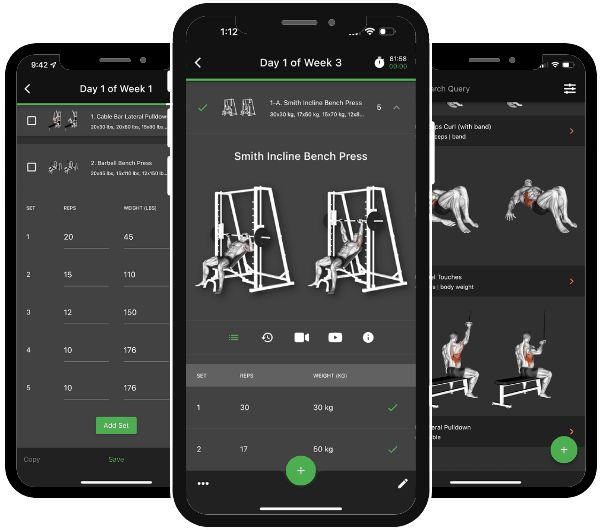
Achieve more with Fitwill: explore over 5000 exercises with images and videos, access built-in and custom workouts, perfect for both gym and home sessions, and see real results.
Start your journey. Download today!


Instructions
- Anchor the resistance band high overhead and stand facing away from the anchor with your feet about hip-width apart.
- Hold the band beside your head or at your temples, keep your elbows slightly forward, and take a small step to create steady tension before you start.
- Set your ribs down over your pelvis, soften your knees, and keep your neck long with your chin lightly tucked.
- Brace your abs, then crunch your upper body forward by bringing your ribs toward your pelvis.
- Let your elbows travel down and slightly in as your torso folds, but do not yank with your arms.
- Squeeze the abs at the bottom for a brief pause while keeping your hips mostly stacked under you.
- Slowly reverse the motion and let the band pull you back to a tall standing position under control.
- Reset your posture at the top, keep the band under tension, and repeat for the planned reps before stepping out of the anchor tension safely.
Tips & Tricks
- Keep the band anchored high enough that the pull stays overhead; a low anchor turns the movement into a different pattern.
- Think about closing the distance between your ribs and your pelvis, not bending your hips forward.
- If your lower back arches at the top, start each rep with a small pelvic tuck before you crunch.
- Keep the elbows slightly in front of the face so the arms do not become the main lever.
- Use a shorter range if the band snaps you upright or pulls your shoulders out of position.
- Exhale as you crunch down and let the inhale happen as you return to standing.
- Pick a tension that lets you pause at the bottom without shaking or twisting.
- If your neck feels strained, hold the band a little lower and keep the chin gently tucked.
- Do not let the knees lock out; a soft stance makes it easier to keep the ribs and pelvis stacked.
- Stop the set when you can no longer control the return, because the lowering phase is where this exercise gets sloppy.
Frequently Asked Questions
What does Resistance Band Standing Ab Crunch train most?
It mainly targets the rectus abdominis, with the obliques helping control the curl and the hip flexors assisting near the finish.
Where should the band be anchored for Resistance Band Standing Ab Crunch?
Use a high anchor overhead so the band pulls down from above. That keeps the movement in a true standing crunch pattern instead of a row or diagonal pull.
Should I hold the band at my temples or behind my head?
Either can work, but the image shows the band at the sides of the head, which helps keep the elbows slightly forward and reduces neck strain.
Why do I feel Resistance Band Standing Ab Crunch in my hip flexors?
Some hip flexor work is normal because the pelvis and thighs help stabilize the standing position. If they take over, shorten the range and focus on curling the ribs down instead of just folding at the hips.
Can beginners do this exercise safely?
Yes, as long as the band tension is light and the return is slow. Beginners should keep the stance steady and stop the set if they start leaning backward or using momentum.
What is the most common mistake with Resistance Band Standing Ab Crunch?
The biggest mistake is turning it into a fast whole-body swing. The torso should curl under control while the hips stay mostly in place.
How low should I crunch on each rep?
Crunch only until you can keep the ribcage closing toward the pelvis without rounding the lower back aggressively or losing control of the band.
What can I use instead of Resistance Band Standing Ab Crunch?
A cable standing crunch gives a similar feel with more constant resistance, while a kneeling cable crunch is a useful substitute if you want less balance demand.
How many reps work best for this movement?
It usually works well in moderate to higher rep ranges, because the goal is controlled trunk flexion and clean tension rather than maximal loading.