Bent Arms Chin-Up
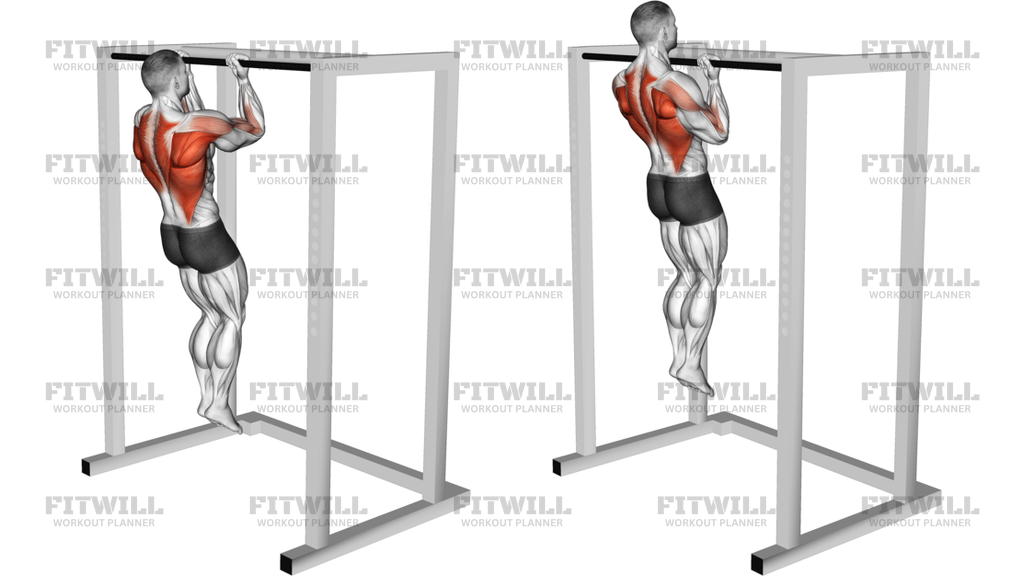
Bent Arms Chin-Up is the top phase of a chin-up: you hold yourself above the bar with the elbows bent, the chin clearing the bar, and the shoulders kept active instead of shrugged. It is a bodyweight pulling exercise that builds upper-back, lat, biceps, forearm, and trunk strength while teaching you how to control the hardest part of the rep.
The setup matters because a sloppy start quickly turns the hold into a neck crank or a swing. Grip the bar about shoulder-width apart, stack the ribs over the pelvis, and keep the legs quiet so the torso stays organized. The goal is a solid hanging line with tension through the hands, arms, back, and core before you begin the pull.
From a dead hang or assisted start, pull until your chin clears the bar and your elbows stay bent. Hold the top position with the chest close to the bar, then lower under control to full arm extension without dropping suddenly. Breathe steadily through the hold and avoid kicking, kipping, or reaching with the neck to fake a better rep.
Use Bent Arms Chin-Up as a strength builder, a top-position isometric, or a progression toward strict chin-ups and weighted pulling. It fits well when you want cleaner pulling mechanics instead of high-rep momentum. If the shoulders pinch, the swing gets hard to control, or the grip fails first, shorten the hold, add assistance, or reduce the range until the position stays crisp.
[ Workout Log & Planner ]
Put your next workout in Fitwill
Keep your plan and training log ready when you are.


Instructions
- Grip the chin-up bar about shoulder-width apart and start from a dead hang with the arms straight.
- Set the shoulders down away from your ears and keep the ribs stacked over the pelvis.
- Squeeze the bar and set the legs together so the body stays quiet before you pull.
- Drive the elbows down and pull your chest toward the bar until your chin clears it.
- Keep the shoulders active at the top instead of shrugging into the ears.
- Hold the top position briefly with the torso steady and the neck neutral.
- Lower slowly to full arm extension without swinging or dropping out of the rep.
- Reset the shoulders and repeat for the planned time or repetition count.
Tips & Tricks
- Start every rep from a quiet dead hang; if the body is swinging, pause until it settles.
- Think about driving the elbows toward your ribs instead of yanking the chin forward.
- Keep the chest tall at the top so the shoulders do not collapse into a shrug.
- Avoid jutting the neck over the bar; the chin should clear the bar without craning forward.
- If you cannot keep the hold steady, use a band, assistance machine, or light foot support.
- Lower under control for 2 to 4 seconds to build strength through the full pull.
- Cross the ankles or slightly bend the knees to reduce unwanted leg movement.
- Stop the set when grip, shoulder position, or torso tension starts to break down.
Frequently Asked Questions
What muscles does Bent Arms Chin-Up work?
It emphasizes the lats, biceps, upper back, forearms, and the trunk muscles that keep the body from swinging.
Can beginners perform this exercise?
Yes, but many beginners need band assistance, a chin-up machine, or short top holds before they can control a full bodyweight rep.
Should my chin actually clear the bar?
Yes. The top position is the key part of the exercise, so aim for a clean chin-over-bar hold without shrugging or swinging.
What is the biggest form mistake on the bar?
Shrugging the shoulders and kicking the legs. Both make the rep look higher than it really is and reduce the work done by the pulling muscles.
Is this different from a regular chin-up?
Yes. A regular chin-up is a full pull from the bottom to the top, while this version emphasizes the bent-arm top position and control there.
How can I make the hold easier?
Use a band, a lower bar with foot support, or a chin-up assist machine so you can keep the shoulders packed and the torso still.
How long should I hold the top position?
Use the hold time your program calls for, but stop before the shoulders shrug or the grip starts to fail.
Where should I feel the exercise most?
You should feel the pull in the upper back and arms, with the core working hard to keep the body from swinging.