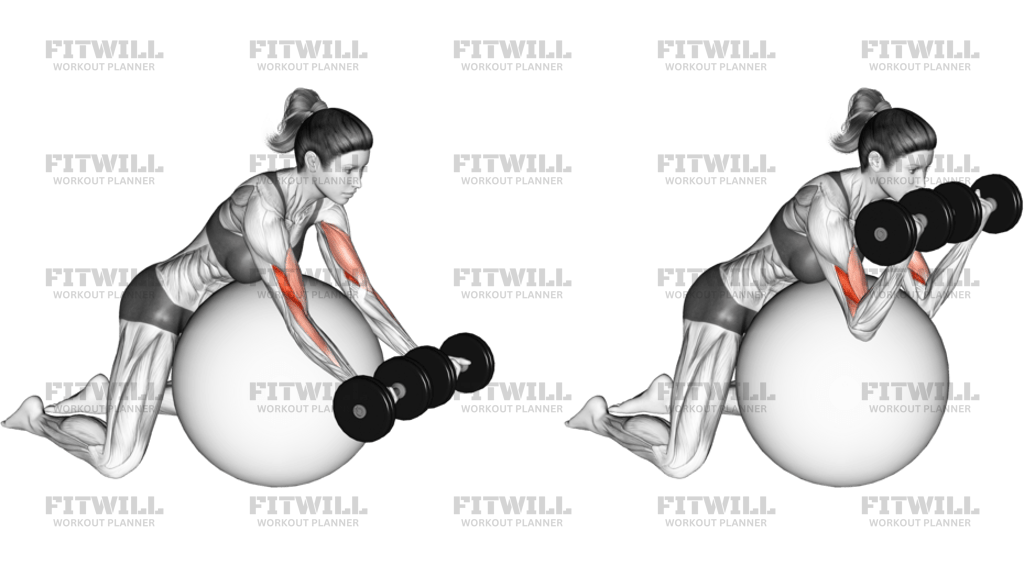
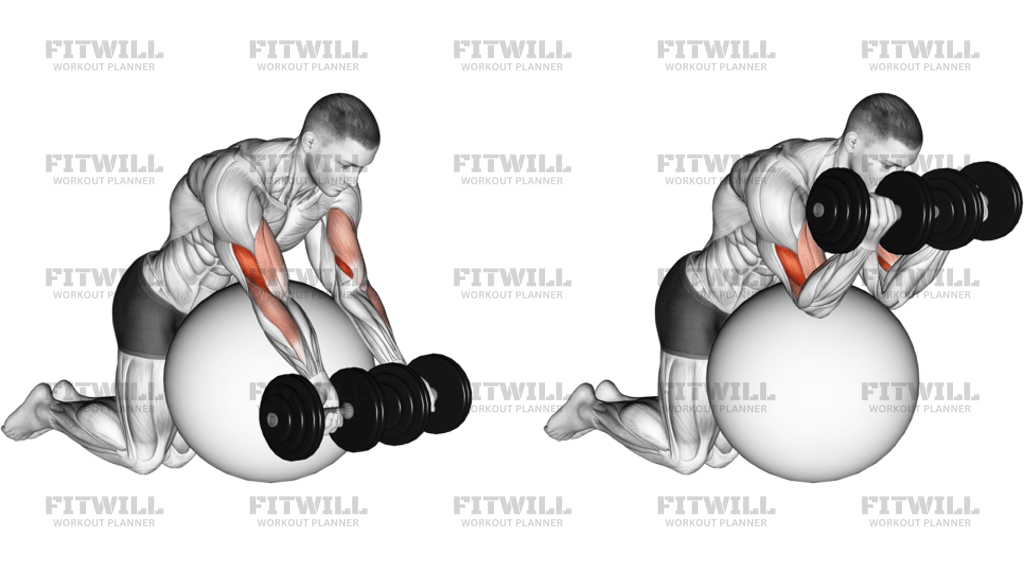
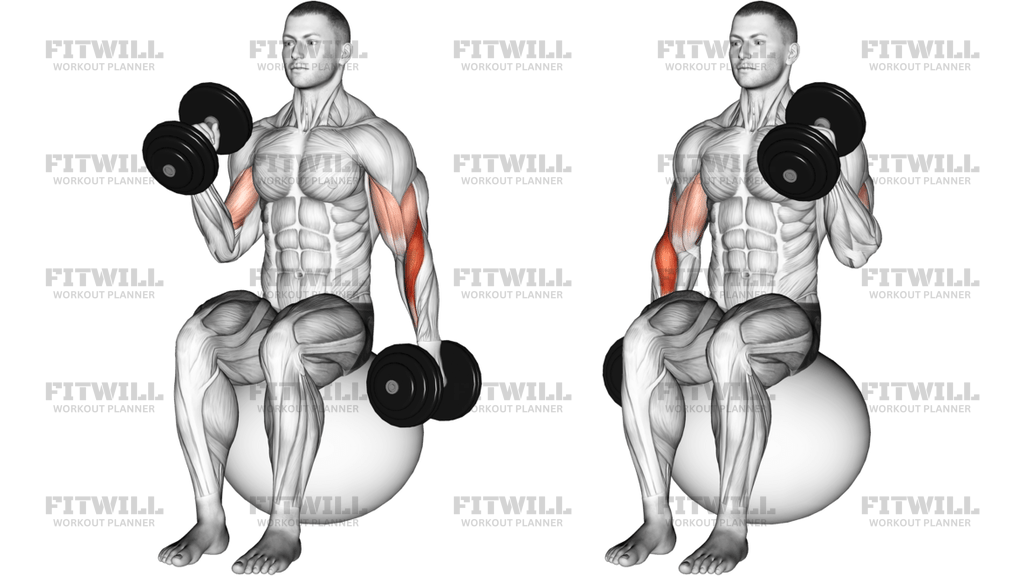
Dumbbell Biceps Curl With Overhead Extension On Stability Ball
Dumbbell Biceps Curl With Overhead Extension On Stability Ball is a balance-demanding upper-arm exercise that combines an elbow curl with an overhead arm extension while you stay braced on a stability ball. The ball makes the setup intentionally unstable, so the value of the movement comes from staying organized through the torso and shoulders instead of chasing heavy load or speed.
The curl portion emphasizes the biceps, while the overhead extension shifts work toward the triceps and the muscles that stabilize the shoulder and forearm. That combination makes the exercise useful when you want arm work that also challenges coordination, posture, and body control. Because the ball reduces the margin for error, small compensations show up quickly if the load is too heavy.
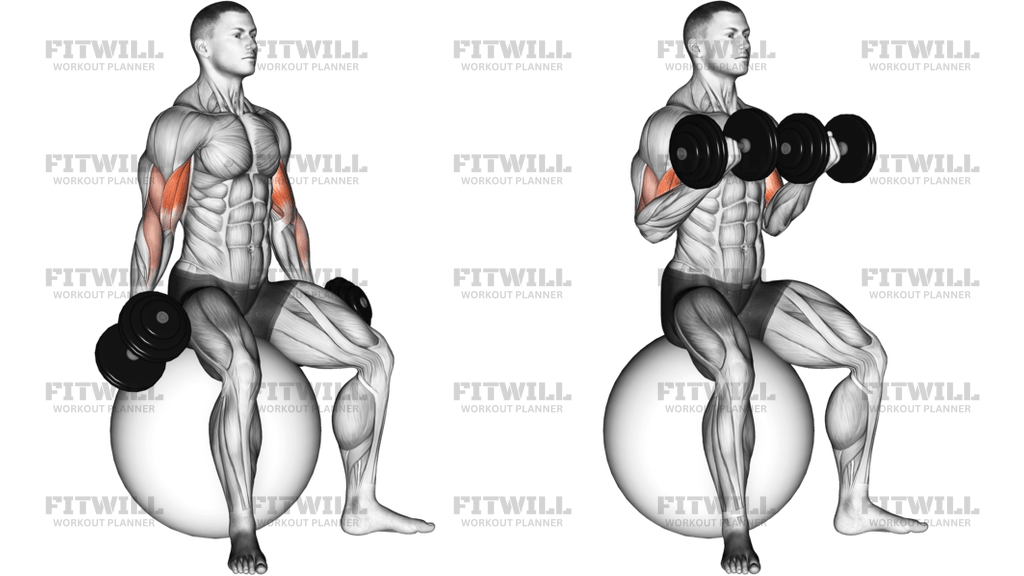
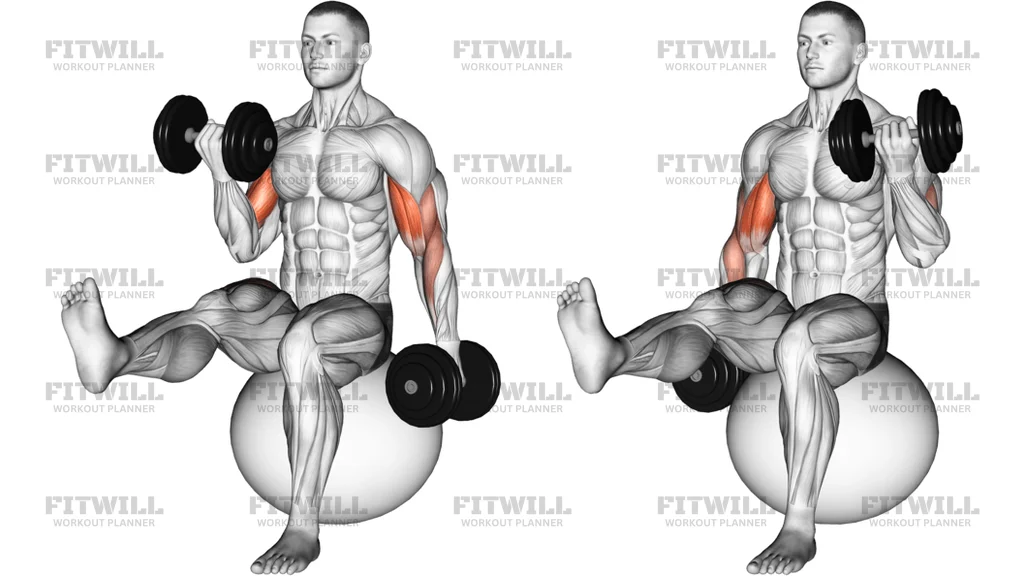
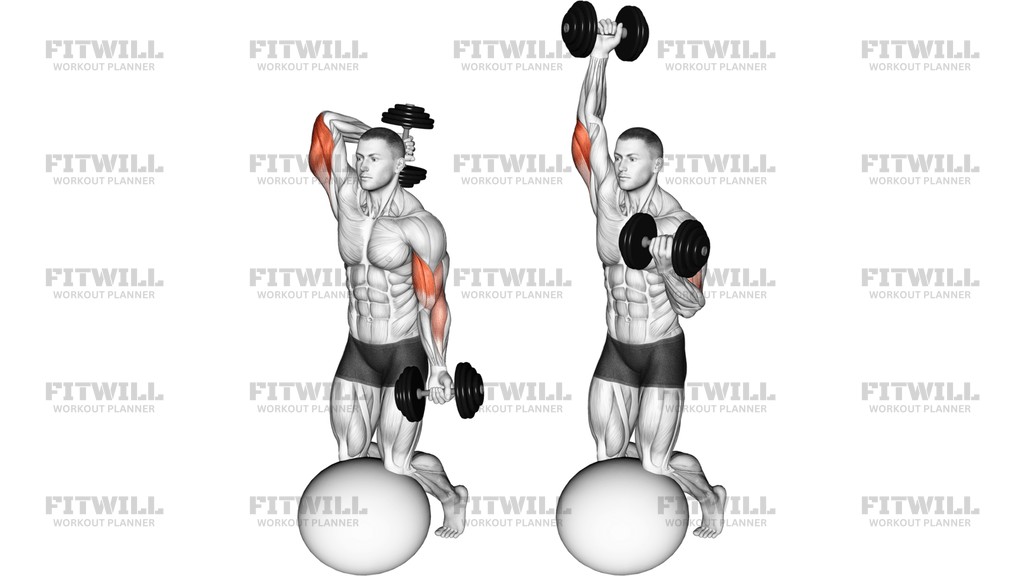
Good repetitions start with a secure setup. Place one shin or knee on the ball, keep the other foot anchored on the floor, and let the pelvis stay level so the ball does not roll away under you. Hold one dumbbell at your side and the other in the overhead bent-elbow position shown in the image, then lock in a tall chest, quiet ribs, and a steady gaze before you move.
From there, curl the down-side dumbbell toward the shoulder without swinging the torso while the opposite arm stays high and finishes the overhead extension under control. Reverse both actions slowly, feeling the elbow open and close instead of letting the dumbbells drop. Keep the neck long, breathe out through the effort, and reset your balance after each rep if the ball starts to drift.
This movement fits best as accessory work, a coordination drill, or a light arm finisher when you want tension without losing posture. It is not a good choice for maximal loading, fast reps, or sloppy fatigue. Use it when you can keep the ball stable, the elbows honest, and the range of motion smooth from the first rep to the last.
[ Workout Log & Planner ]
Put your next workout in Fitwill
Keep your plan and training log ready when you are.


Instructions
- Place one shin or knee on the stability ball and keep the other foot planted on the floor for balance.
- Hold one dumbbell at your side and the other with the elbow bent overhead, matching the alternating position shown in the image.
- Square your hips, lift your chest, and brace your torso before the first rep so the ball stays still.
- Curl the lower dumbbell toward the shoulder without rocking your torso or letting the elbow drift forward.
- At the same time, keep the overhead arm stacked and extend that elbow until the dumbbell is directly above the shoulder.
- Squeeze briefly at the top of the curl and at the end of the overhead extension without shrugging the shoulder.
- Lower both dumbbells slowly, keeping tension through the biceps, triceps, and forearms as you return to the start.
- Reset your balance between reps if the ball shifts, then repeat for the planned number of repetitions.
Tips & Tricks
- Choose light dumbbells first; the stability ball magnifies every balance error and makes heavy loads harder to control.
- Keep the supporting foot quiet and press it into the floor if the ball starts to drift.
- Do not let the curling elbow swing behind the torso or flare far forward at the top.
- Keep the overhead upper arm vertical so the extension comes from the elbow, not from leaning the torso.
- Exhale as you curl and extend, then inhale on the slower lowering phase.
- Avoid shrugging the shoulder of the overhead arm; keep the neck long and the shoulder blade set.
- If your lower back arches, reduce the range or lighten the dumbbells before continuing.
- Stop the set when you can no longer keep the ball stable under the working side.
- Use a controlled tempo on the way down because the eccentric phase is where the arm and shoulder position are easiest to lose.
Frequently Asked Questions
What does Dumbbell Biceps Curl With Overhead Extension On Stability Ball train most?
It primarily trains the biceps on the curl side and the triceps on the overhead extension side, with forearms, shoulders, and core helping you stay balanced.
Why use a stability ball for this arm exercise?
The ball adds an unstable base, so you have to control your torso, hips, and shoulder position while you move the dumbbells.
How should I position myself on the ball?
Place one shin or knee on the ball, keep the other foot on the floor, and stay tall enough that the ball does not roll as you curl and extend.
Should I swing the curl or lean back to finish it?
No. The curl should come from the elbow, not from body sway, because leaning back usually means the dumbbells are too heavy.
Is the overhead arm a triceps extension or a shoulder press?
It is a triceps-style overhead extension. Keep the upper arm mostly fixed and let the elbow open and close instead of pressing the weight overhead.
Is this exercise suitable for beginners?
Yes, but only with very light dumbbells and a stable setup. Beginners should master the balance position before trying to increase resistance.
What is the biggest mistake with this movement?
Letting the ball move while the torso twists. If the ball shifts every rep, reduce the load and tighten the setup.
Can I alternate sides every rep?
Yes. Alternating sides is the most natural way to keep the rhythm, but you can also do the same side for a full set if your program calls for it.