Dumbbell Side Bridge With Bent Leg
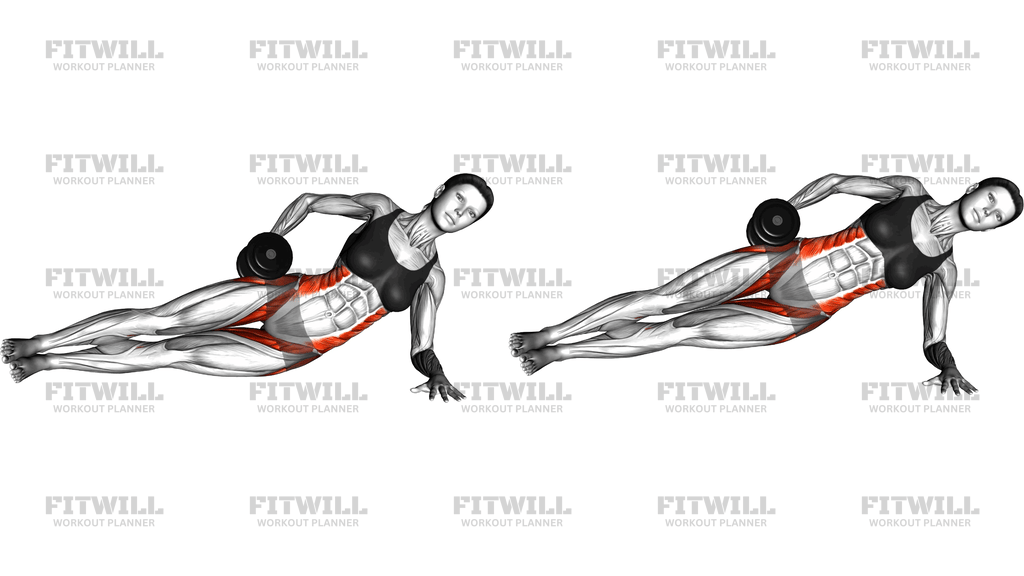
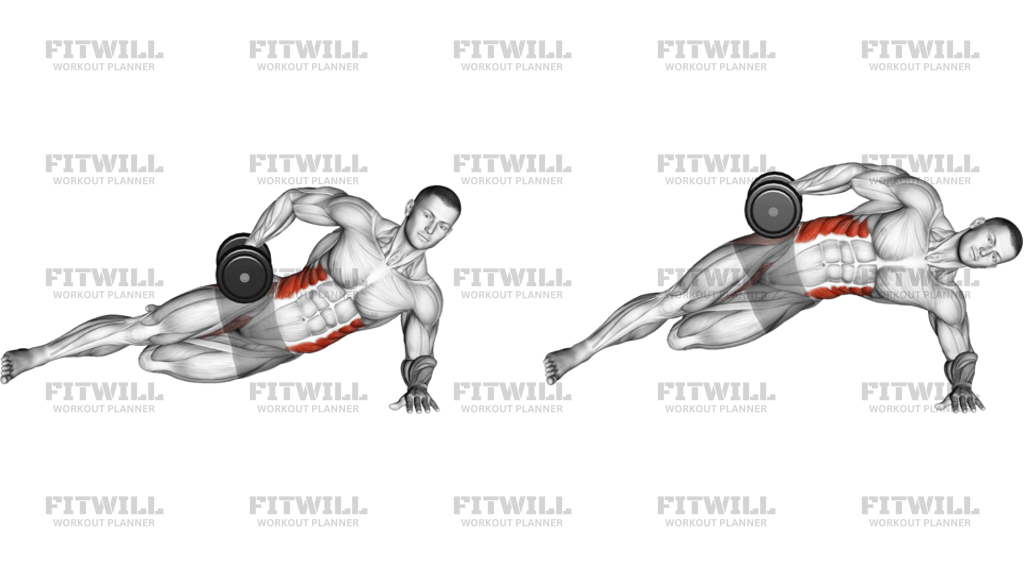
Dumbbell Side Bridge With Bent Leg is a loaded side-plank variation performed on one forearm with the knees bent and stacked. The bent-knee setup shortens the lever compared with a full side bridge, which makes the hold easier to learn while still demanding strong oblique engagement. The dumbbell in the upper hand adds resistance and makes the waist work harder to keep the rib cage, pelvis, and shoulders from drifting out of line.
The exercise is especially useful for the external obliques, with the rectus abdominis, transverse abdominis, glutes, hip stabilizers, and shoulder stabilizers helping keep the body stacked. Because the load sits off to one side, the torso has to resist side-bending and rotation at the same time. That is what gives the movement its value: it teaches the trunk to stay organized while the shoulder and hips share the work.
Setup is what makes the repetition feel solid instead of sloppy. Place the elbow directly under the shoulder, bend the knees about 90 degrees, and stack the legs so the lower body becomes a shorter, more stable base. Hold the dumbbell in the upper hand and keep it close to the hip or thigh so it does not pull the torso forward. Before lifting, brace the ribs down, lengthen the neck, and make sure the pelvis is not already rolled open.
From there, press the floor away, lift the hips until the body forms a clean line from shoulders to knees, and pause without losing tension. The best reps feel quiet and controlled: the waist stays active, the dumbbell stays steady, and the shoulders do not shrug toward the ear. Lower slowly, keep the same stacked shape on the way down, and reset before the next rep.
This exercise fits well in core blocks, warm-ups, accessory work, and athletic programs where side-to-side trunk control matters. It is a practical regression from a full straight-leg side bridge and a useful progression before longer holds or heavier loading. Keep the load light enough that you can breathe, hold position, and repeat the rep without twisting or dumping into the lower back.
[ Workout Log & Planner ]
Put your next workout in Fitwill
Keep your plan and training log ready when you are.


Instructions
- Lie on one side with your knees bent to about 90 degrees and stacked from hip to foot.
- Place the forearm directly under the shoulder, with the elbow slightly in front of the rib cage for a stable base.
- Hold the dumbbell in the upper hand and rest it lightly against the hip or upper thigh.
- Brace the ribs down, squeeze the glutes, and keep the chest stacked over the pelvis before lifting.
- Press through the forearm and lower knee, then lift the hips until the shoulders and knees make one clean line.
- Keep the dumbbell quiet and avoid rolling the chest forward or backward as you hold the bridge.
- Breathe out as you lift or hold the top position, then inhale as you lower under control.
- Lower until the hip nearly touches down, reset the stack, and repeat on the same side before switching sides.
Tips & Tricks
- Use a dumbbell light enough that the top hip does not drift backward when you lift.
- Keep the elbow under the shoulder so the front of the shoulder is not taking the whole load.
- If the dumbbell wants to slide, keep it close to the upper thigh or hip instead of holding it away from the body.
- Keep the chin slightly tucked and the neck long so the head does not crank upward.
- Think ribs over pelvis; if the upper ribs flare, the side waist is losing tension.
- Pause long enough at the top to feel the obliques work instead of bouncing through the bridge.
- If the lower back or side waist cramps, shorten the hold and rebuild the stacked position first.
- Add hold time before you add more weight or more reps.
Frequently Asked Questions
What muscle does Dumbbell Side Bridge With Bent Leg target most?
The obliques are the primary target, with the glutes, hip stabilizers, and shoulder stabilizers helping keep the bridge stacked.
Where should I hold the dumbbell during the side bridge?
Hold it in the upper hand and keep it close to the hip or thigh so it does not pull the torso forward.
Why bend the knees instead of doing a full side bridge?
Bent knees shorten the lever and make the side bridge easier to control while still loading the side waist hard.
How do I know if my hips are high enough?
At the top, the shoulders and knees should make one line without the waist sagging or the pelvis rolling open.
Can beginners do Dumbbell Side Bridge With Bent Leg?
Yes. It is a good entry point for side-plank strength if the dumbbell is light and the hold stays clean.
What is the most common form mistake?
Letting the chest rotate open or the hips drift backward. That usually means the body is no longer stacked over the elbow and knees.
How long should I hold each rep?
Long enough to keep a clean line and steady breathing; start short, then add time only when the top position stays solid.
What should I do if my shoulder feels overloaded?
Recheck that the elbow is under the shoulder, keep the shoulder packed, and reduce the load or hold time if the joint still feels pinched.