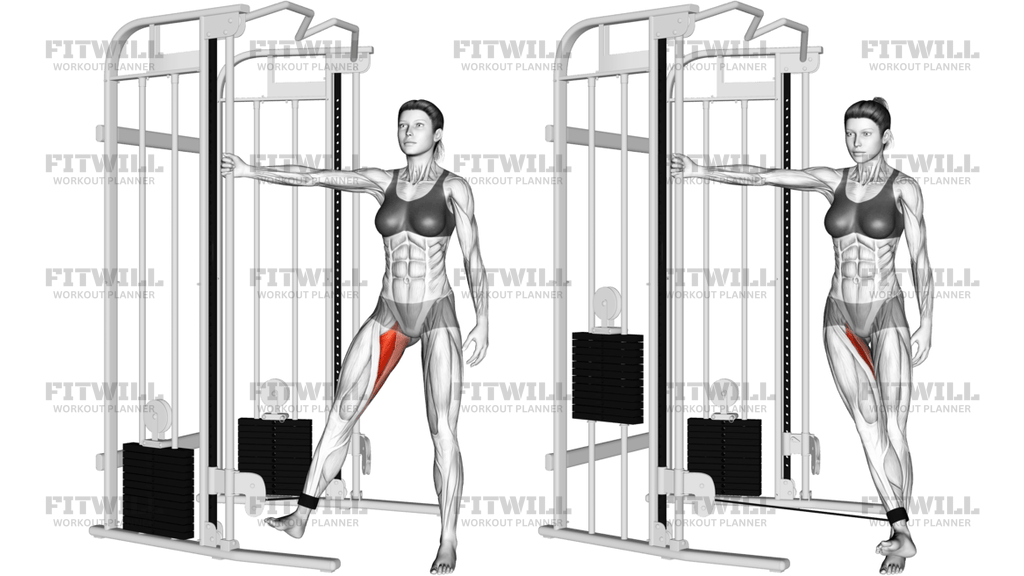
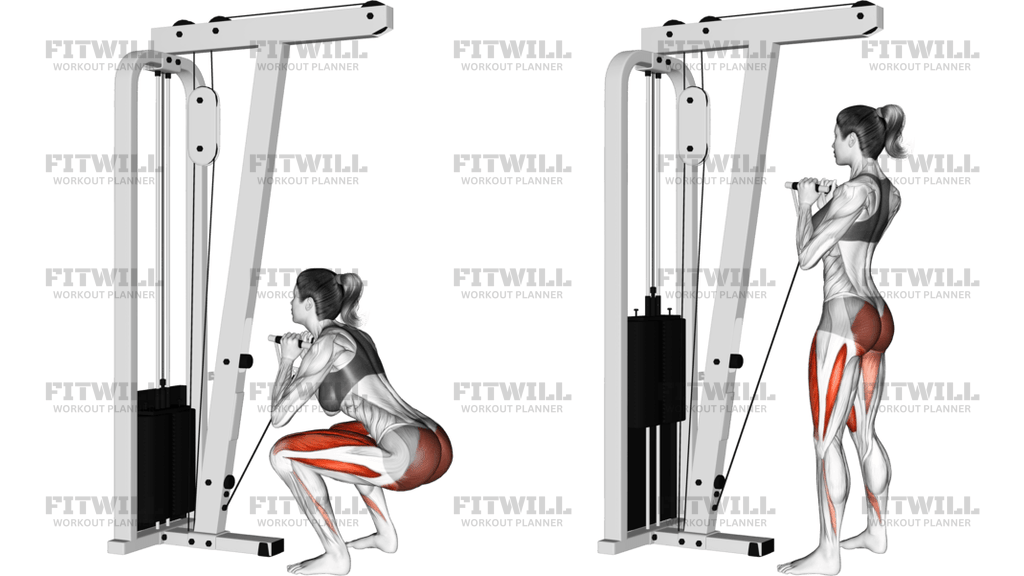
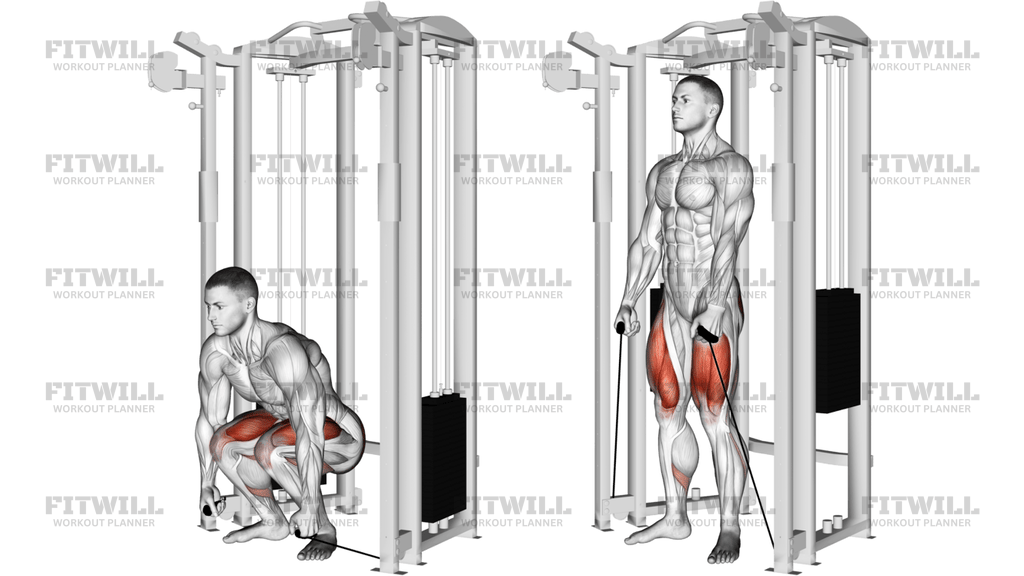
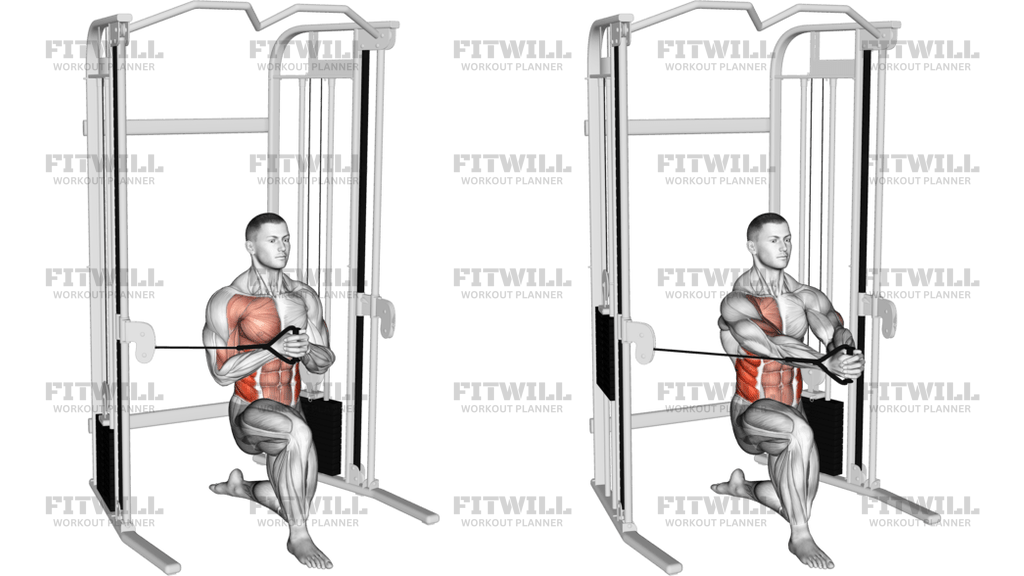
Cable Glute Dominant Step-Up
Cable Glute Dominant Step-Up is a single-leg lower-body exercise that uses a low cable and an elevated step to bias the working hip into extension. The cable adds a constant downward pull, so the glute on the stepping leg has to do more than simply stand you up: it also has to control the descent and keep the pelvis from tipping or rotating.
The setup is the part that makes this exercise useful. The working foot needs a secure, full-foot contact on the box or bench, the trailing foot stays light on the floor, and the handle stays close to the body so the cable does not drag the torso sideways. A slightly forward torso angle is normal here because it helps shift load toward the glute rather than turning the movement into a straight-up quad step.
Each repetition should feel like a controlled climb, not a jump. Drive through the heel and midfoot of the foot on the box, extend the hip and knee together, and finish tall without leaning back at the top. The back leg should not be the thing that launches the rep; it is only there for balance and a clean reset between repetitions. Lower slowly so the cable keeps tension on the working side all the way back to the floor.
This exercise fits well as accessory work after squats, deadlifts, lunges, or as part of a unilateral glute session when you want more hip control and single-leg stability. It is especially useful when someone needs better pelvis control, better step-up mechanics, or a more glute-dominant pattern than a standard bodyweight step-up provides. Keep the step height, load, and torso angle honest so the target hip does the work instead of momentum, low-back extension, or a hard push from the trailing leg.
[ Workout Log & Planner ]
Put your next workout in Fitwill
Keep your plan and training log ready when you are.


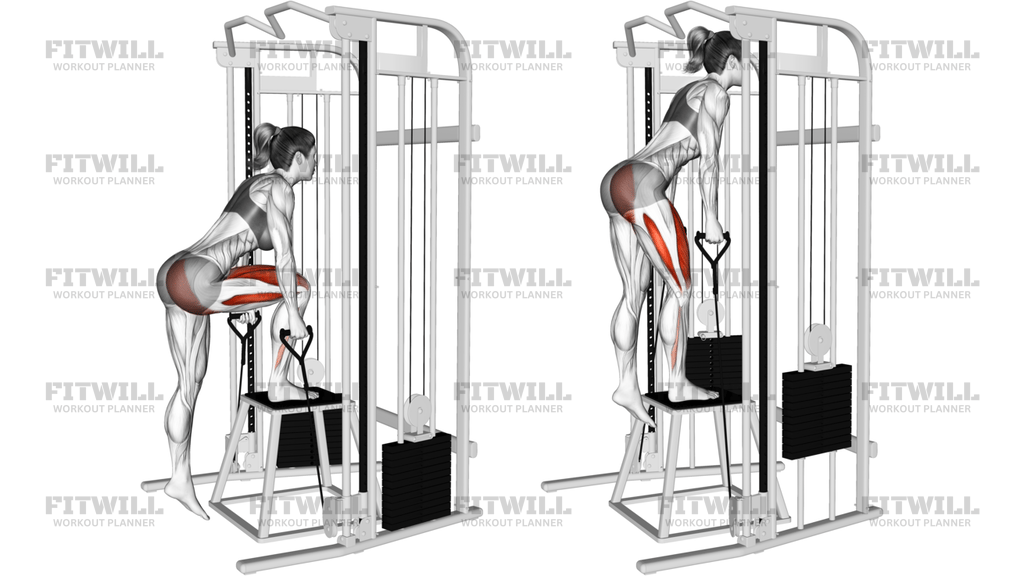
Instructions
- Set a box or step beside a low cable pulley and attach a handle that lets the cable stay low and slightly behind you.
- Place the working foot fully on the box, keep the trailing foot on the floor behind you, and hold the handle close to the working-side thigh.
- Hinge slightly forward from the hips and soften the working knee so your weight sits over the whole foot on the platform.
- Brace your torso, keep your ribs stacked over your pelvis, and square your hips toward the front.
- Drive through the heel and midfoot of the box leg to stand up as the hip and knee extend together.
- Keep the trailing leg light and avoid jumping or pushing off the floor foot to finish the rep.
- Exhale as you rise, then stand tall and squeeze the glute on the box side without leaning back.
- Lower under control until the trailing foot returns to the floor, let the handle stay steady, and reset before the next rep.
Tips & Tricks
- Choose a step height that lets the working foot stay planted and the pelvis stay level; if the knee folds too deeply or the low back wants to round, the box is too high.
- Keep the handle close to the working thigh so the cable does not pull your torso sideways as you stand.
- A small forward torso lean is useful here because it shifts the demand toward the glute instead of making the rep feel like a straight upright step-up.
- Let the box leg do almost all of the work; the trailing leg should help with balance, not launch the body upward.
- Track the working knee over the toes instead of letting it cave inward as fatigue rises.
- Use a slower lowering phase than the lifting phase to keep tension on the glute and make each rep more controlled.
- If you feel the exercise mostly in your low back, reduce the load and shorten the range until you can keep the ribs stacked over the pelvis.
- Keep the full foot on the platform, especially the heel and big toe, so you can drive through a stable base.
Frequently Asked Questions
What muscle does Cable Glute Dominant Step-Up target most?
The main target is the glute of the stepping leg, with the hamstrings, quads, and core assisting to keep the body steady.
Why use a cable for this step-up instead of a dumbbell?
The low cable creates constant downward tension, which makes the glute work harder to stand up and control the return.
How high should the box or bench be?
Use a height that lets you keep the working foot flat and the pelvis level; if you have to twist, bounce, or round the lower back, lower the step.
Should the trailing foot push off the floor?
Only lightly, if at all. The stepping leg should do most of the lifting, while the trailing leg stays mostly there for balance.
Where should I hold the handle?
Keep the handle close to the working thigh or centered low in front of you so the cable stays steady and does not pull your torso out of position.
Can beginners do this exercise safely?
Yes, if they use a low step, light resistance, and a controlled lowering phase. It is easier to learn when the cable load is modest.
What is a common mistake with this movement?
Pushing hard off the floor leg or leaning back at the top usually shifts the work away from the glute and into momentum or the lower back.
How do I make Cable Glute Dominant Step-Up harder over time?
Add a little load, slow the lowering phase, or add a short pause at the top before making the step higher.