Roll Front Shoulder And Chest Lying On Floor
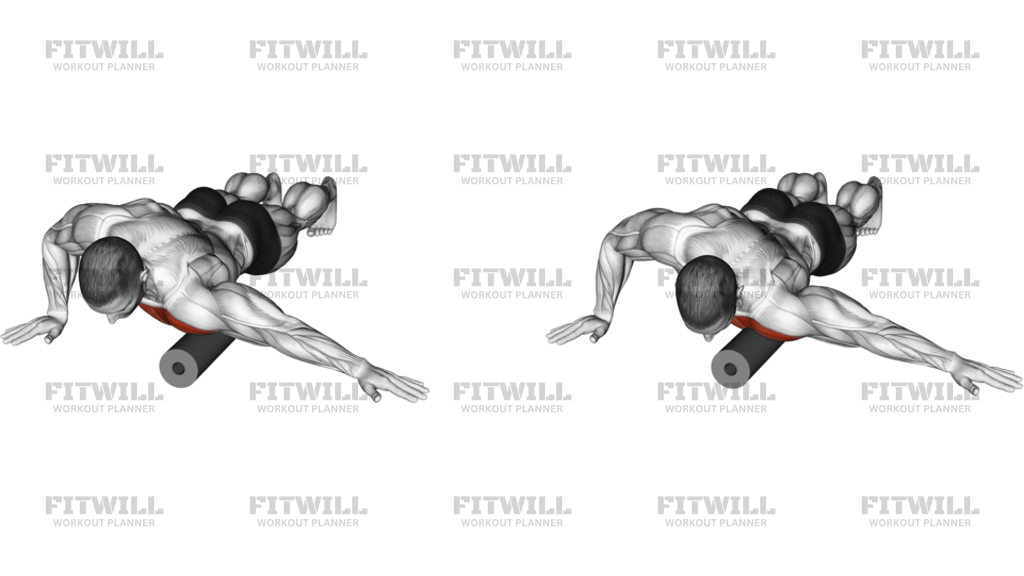
Roll Front Shoulder and Chest Lying On Floor is a floor-based self-massage drill for the upper chest and front of the shoulder. The foam roller lets you load the pectoral tissue and anterior deltoid in a controlled way, which can make pressing, reaching, and overhead work feel smoother when the front of the shoulder is tight. The exercise is not about speed or volume; it is about finding a usable pressure level and keeping the rib cage, neck, and shoulder from tensing up against the roller.
The setup matters because the roller needs to sit on the muscle belly, not on the shoulder joint or collarbone. Lying prone on the floor limits how much bodyweight drops into the roller, so you can choose a pressure level that feels strong but still manageable. One arm is typically opened out to the side to expose the chest, while the torso stays long and the head stays relaxed. That position helps the roller work across the front shoulder line instead of sliding into a pinchy or unstable angle.
As you move, make small, deliberate shifts forward, back, or slightly side to side so the roller traces the upper chest and front delt. When you find a tight spot, pause and breathe until the pressure softens. The goal is to let the tissue relax, not to grind through pain or force a big range. If the front of the shoulder feels sharp, move the roller a little lower on the pec and shorten the arm position.
This drill is useful before upper-body training, after long periods of sitting, or any time the front of the shoulder feels crowded and stiff. It can support better shoulder position for pressing and pulling by reducing tone in the pecs and surrounding tissues. Keep the movement slow, keep the pressure specific, and stop short of joint pain or numbness. A short, careful set on each side is usually more productive than an aggressive pass that turns the shoulder into a brace.
[ Workout Log & Planner ]
Put your next workout in Fitwill
Keep your plan and training log ready when you are.


Instructions
- Lie face down on the floor with a foam roller under the upper chest on one side, just below the collarbone and in front of the shoulder.
- Open that arm out to the side with the palm down so the front of the chest stays accessible and the shoulder can settle into the roller.
- Keep your head turned to one side or resting comfortably so the neck stays long and relaxed.
- Support some of your bodyweight through the opposite forearm, opposite hand, and feet so the roller pressure feels firm but not sharp.
- Slowly shift your torso a few inches forward, back, or slightly side to side to work across the pec and front delt.
- When you find a tender spot, pause there and let your body sink into the roller instead of pushing harder.
- Breathe out slowly while holding pressure, and let the rib cage stay heavy against the floor.
- Move to a new spot only after the tight area eases, then repeat the same controlled pass on the other side.
Tips & Tricks
- Keep the roller on soft tissue under the front shoulder, not on the shoulder joint or collarbone.
- Use the floor to limit pressure; if the spot feels too intense, lower your bodyweight and shorten the range.
- A small side-to-side shift is usually enough to find the pec fibers without turning the drill into a full roll.
- If the front of the shoulder pinches, slide the roller slightly lower on the chest and reduce how far the arm opens.
- Let the exhale lengthen over the tight spot instead of bouncing through it.
- Keep the lower back and ribs quiet so the pressure stays in the chest instead of spreading through the torso.
- Stop before the sensation becomes sharp, numb, or joint-like; this should feel like muscle pressure, not irritation.
- Do each side separately so you can compare pressure and avoid overworking the first side.
Frequently Asked Questions
What does Roll Front Shoulder and Chest Lying On Floor target?
It mainly targets the upper pectorals and the front of the shoulder, especially the tissue that can feel tight before pressing or overhead work.
Is this a stretching exercise or a massage drill?
It is a self-myofascial release drill. You are using the foam roller to apply controlled pressure, not actively lifting or stretching against a load.
Where should the foam roller sit during the setup?
Place it under the upper chest on the working side, just in front of the shoulder joint. It should press muscle tissue, not the bony point of the shoulder.
Why does my shoulder feel pinched when I try this?
The roller is probably too high or your arm is opened too far. Move the roller lower on the pec and shorten the arm position until the pressure feels muscular again.
How long should I stay on one tight spot?
Hold a tender area for about 15 to 30 seconds, or until the pressure softens and your breathing stays calm.
Can beginners do this exercise?
Yes. The floor makes the pressure easier to control, so beginners can start with short holds and a smaller range of motion.
What should my breathing look like during the hold?
Take slow breaths and lengthen the exhale over the tight area. If you are holding your breath, the pressure is probably too high.
When is this most useful in a workout?
It is useful in a warmup, between upper-body sets, or after training when the chest and front shoulder feel stiff from pressing or desk posture.