Rounded Back Extension
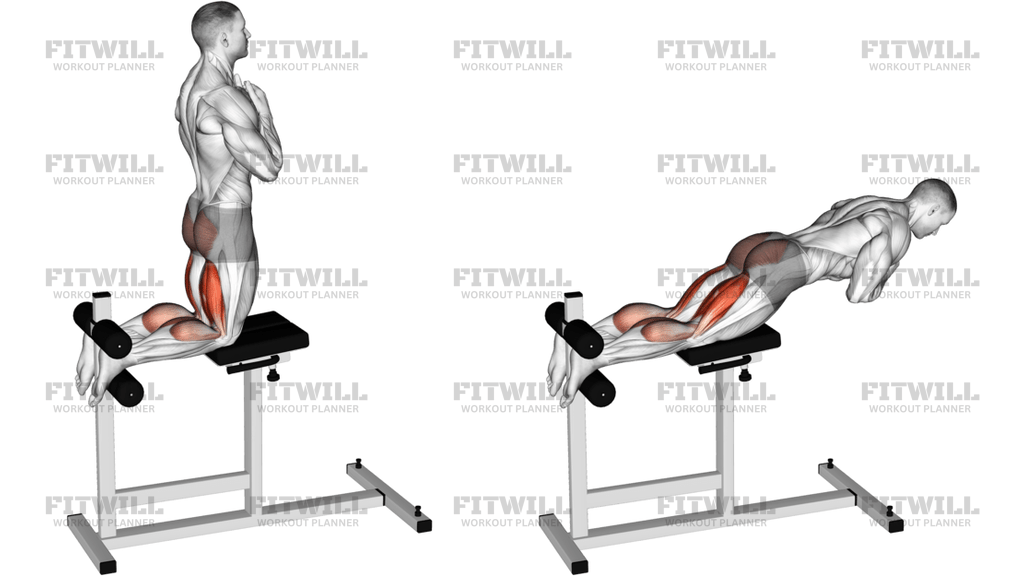
Rounded Back Extension is a bodyweight back-extension variation done on a 45-degree Roman chair or hyperextension bench. It uses the anchored feet and hip pad to train controlled hip extension while the trunk stays intentionally rounded instead of being driven into a big low-back arch. That makes the exercise useful when you want to load the hips and posterior chain with a strict, repeatable pattern rather than turning the set into a loose spinal extension.
The main work comes from the hips and the muscles that extend them, especially the glutes and hamstrings, while the core and spinal stabilizers keep the torso organized. Because the setup fixes the lower body, the quality of the rep depends heavily on where you place the pelvis on the pad, how firmly you lock the ankles, and how well you keep the rib cage from flaring as you move. Small positioning errors can make the set feel like a lower-back exercise instead of a hip-driven one, so the bench setup deserves as much attention as the rep itself.
A good rep starts with the torso draped forward, then the hips extend to bring the body back up under control. The rounded upper-back shape helps discourage overextending at the top and keeps the emphasis on a clean hinge instead of a dramatic lean-back finish. You should feel tension build through the back of the legs and glutes as you rise, then a controlled stretch as you lower again. The set should look smooth and deliberate from start to finish, with no bouncing off the bottom and no snapping into the top position.
This exercise fits well in posterior-chain accessories, glute-focused sessions, or lower-body warmups when you want a low-load way to practice hip extension. Beginners can use it because the bodyweight setup provides feedback and limits cheating, but the movement still rewards patience and control. It is also a practical option when you want extra posterior-chain work without needing a barbell on your back or a machine stack. Keep the range honest, avoid throwing the torso upward, and step out carefully after the set so the ankles and low back do not get jarred by a rushed dismount.
Fitwill
Log Workouts, Track Progress & Build Strength.
Achieve more with Fitwill: explore over 9600 exercises with images and videos, access built-in and custom workouts, perfect for both gym and home sessions, and see real results.
Start your journey. Download today!




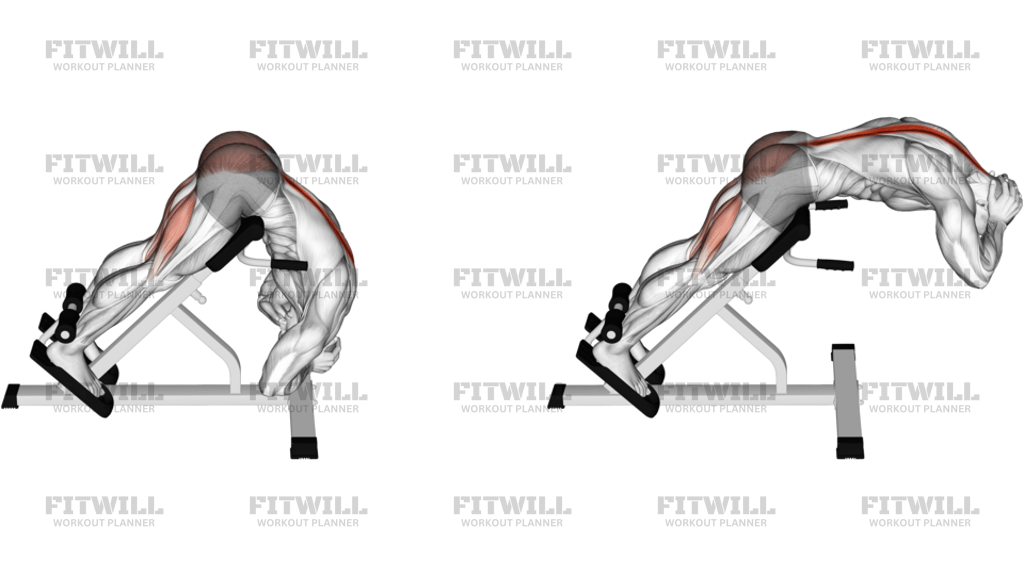
Instructions
- Set the bench so your hips sit just above the top edge of the pad, hook your ankles under the foot rollers, and face down with your torso hanging off the front of the bench.
- Cross your arms over your chest or rest your hands lightly behind your head, then let your torso fold forward with a slight rounded upper back instead of standing tall.
- Plant your feet into the rollers, keep your pelvis in contact with the pad, and brace your abs before you start the first rep.
- Hinge at the hips to lift your torso until your body is in line with your legs or just slightly above it, keeping the rib cage down.
- Squeeze your glutes at the top without cranking your lower back into a deep arch or throwing your chest forward.
- Lower your torso slowly back toward the floor until you feel a controlled stretch through the back of your thighs and hips.
- Keep the movement smooth on every rep, using the same rounded upper-back position instead of changing posture as you fatigue.
- Finish the last rep by lowering under control, then release your ankles and step off the bench carefully.
Tips & Tricks
- Place the hip crease right on top of the pad; if you sit too far forward, the bench will dig into your stomach and shorten the hinge.
- Think of this as a hip extension, not a chest lift. The torso rises because the glutes and hamstrings drive the hips into the pad.
- Keep the upper back softly rounded and the ribs tucked so the rep does not turn into a big lumbar back bend at the top.
- If you feel the low back taking over, shorten the top range and stop as soon as your torso reaches a straight line with your legs.
- Press your ankles firmly into the rollers so your body stays anchored and you do not slide on the pad during the lowering phase.
- Use a slower lowering phase than lifting phase. The eccentric stretch is where this movement usually gets most of its training value.
- Crossing the arms over the chest usually keeps the torso more stable than reaching forward and swinging for momentum.
- If bodyweight feels too easy, add a small plate or dumbbell only after you can keep the same trunk angle for every rep.
Frequently Asked Questions
What muscles does Rounded Back Extension work?
It mainly trains the glutes and hamstrings, with the core and spinal stabilizers helping keep the torso controlled on the bench.
Can beginners perform this exercise?
Yes. Start with bodyweight, keep the range short, and learn how to hinge from the hips without arching hard through the lower back.
Where should my hips sit on the Rounded Back Extension bench?
Set your hips just above the top of the pad so your trunk can move freely. If the pad sits too high or too low, the movement gets awkward and the lower back usually takes over.
Should I keep my back rounded during Rounded Back Extension?
Keep a gentle rounded upper back rather than forcing a hard arch at the top. The goal is to stop the rep from becoming an exaggerated spinal extension.
How high should I lift my torso on the bench?
Lift until your torso matches your legs or just slightly above that line. Going higher usually adds low-back extension instead of better hip work.
What is the biggest mistake in Rounded Back Extension?
The most common mistake is jerking the torso up and finishing with a big lumbar arch. Keep the motion smooth and let the hips drive the rep.
Can I hold weight on Rounded Back Extension?
Yes, but only after the bodyweight version is stable. A small plate or dumbbell held to the chest is usually easier to control than reaching a weight overhead.
Why do my hamstrings feel this more than my glutes?
That usually means you are using a bigger hinge and a slower lowering phase. A slightly shorter range and a stronger squeeze at the top can shift more of the work toward the glutes.