Supinated Narrow-Grip Pull-Up
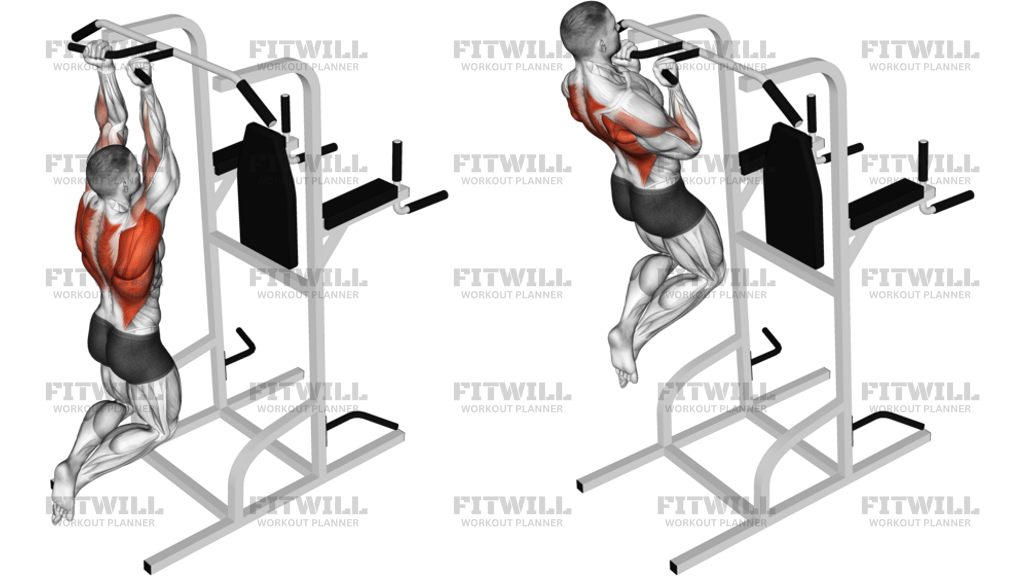
Supinated Narrow-Grip Pull-Up is a vertical pulling exercise that uses your own body weight and an underhand close grip to train the lats, biceps, and upper-back muscles together. The narrow supinated hand position changes the line of pull compared with a wide overhand pull-up, so the elbows travel closer to the ribs and the biceps contribute more to the effort. It is a useful strength movement for building pulling power, control at the shoulder, and a strong lock-in at the top of the rep.
The setup matters because this exercise exposes every bit of body sway, shrugging, and lost tension. On a pull-up station or assisted pull-up machine, grasp the close handles with palms facing you, keep the chest lifted, and start from a dead hang or nearly straight arms with the shoulders packed down. The image shows a tight body line and crossed ankles, which helps keep the lower body quiet so the back and arms do the work instead of momentum.
A good rep begins by pulling the shoulders away from the ears and then driving the elbows down and back. Think about bringing your upper chest toward the handles while keeping the ribs from flaring and the neck long. At the top, the chin should clear the bar or the chest should approach the hand level without craning the head forward. Lower under control until the arms are straight again and the shoulder blades are allowed to open without collapsing.
This movement fits well in upper-body strength work, back training, or any session where you want a demanding bodyweight pull with a biceps-heavy feel. Beginners can use assistance from a machine or band to keep the motion smooth and repeatable, while stronger lifters can work toward stricter reps, pauses at the top, or slower descents. Keep each repetition clean and symmetrical; if the torso starts swinging or the elbows drift wide, the set is usually too hard or too rushed for useful training.
[ Workout Log & Planner ]
Put your next workout in Fitwill
Keep your plan and training log ready when you are.


Instructions
- Set the pull-up station or assisted machine so you can start with arms straight and shoulders relaxed.
- Grasp the narrow underhand handles with palms facing you and hands a few inches apart.
- Hang with your chest up, shoulders down, and ankles crossed or legs held quiet behind you.
- Brace your abs and glutes before the first pull so the torso stays still.
- Pull by driving your elbows down and back rather than yanking with the hands.
- Bring your upper chest toward the handles and keep the chin from jutting forward.
- Pause briefly at the top with the shoulder blades pulled down and back.
- Lower under control to a full stretch until the elbows are straight again.
- Reset at the bottom before starting the next rep and repeat for the planned set.
Tips & Tricks
- Keep the grip narrow enough that your elbows track close to your sides, but not so tight that your wrists bend inward.
- Start each rep by depressing the shoulders first; shrugging at the bottom makes the pull feel heavier and less precise.
- If the bar reaches the lower chest or upper sternum without neck strain, the top position is high enough for this movement.
- Use a slower descent than the pull so the lats stay loaded instead of dropping out between reps.
- Crossing the ankles or keeping the knees quiet helps reduce swinging on the way up.
- If you need assistance, choose a setting that still lets you control the bottom stretch and the top pause.
- Keep the ribcage from flaring hard at the top; the rep should come from elbow drive, not a big back arch.
- Stop the set when the chin starts reaching forward or the legs begin to kick for extra height.
Frequently Asked Questions
What does a supinated narrow-grip pull-up train?
It mainly trains the lats and biceps, with help from the mid-back, forearms, and lower traps.
Is the narrow underhand grip different from a regular pull-up?
Yes. The palms face you and the hands stay closer together, which usually makes the biceps work harder and keeps the elbows closer to the body.
How should I set my body at the bottom of the rep?
Start with straight arms, shoulders pulled down, chest lifted, and the body held still so the pull begins from a dead hang rather than a swing.
Should I lean back during the pull?
A slight lean is normal, but the torso should stay controlled. If you are swinging far backward, the set is becoming more of a kip than a strict pull-up.
Can beginners do this exercise?
Yes, especially with an assisted pull-up machine or band so the full range stays smooth and controlled.
What are the most common mistakes?
Shrugging, kicking the legs, cutting the bottom stretch short, and craning the neck toward the bar are the main ones.
What if I cannot get my chin over the bar yet?
Use more assistance, shorten the range slightly while you build strength, or add eccentrics and top-position holds before chasing full reps.
Where should I feel the top of the rep?
You should feel the lats and biceps finish the pull while the shoulder blades stay down and back, not jammed up toward the ears.