Close-Grip Pull-Up
Close-Grip Pull-Up is a vertical pulling exercise built around bodyweight control, shoulder blade motion, and elbow flexion. The narrow grip shortens the path compared with a wide pull-up and usually lets you drive the elbows down more directly, which makes the movement useful for lat development, upper-back strength, and arm involvement. It is a strict strength exercise, but the quality of each rep depends more on position and control than on simply getting your chin over the bar.
The close grip changes how the shoulders and arms share the work. Because your hands stay narrow on the handles, the elbows travel closer to the torso and the lats can contribute strongly while the biceps, forearms, lower traps, and core help stabilize the body. A clean rep starts before the pull begins: grip the close handles, set the shoulders away from the ears, and keep the torso from swinging so the first inch of movement comes from the back rather than from momentum.
On each repetition, think about pulling the elbows down and in rather than yanking the chin forward. The chest should rise toward the handles while the ribs stay stacked and the neck stays long. At the top, the chin clears the hands without shrugging hard or kicking the legs. Lower yourself under control until the elbows straighten again and the shoulders open only as far as you can manage without losing tension.
Close-Grip Pull-Up is useful in strength phases, upper-body hypertrophy blocks, or as a bodyweight test of pulling capacity. It also works well when you want more arm-assisted vertical pulling than a wider grip allows, but still want a strong lat emphasis. Many lifters use it as a progression before weighted pull-ups because the narrower hand position often makes the rep path feel more repeatable and easier to load cleanly.
The main form risks are swinging, craning the neck to force the chin above the bar, and shrugging the shoulders up at the top. If your grip or elbows fail first, use assistance or reduce the number of reps rather than turning the set into a kip. Keep the movement strict, reset between reps if needed, and use a range that lets your shoulders stay organized from the bottom hang to the top finish.
[ Workout Log & Planner ]
Put your next workout in Fitwill
Keep your plan and training log ready when you are.


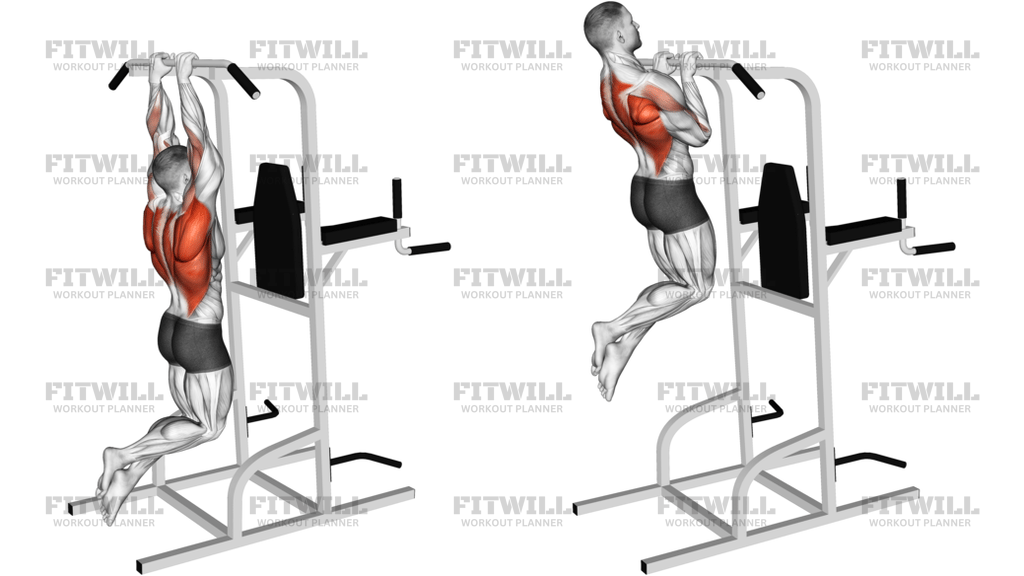
Instructions
- Grip the close handles on the pull-up station, then hang with your arms straight and your shoulders set down away from your ears.
- Cross your ankles behind you and keep your ribs stacked over your pelvis so your body starts in one firm line.
- Brace your abs and squeeze your glutes before the first pull so your legs do not swing.
- Pull your elbows down and slightly in toward your ribs while you drive your chest toward the handles.
- Keep your neck long and your shoulders from shrugging as you lift your chin above the bar or handles.
- Pause for a beat at the top without kicking or leaning back hard.
- Lower yourself slowly until your elbows are straight again and your shoulders are controlled at the bottom.
- Inhale on the way down, exhale as you pull up, and reset your body before the next rep if you lose tension.
Tips & Tricks
- Think about pulling the elbows toward the lower ribs; that cue keeps the lats working harder than the biceps alone.
- If the top position turns into a shrug, stop the rep a little earlier and keep the shoulder blades down instead of chasing a higher chin.
- Crossing the ankles helps quiet the legs and makes it easier to keep the torso still.
- Do not let the chest drift way forward or the lower back arch excessively to finish the rep.
- Use a slower descent than ascent so the shoulder blades stay controlled as you lower from the bar.
- If your grip gives out before your back does, shorten the set or use assistance rather than turning the movement into a hanging hold.
- A close neutral handle usually feels friendlier on the elbows and wrists than a straight bar grip.
- Stop one rep before the body starts to swing; once momentum appears, the exercise stops being a strict pull-up.
Frequently Asked Questions
What muscles does Close-Grip Pull-Up train most?
It primarily trains the lats and upper back, with strong help from the biceps, forearms, lower traps, and core.
Is Close-Grip Pull-Up easier than a wide-grip pull-up?
For many lifters, yes. The narrower hand position usually shortens the path and lets the arms contribute more, which can make the rep easier to control.
Should I use the close handles or a straight bar for Close-Grip Pull-Up?
Use the close handles if the station has them, because that matches the image and usually gives the cleanest narrow-grip path. A straight bar can work too, but the hand position and feel will be different.
How do I stop swinging during Close-Grip Pull-Up?
Cross your ankles, brace before each rep, and start every pull from a dead hang. If the set starts to swing, pause and reset instead of forcing more reps.
How high should I pull on Close-Grip Pull-Up?
Pull until your chin clears the hands or handle line without shrugging your shoulders forward. Do not chase a higher finish by cranking your neck.
Can beginners do Close-Grip Pull-Up?
Yes, but most beginners need band assistance, a pull-up machine, or slow negatives first. The narrow grip can help, but strict body control still matters.
What should I do if my elbows or wrists feel irritated?
Try the close neutral handles if available, reduce range slightly, and slow the lowering phase. If the pain continues, swap to an assisted version or another vertical pull for that session.
How can I make Close-Grip Pull-Up harder over time?
Add a small amount of weight only after you can keep every rep strict. You can also slow the descent, add a pause at the top, or reduce assistance if you are using a machine or band.