Single Leg Hopping
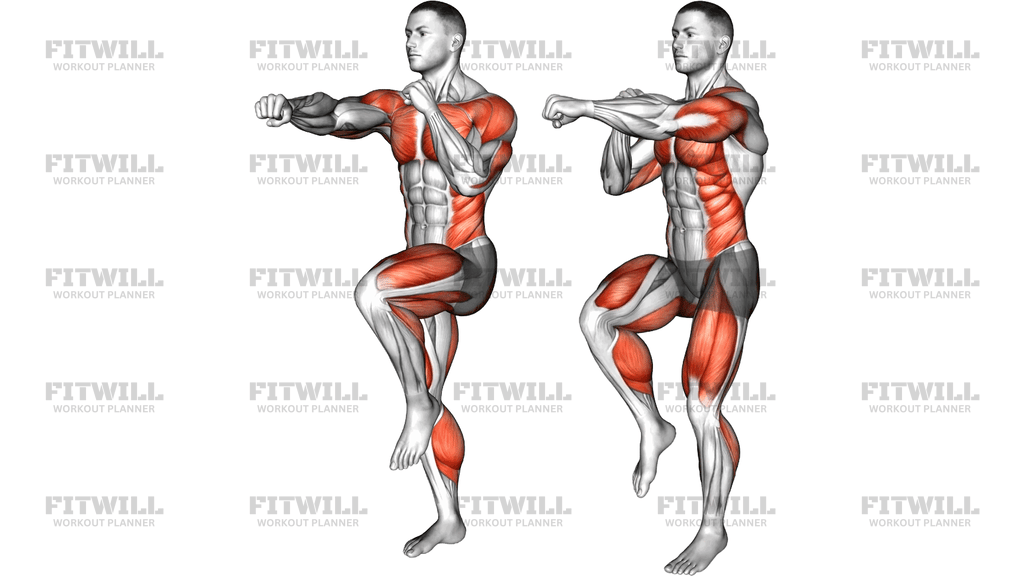
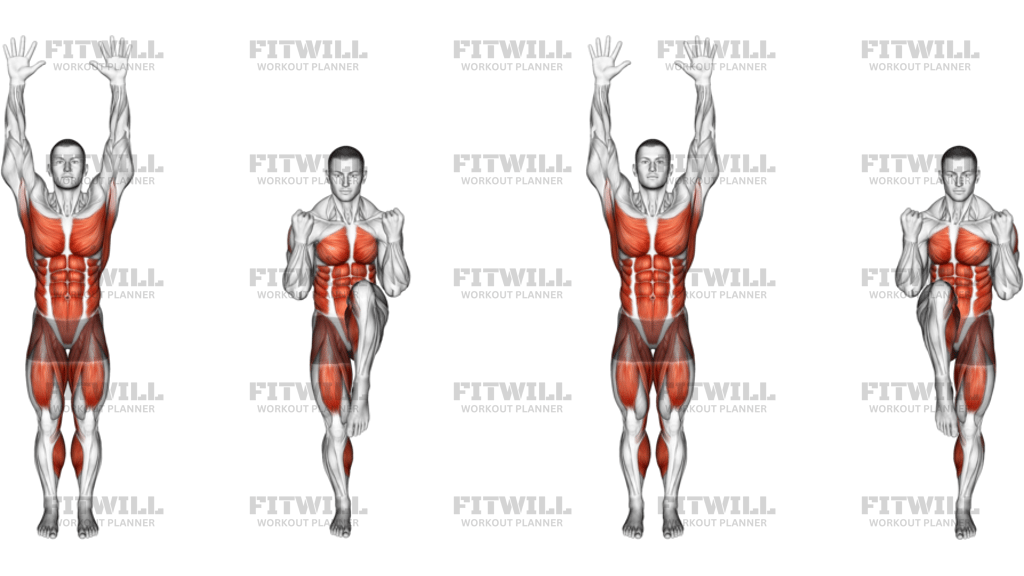
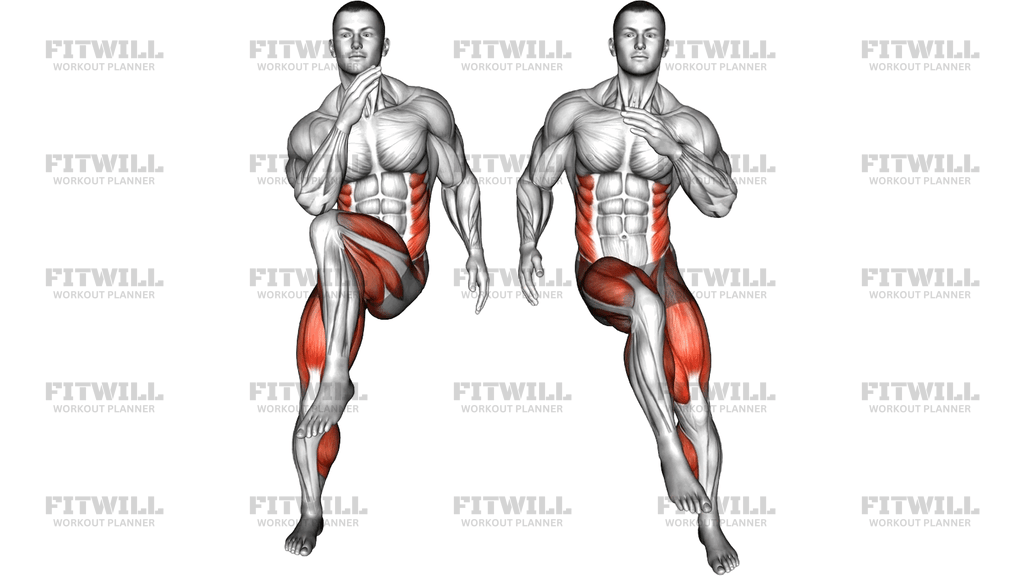
Single Leg Hopping is a bodyweight plyometric drill done on one foot to build elastic power, ankle stiffness, balance, and lower-body coordination. The aim is a quick spring off the floor with a controlled landing, not a big jump or a long stride. Because one leg handles every contact, the quality of the setup and landing matters as much as the height of the hop.
Start with the support foot planted under the hip, the knee softly bent, the ribs stacked over the pelvis, and the torso slightly inclined from the ankles. The free leg can stay relaxed or drive like a running knee, depending on the variation, but the working leg should stay centered and organized. If the pelvis drifts, the hop turns into a wobble instead of a useful plyometric rep.
Each repetition should load quickly through a small bend at the ankle, knee, and hip, then rebound off the midfoot and toes. Land on the same foot with a quiet contact, let the ankle and knee absorb the force, and only rebound again if the knee still tracks cleanly over the toes. Short, crisp contacts teach the body to store and release force without collapsing into the hip or flattening the arch.
This drill fits warm-ups, speed sessions, field-sport prep, or plyometric blocks for runners and athletes who need single-leg spring. It is also useful as a coordination drill when you want more athletic control without equipment. Keep the volume modest, stop the set if the landings get loud or sloppy, and regress to a lower hop or a supported version if the foot, Achilles, or knee cannot stay comfortable and aligned.
Fitwill
Log Workouts, Track Progress & Build Strength.
Achieve more with Fitwill: explore over 9600 exercises with images and videos, access built-in and custom workouts, perfect for both gym and home sessions, and see real results.
Start your journey. Download today!




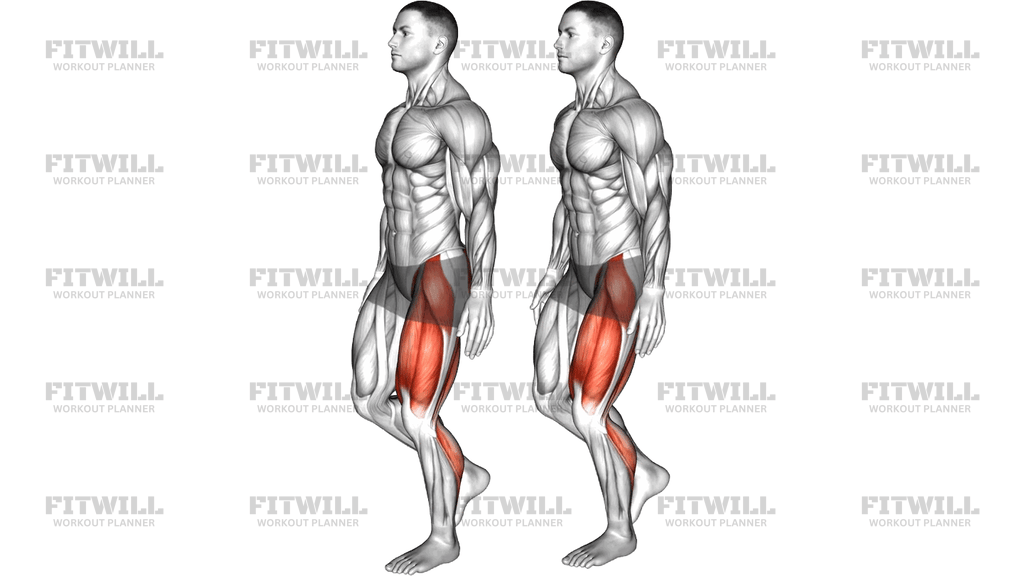
Instructions
- Stand on one foot on a flat, non-slip surface with the other knee slightly lifted and your arms relaxed in a running stance.
- Place the support foot directly under the hip and keep a tripod contact through the heel, base of the big toe, and base of the little toe.
- Keep the knee softly bent, the ribs stacked over the pelvis, and the torso slightly inclined from the ankles rather than folded at the waist.
- Brace lightly, then dip a few inches by bending the ankle, knee, and hip together.
- Drive through the whole foot to hop straight up or slightly forward with a quick, springy push.
- Let the opposite knee and arms help you stay rhythmic without twisting the torso.
- Land on the same foot with a quiet contact and a bent knee that stays lined up over the toes.
- Rebound into the next hop only if you can keep the landing stable; otherwise reset or switch sides after the set.
Tips & Tricks
- Keep the hops low enough that you can land in nearly the same spot every time.
- Think quiet feet: a soft, silent landing usually means the impact is under control.
- Press through the big toe, little toe, and heel so the arch does not collapse as you rebound.
- Use a small forward lean from the ankles; staying perfectly upright often makes the hop unstable.
- Let the free knee move like a sprint drill, but do not let it pull the torso sideways.
- If the Achilles feels irritated, reduce the set length and the bounce height before adding more speed.
- Track the knee over the second or third toe to keep the hip and knee aligned on landing.
- Rest long enough between sets that each repetition still looks crisp rather than rushed.
Frequently Asked Questions
What does Single Leg Hopping train?
It trains plyometric power, ankle stiffness, balance, and single-leg coordination.
Is this a strength exercise or a power exercise?
It is mainly a power and elastic-rebound drill, not a heavy strength movement.
Which muscles work most during the hop?
The calves, quads, glutes, hamstrings, hip stabilizers, and core all help, with the stance leg doing most of the work.
Should I hop in place or travel forward?
Start in place. Small forward or lateral travel is a progression once your landing stays clean.
How high should each hop be?
Only high enough to unload and reload the foot. Bigger hops usually add impact more than benefit.
What is the most common mistake?
Letting the knee cave inward or landing loudly usually means the hop is too high or too fast.
Can beginners do Single Leg Hopping?
Yes, if they already control a single-leg stand. Start with low amplitude and short sets, or use light support.
When should I stop the set?
Stop when the landings get noisy, the pelvis starts to wobble, or the knee and ankle stop lining up.