Weighted Seated Single Calf Raise Version 2
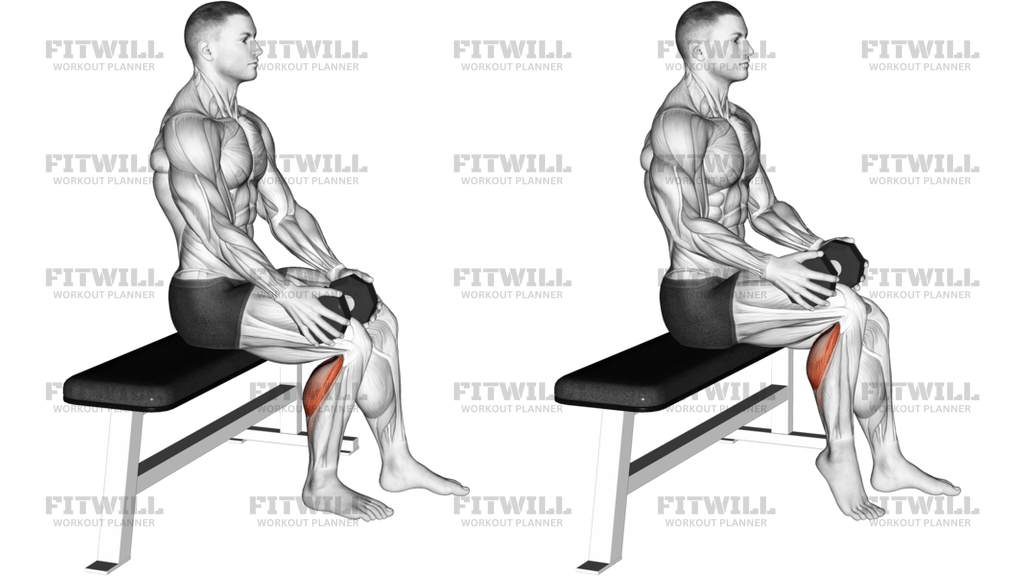
Weighted Seated Single Calf Raise Version 2 is a single-leg calf exercise performed while sitting on a bench with a weight loaded across the working thigh. The bent-knee position shifts the emphasis toward the soleus while still involving the gastrocnemius and the smaller stabilizers around the ankle and foot. It is a controlled lower-leg strength movement, not a bounce exercise, so the quality of the setup matters as much as the size of the lift.
In the image version of the movement, one foot stays planted on the floor while the working knee is bent and the heel moves from the floor into a high heel raise. The dumbbell or plate resting on the thigh adds resistance without changing the basic pattern. That makes the exercise useful for direct calf work when you want a compact setup, easy load changes, and a clear rep path.
Good execution starts with the bench position, foot placement, and how the weight sits on the thigh. Sit tall, keep the working foot flat enough to start from a lowered heel position, and let the load rest just above the knee so it presses into the thigh instead of sliding around. The torso should stay quiet while the ankle does the work. If the weight is too far forward or the hips shift, the movement becomes unstable and the calf loses tension.
Each repetition should travel through a smooth ankle arc. Drive up through the ball of the foot until the heel is as high as you can raise it without rolling the ankle outward, then lower under control until the calf is stretched again. The free leg can stay relaxed and out of the way. Breathing should stay steady and uncluttered: brace lightly before the rep, exhale as you rise, and reset before the next lift.
This exercise fits well as accessory calf work after bigger lower-body movements, or as focused work when you want direct soleus loading without a standing balance demand. It is also a practical choice for beginners because the seated setup reduces whole-body instability, but the load still needs to match the range you can control. Stop short of bouncing off the bottom, and use a tempo that lets the calf do the job instead of momentum.
Fitwill
Log Workouts, Track Progress & Build Strength.
Achieve more with Fitwill: explore over 9600 exercises with images and videos, access built-in and custom workouts, perfect for both gym and home sessions, and see real results.
Start your journey. Download today!




Instructions
- Sit on a flat bench and place one foot on the floor with the knee bent about 90 degrees; keep the other leg relaxed out of the way.
- Rest a dumbbell, plate, or similar load across the working thigh just above the knee so it presses straight down into the leg.
- Position the working foot so the ball of the foot stays on the floor and the heel can move freely through the raise.
- Sit tall with your ribs stacked over your hips and keep your torso still before the first rep.
- Press through the ball of the foot and lift the heel as high as you can without shifting your knee or ankle inward.
- Pause briefly at the top and squeeze the calf hard before lowering.
- Lower the heel slowly until you feel a clear stretch in the calf without bouncing off the bottom.
- Reset the breath and repeat for the planned number of reps, then switch legs.
Tips & Tricks
- Keep the load centered just above the knee; if it slides toward the hip or down the shin, the calf loses a clean line of force.
- Think about lifting the heel straight up rather than rocking the whole foot backward.
- Do not let the ankle roll outward at the top; the big toe, second toe, and heel should stay aligned.
- Use a short pause at the top so the rep finishes with calf tension instead of rebound.
- Lower slowly enough to feel the soleus lengthen, but do not drop into the bottom position.
- A slightly elevated forefoot or small plate under the toes can increase the stretch if you control the bottom position well.
- If the thigh load hurts the leg, add a folded towel under the dumbbell or plate before increasing weight.
- Choose a load that lets the ankle move through a full, clean arc on every rep; sloppy reps show up fast on calf work.
Frequently Asked Questions
What muscles does Weighted Seated Single Calf Raise Version 2 train most?
It mainly targets the soleus because the knee stays bent, while the gastrocnemius and foot stabilizers help control the lift.
Why is the weight placed on the thigh instead of held in the hands?
Loading the thigh keeps the resistance close to the ankle joint and makes it easier to isolate the calf without turning the movement into a balance drill.
How high should the heel rise during the rep?
Rise as high as you can while keeping the foot aligned and the knee quiet. The top should feel like a hard calf contraction, not a hip shift.
Should I bounce at the bottom of the movement?
No. Let the heel come down under control, pause long enough to own the stretch, and then start the next rep from a still position.
Can I do this exercise with just body weight?
Yes, body weight works well as a starting point. Add a dumbbell or plate on the thigh once you can control the full range without wobbling.
Why do I feel this in my shin or foot instead of my calf?
That usually means the ankle is rolling, the foot is gripping too hard, or the load is too heavy. Keep the pressure through the ball of the foot and move the heel straight up and down.
Is this a good beginner calf exercise?
Yes. The seated setup reduces balance demands, so beginners can learn the ankle path and gradually add load with better control.
How should I breathe during seated single calf raises?
Take a small brace before each rep, exhale as you lift the heel, and reset at the bottom before starting the next repetition.