High Knee Tap
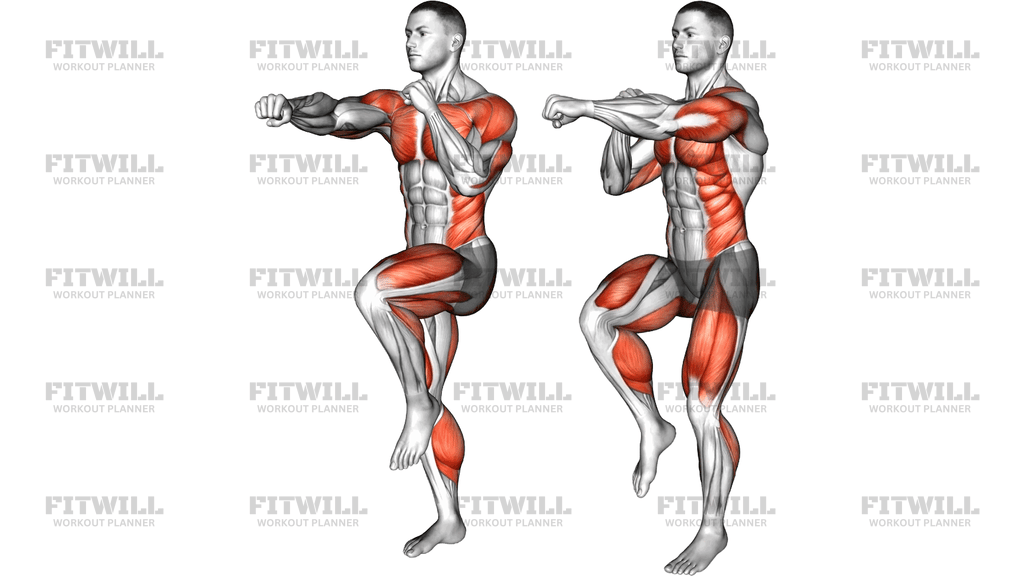
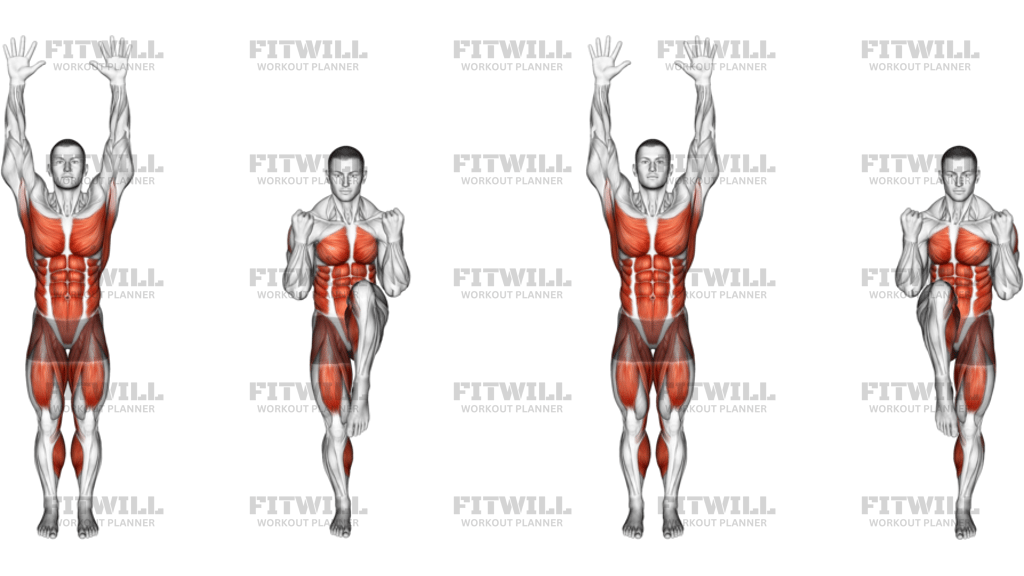
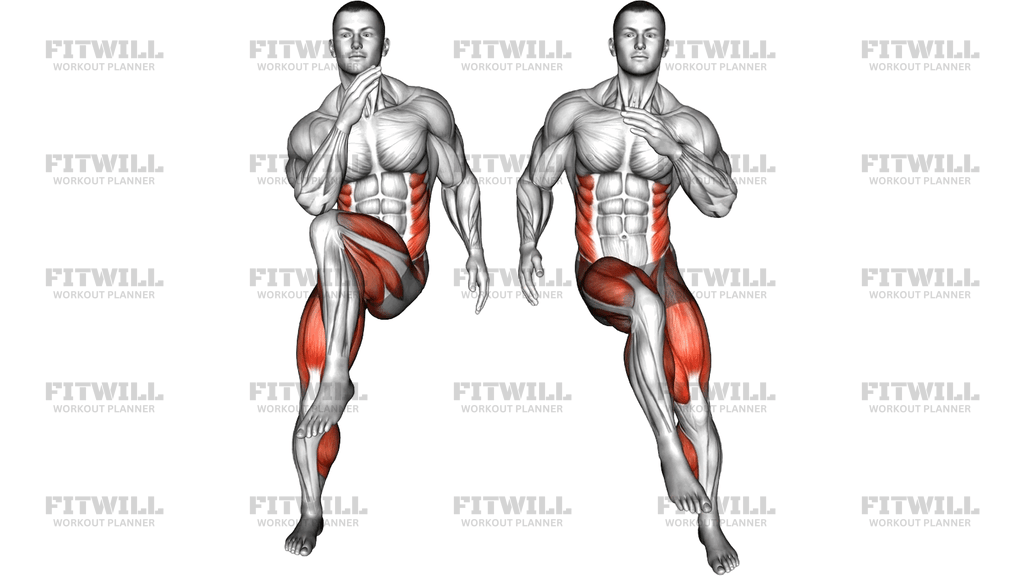
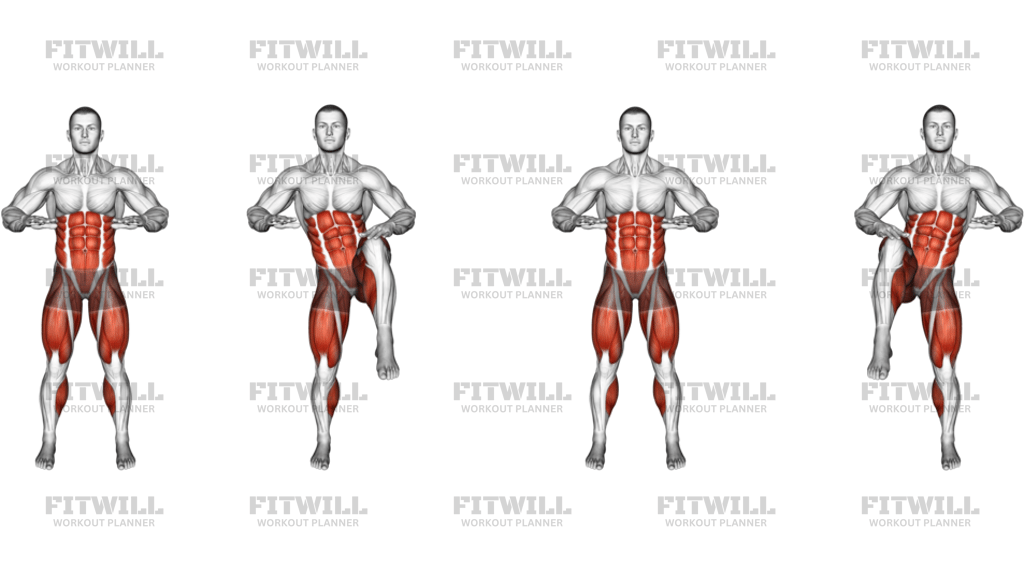
High Knee Tap is a standing bodyweight drill built around quick knee drives, light hand contact, and clean single-leg balance. The image shows a rhythmic alternating pattern: one knee comes up to hip height while the hand on that side taps the raised knee, then the body switches sides. It is not about force or height alone. The real training effect comes from keeping the torso stacked, the planted leg steady, and the movement crisp enough that each rep looks the same.
This drill mainly trains coordination, hip flexor action, trunk control, and lower-body rhythm. Your hip flexors lift the thigh, your core resists side-to-side sway, and your standing leg has to keep you upright while you change sides. Because the movement is fast and repetitive, it also works well as a warm-up for running, field sports, conditioning circuits, or any session that needs a light athletic pulse without external load.
Good setup matters. Stand tall with feet about hip-width apart, ribs down, and elbows bent in front of the torso so the hands are ready to meet the knee. From there, shift all of your weight onto one foot, lift the other knee toward hip height, and tap it lightly with the hand on the same side shown in the image. Keep the chest lifted and avoid leaning back as the knee rises; the goal is a clean knee drive, not a backward arch or a swinging hop.
On each rep, lower the leg under control and immediately switch sides with the same timing and range. The tap should be a quick cue, not a pull that yanks the knee off line. Breathe out as the knee rises, stay relaxed through the shoulders, and let the arms help with rhythm rather than force. If balance or cadence breaks down, shorten the range and slow the tempo before building back up. That keeps the exercise useful as a coordination and conditioning drill instead of turning it into sloppy marching.
[ Workout Log & Planner ]
Put your next workout in Fitwill
Keep your plan and training log ready when you are.


Instructions
- Stand tall with your feet about hip-width apart and your elbows bent in front of your torso, ready to tap the knee.
- Shift your weight onto one foot and lift the opposite knee until the thigh is close to hip height.
- Tap the raised knee lightly with the hand on the same side shown in the image.
- Keep your chest up and your ribs stacked over your pelvis as the knee rises.
- Stay on a steady standing foot without leaning back, hopping, or swinging the torso.
- Lower the lifted leg under control until the foot returns to the floor.
- Switch sides immediately and repeat the same knee height, tap, and posture.
- Breathe out on each knee drive and keep the rhythm even for the full set.
Tips & Tricks
- Use a light tap instead of pushing the knee inward or pulling it across your body.
- Keep the standing hip under your shoulders so the torso does not drift away from the lifted leg.
- Raise the knee only as high as you can without arching your lower back.
- Let the planted foot stay quiet; the movement should come from the hip and not from a bounce.
- If you want more conditioning, speed up the side-to-side rhythm before you add more range.
- If balance is the limiter, slow the tempo and pause for a beat at the top of each knee raise.
- Keep your hands relaxed so the tap stays quick and does not turn into a grab.
- Stop the set when the knees stop reaching the same height or the torso starts leaning side to side.
Frequently Asked Questions
What does High Knee Tap train?
It mainly trains hip flexors, core control, single-leg balance, and coordination.
Is High Knee Tap more of a cardio drill or a strength exercise?
It is mostly a dynamic cardio and coordination drill, with some core and balance demand.
Do I need to hop while doing the knee tap?
No. Lift one knee, tap it, lower it, and switch sides without turning it into a jump.
Where should my hand tap the leg?
Tap the raised knee lightly on the same side as the lifted leg, just as a quick timing cue.
Can beginners do this exercise?
Yes. Start with a slower tempo and a smaller knee lift if balance or hip mobility is limited.
What is the most common form error?
Leaning back or swinging the torso to fake a higher knee is the most common mistake.
When is High Knee Tap useful in a workout?
It works well in warm-ups, conditioning blocks, running prep, and athletic circuits.
How do I make the exercise harder without equipment?
Use a faster alternating rhythm, hold the knee up for a brief pause, or keep the same height for a longer set.