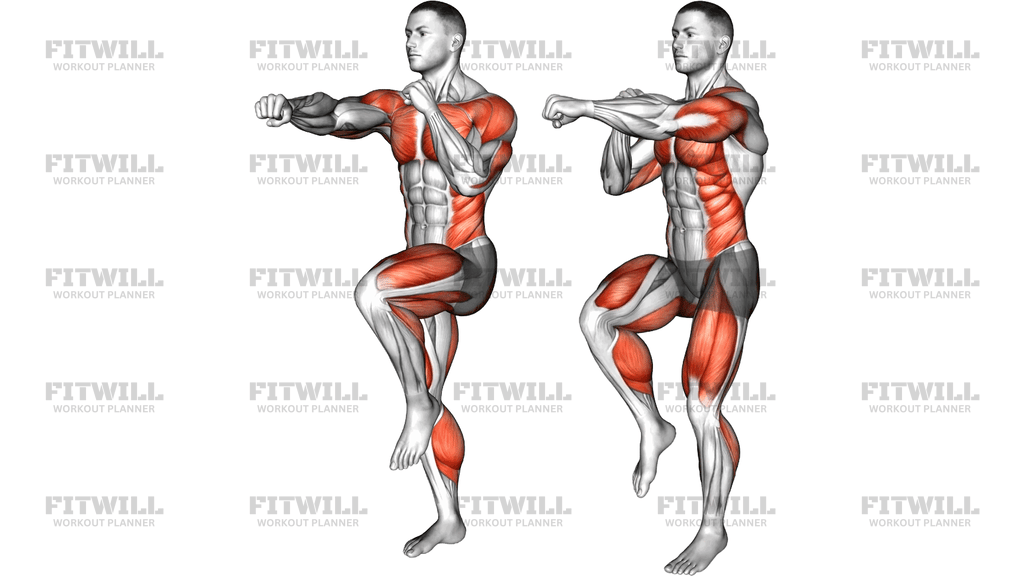
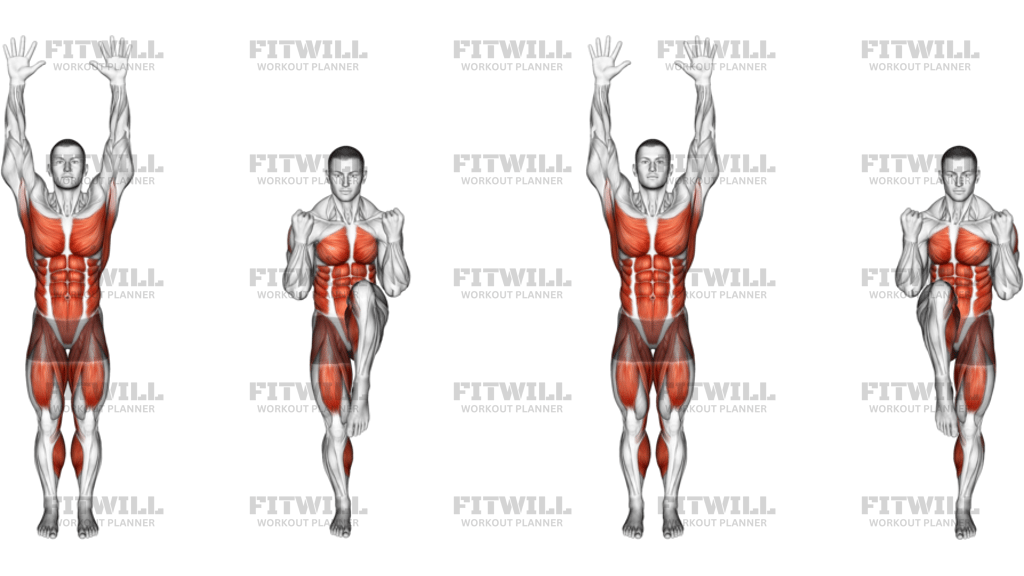
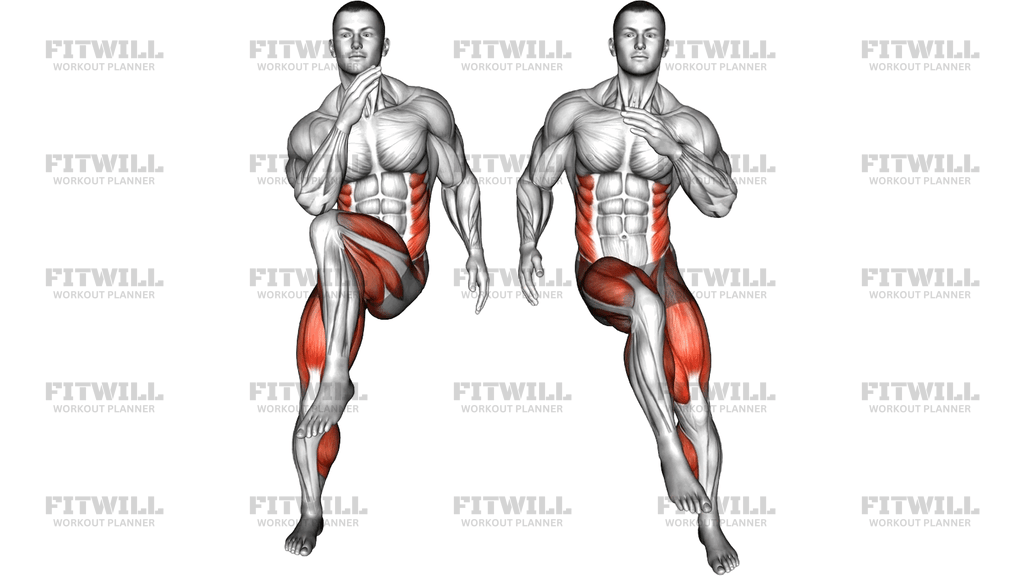
Front Leg Lift Under Knee Tap
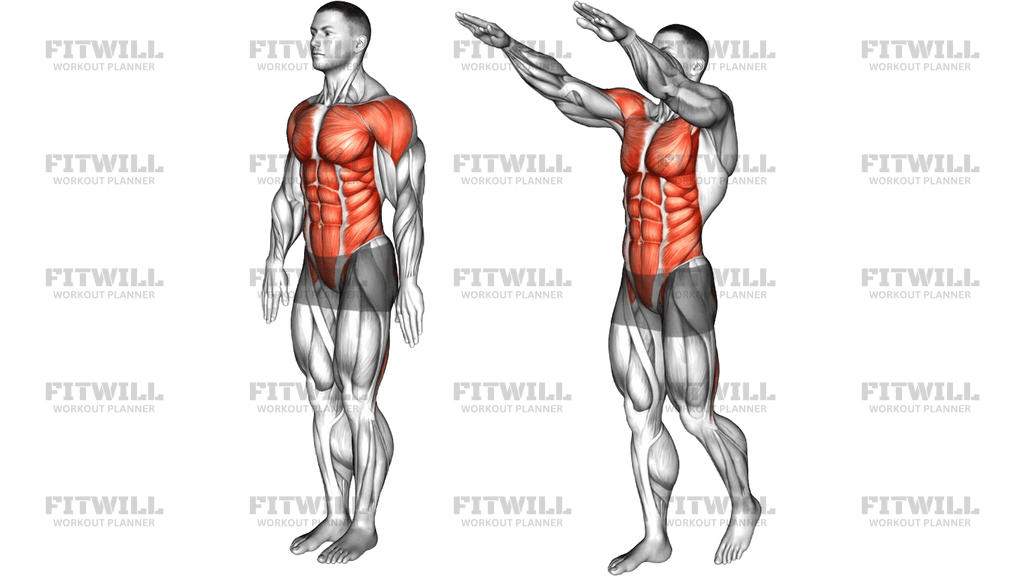
Front Leg Lift Under Knee Tap is a standing bodyweight drill that combines a controlled knee lift with a brief tap under the raised leg. It is useful as a dynamic warm-up, coordination drill, or low-load balance exercise before running, lower-body training, or athletic work because it asks the hip flexors, glutes, and trunk to organize at the same time.
The setup matters because this movement is easy to turn into a lean-back or swing if you start off unstable. Stand tall on one leg with the supporting foot planted firmly, the standing knee softly unlocked, and the ribs stacked over the pelvis. Keep the lifted leg in front of you, not drifting out to the side, and use the free arm or hand to touch lightly under the knee or upper shin.
Each repetition should feel like a clean lift rather than a kick. Drive the knee forward and up under control, then make a quick, light tap under the leg without collapsing your chest toward it. The supporting hip should stay level, the spine should stay long, and the lower back should not arch to buy extra height. A brief pause at the top is useful if you need more control.
This exercise fits well in warm-ups, activation circuits, and general conditioning sessions because it trains balance, tempo, and coordination without needing equipment. It can also reveal side-to-side differences in hip control and single-leg stability. If one side feels awkward, reduce the lift height and slow the lowering phase before you try to make the movement bigger.
Front Leg Lift Under Knee Tap should stay crisp and pain free. If you feel pinching in the front of the hip, excessive wobbling at the ankle, or tension in the low back, shorten the range and use a wall or rack for fingertip support. The goal is not a dramatic height or fast cadence; the goal is a repeatable lift, a controlled reset, and stable breathing from the first rep to the last.
Treat it like a precision drill rather than a power move. A smooth set of alternating reps can wake up the hips and core without leaving you fatigued before the main session starts. If you want more challenge, make the lowering slower or remove support before you chase a higher knee lift.
[ Workout Log & Planner ]
Put your next workout in Fitwill
Keep your plan and training log ready when you are.


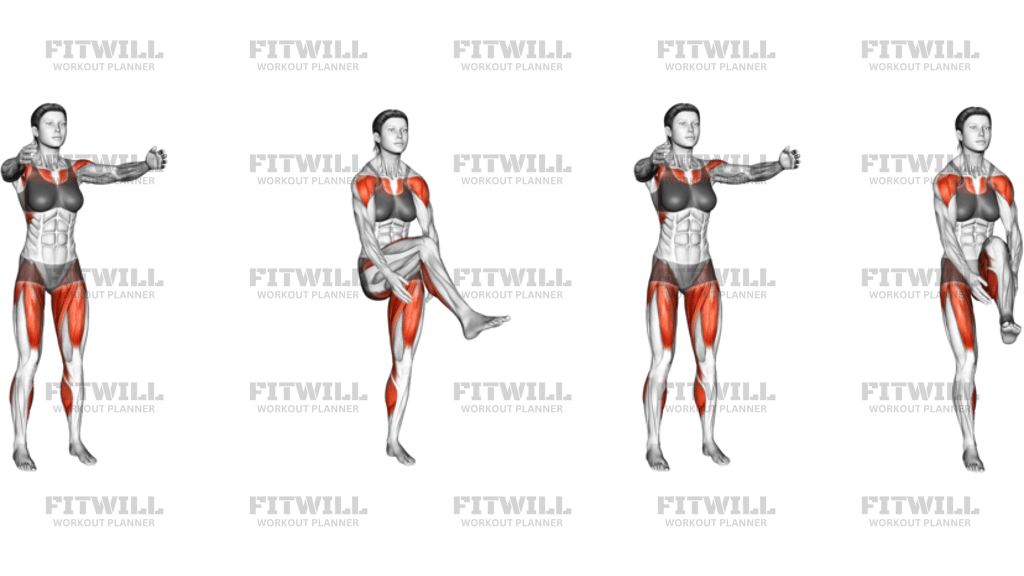
Instructions
- Stand tall on one leg with your supporting foot flat, your other leg free in front of you, and your torso stacked over your hips.
- Keep the standing knee softly bent and fix your gaze on one point so your balance does not drift.
- Lift the free knee forward until the thigh reaches a comfortable high position without leaning back.
- Reach the opposite hand or the free hand under the lifted knee for a light tap beneath the thigh.
- Keep the tap brief and avoid pulling your chest toward the knee or twisting your torso.
- Hold the top position for a split second if you need to steady the supporting hip and ankle.
- Lower the lifted foot back to the floor under control instead of swinging it down.
- Reset your balance fully before the next rep, then repeat on the same side or alternate sides as prescribed.
- Exhale as the knee comes up and tap happens, then inhale as the foot returns to the floor.
Tips & Tricks
- Press the full tripod of the standing foot into the floor so your ankle does not collapse as the knee lifts.
- Keep the tap light; if you have to yank the knee upward with your hand, the lift is too high.
- If your chest leans back, lower the knee target instead of arching through the low back.
- Use a wall, post, or rack with fingertip support if the balance challenge is stealing the movement quality.
- Let the lifted foot stay relaxed; over-pointing the toes often makes the hip flexors cramp.
- Move slowly enough that the standing hip stays level and the knee does not cave inward.
- A small pause at the top is better than adding speed if you want more control and coordination.
- Make the lowering phase deliberate so the drill trains stability instead of a quick hop.
- Stop the set if you start rotating through the pelvis or losing the same range on every rep.
Frequently Asked Questions
What muscle does Front Leg Lift Under Knee Tap target most?
It mainly works the hip flexors and lower abs, with the standing leg, glutes, and foot muscles doing a lot of stabilizing.
Is Front Leg Lift Under Knee Tap more of a warm-up or a strength exercise?
It is best used as a warm-up, activation drill, or coordination exercise rather than a heavy strength movement.
Do I need to tap under the knee with one hand or both hands?
The tap should stay light and brief. In most versions, one hand reaches under the lifted knee or upper shin while the other arm helps you stay balanced.
How high should I lift my leg in Front Leg Lift Under Knee Tap?
Lift only as high as you can while keeping the torso tall and the pelvis level. Parallel is enough if going higher makes you arch your back.
What is the most common mistake with this movement?
People usually lean backward or twist the torso to fake a bigger lift. Keep the chest stacked over the hips and let the leg do the work.
Can beginners do Front Leg Lift Under Knee Tap?
Yes. Beginners should start with a smaller knee lift and use fingertip support on a wall or rack until the balance pattern feels steady.
Which side should I start on?
Start with your less stable side if you want to clean up balance and coordination, then match the same number of reps on the other side.
How can I make Front Leg Lift Under Knee Tap harder without adding weight?
Slow the lowering phase, add a brief pause at the top, or remove support before you try to lift the knee higher.